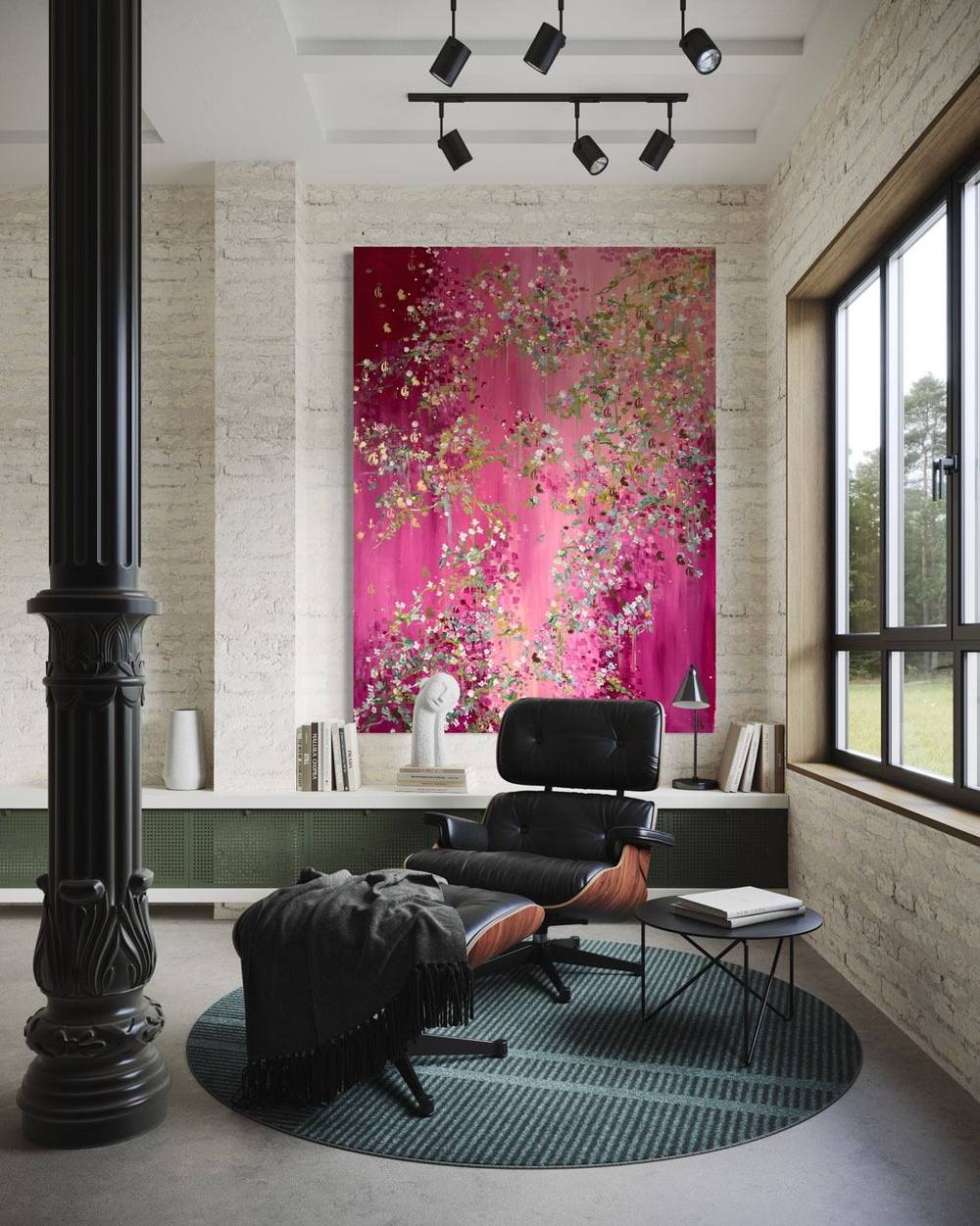
Office art: original paintings for rooms that receive people
A reception, a waiting room, a meeting room: spaces that receive people tell visitors who works there. How an original painting helps tell that story calmly and credibly.
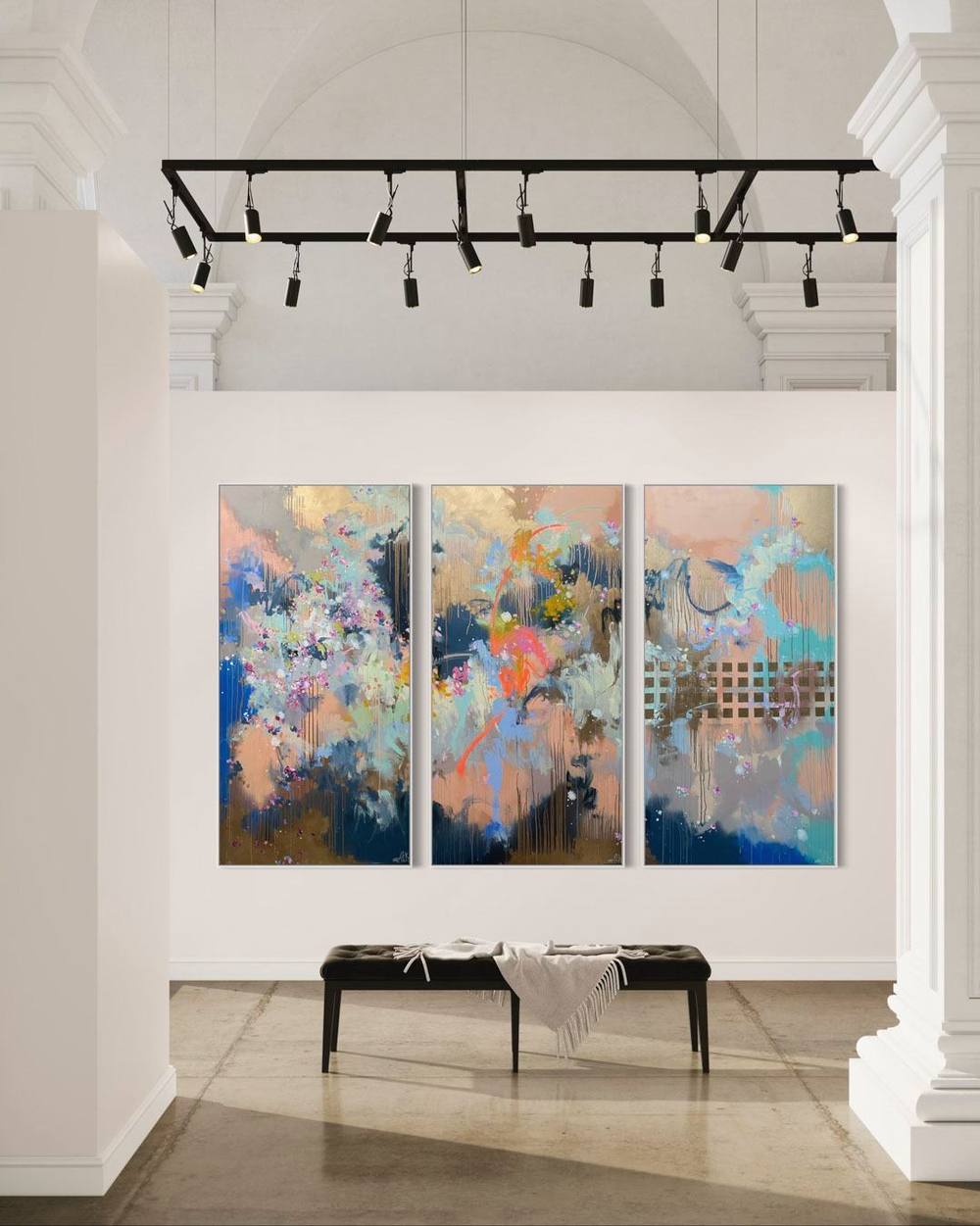
Anyone who walks into a reception reads the room before meeting a single person. Light, materials, order and whatever hangs on the walls all say something about how work is done here. In offices, law firms, medical practices and hotels, art is therefore never mere decoration. It is part of the welcome.
This article describes what an original painting can do in rooms that receive people, which formats and moods suit which situation, and how to make a choice that still feels right in ten years.
What art does in the workplace
Whether designed spaces change people is a surprisingly well-researched question. A team at the University of Exeter led by Craig Knight and Alex Haslam had office workers perform tasks in different kinds of space: bare, purely functional rooms, rooms with plants and pictures, and rooms the workers were allowed to design themselves. Across several studies with more than 2,000 participants, people in enriched spaces were 17 per cent more productive than in bare ones. When they had a say in the design, the figure rose to 32 per cent, with no increase in errors.
For anyone choosing office art, the second finding matters almost more than the first. A painting has a stronger effect when the people who live with it every day have accepted it. It pays to involve the team: in the shortlist, in a trial hanging, in the question of where a work should go.
Three rooms, three tasks
Not every room that receives people asks the same of a painting. It helps to ask what job the work is meant to do.
The reception: showing character
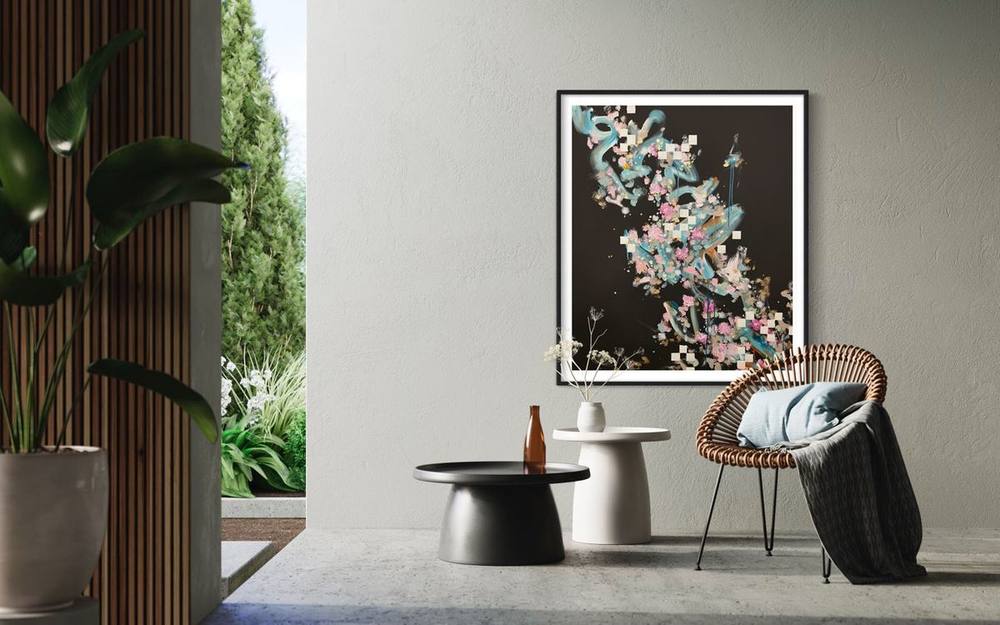
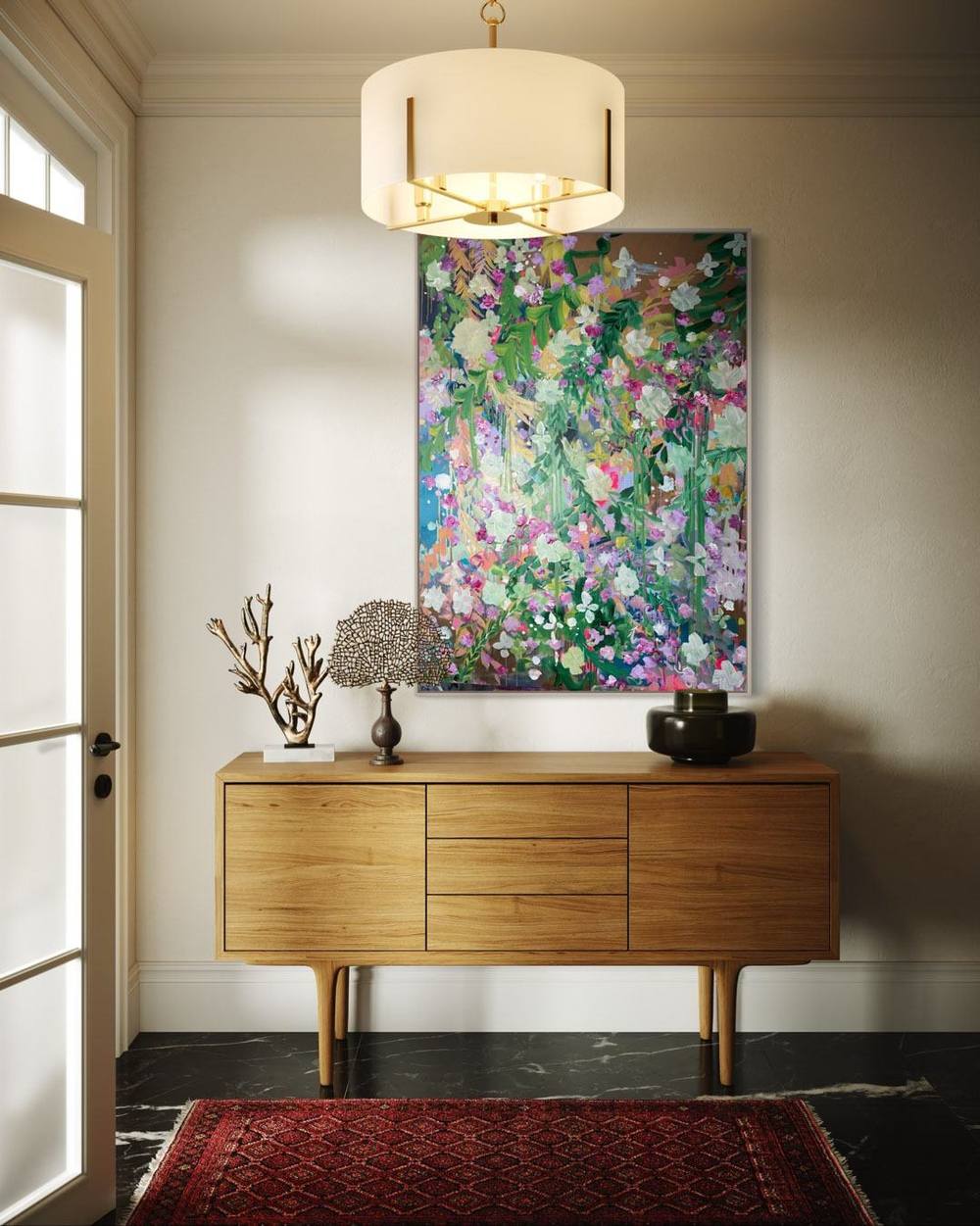
In a reception, a painting has seconds. It should sum up the character of the house without explaining it. Generous formats that read from the door, and a clear idea of colour, work best here. A large landscape format such as 02 | 2023 from Everlasting Blossoms, painted on a black ground in acrylic, lacquer and gold lacquer, sets a dark, elegant accent that suits wood, stone and subdued light. A light, floral portrait format, by contrast, opens a room and feels more welcoming.
The waiting room: offering calm
In practices and law firms people wait, often with worries on their mind. Here a painting is not a statement but a companion for a few minutes. Calm, light works with a restrained palette help time pass. Floral abstractions are especially suitable because they suggest nature without telling a story that has to be understood. In the catalogue of works, the curated path “Calm works” leads to such pictures.
Waiting areas are not the place for strong contrasts or restless rhythms. What reads as lively in a living room can be too much in a tense moment.
The meeting room: a reason to talk
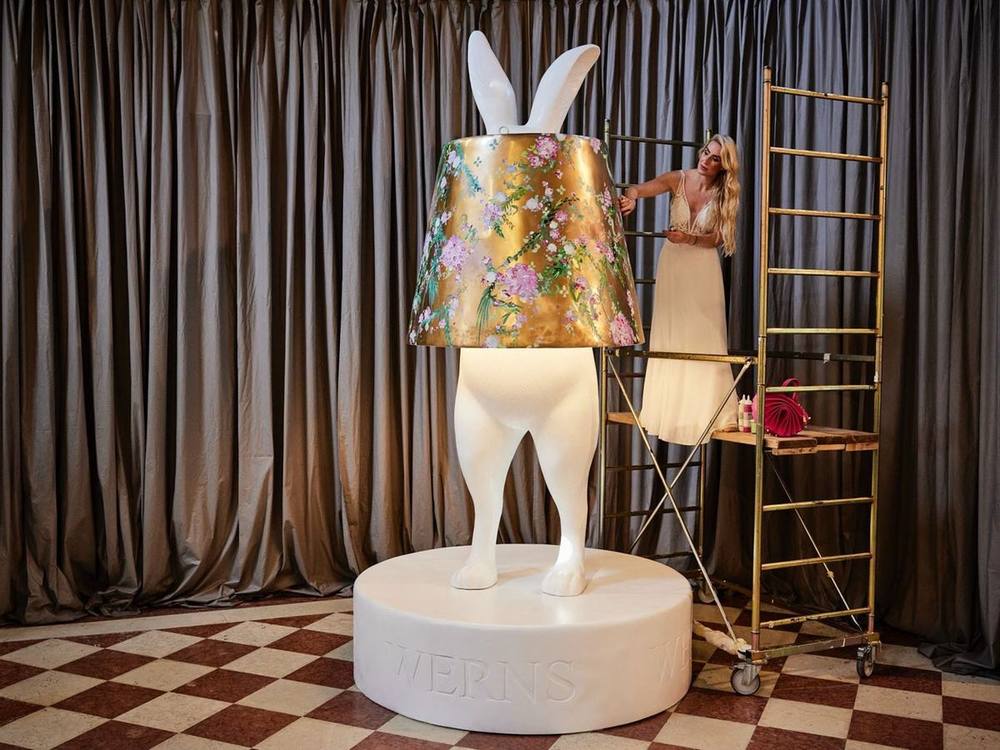
In a meeting room people sit for longer and look more closely. Here works may be more layered, with details that only appear on the third look. Pieces from the Signature Collection, in which the JG monogram, the crown, the hare and the anchor are woven into the painting, offer such discoveries. A medium format such as 28 | 2022 in blue and white suits rooms where concentration matters more than effect.
Sector by sector
Every sector has its own language, and a work of art should speak it without repeating it.
Law firms and consultancies
Anyone entering a law firm is looking for reliability. Works with a clear structure and a calm palette support that impression without feeling stiff. Dark grounds with gold, deep blue or a restrained play of white and sand suit wood, leather and paper. Floral abstractions, by contrast, bring warmth into rooms otherwise ruled by files and screens. In a client meeting, a picture that does not distract but is noticed is a quiet ally.
Medical and dental practices
In practices, people often meet the room in a state of mild tension. Light, friendly works with natural colour, plenty of green, rosé and sky blue, balance the functional furnishings. It matters that a picture holds up at close range: someone waiting looks at the same spot for a long time. Works with finely layered surfaces and small details reward that gaze instead of tiring it.
Hotels, restaurants and showrooms
Here art becomes part of an experience. Guests take photographs, remember, tell others. A large, distinctive work in a lobby or bar quickly becomes a hallmark of a house. The long-term collaboration between Hotel Louis C. Jacob on Hamburg’s Elbchaussee and Juliane Golbs shows how such a connection can endure; the journal describes it in detail.
Agencies and studios
Creative teams can take more energy. Strong colours, gestural painting and contrast can inspire here, as long as there are quieter rooms with calmer works to retreat to. The Exeter research argues for choosing together, especially in such teams.
Care in everyday office life
Offices are not a difficult environment for art, but they are a particular one. Air conditioning dries the air, large windows let in a lot of light, and cleaning is more frequent than at home. A few simple rules protect an original for many years:
- No direct sunlight on the painted surface, especially around midday.
- Distance from radiators and vents, so the canvas does not warm unevenly.
- Clean dry: remove dust only with a soft, dry brush, never with cleaning products or damp cloths, especially on gold and lacquer surfaces.
- Hang securely: in public areas, one fixing too many is better than one too few.
That way a work remains what it should be: a calm, dependable part of the room.
Format, light and hanging
Rooms that receive the public have their own rules. A few practical points:
- Viewing distance: a painting seen from the entrance needs more surface than one people walk past. As a rule of thumb, the greater the distance from which a work is first seen, the larger it may be.
- Light: many offices are lit with cold ceiling light. Works with gold lacquer or gold leaf come alive under warm, directed light. A single spotlight can do more than a new picture.
- Hanging: in public areas a work should hang securely, ideally on two points. This belongs in the planning, not in the follow-up.
- Furniture: above sideboards, sofas or benches a painting looks settled when it takes up about two thirds of the furniture’s width and does not hang too high.
If in doubt, use the size comparison on every work page. It shows the painting to scale next to a door, a sideboard and an armchair.
One work or a collection?
Many companies start with a single work in the reception and add to it later. That is a good path, because a first original sets the tone and makes every later decision easier. Anyone furnishing several rooms at once should look for a connecting idea: a colour family, a series, a recurring motif. That is how a collection emerges instead of an accumulation.
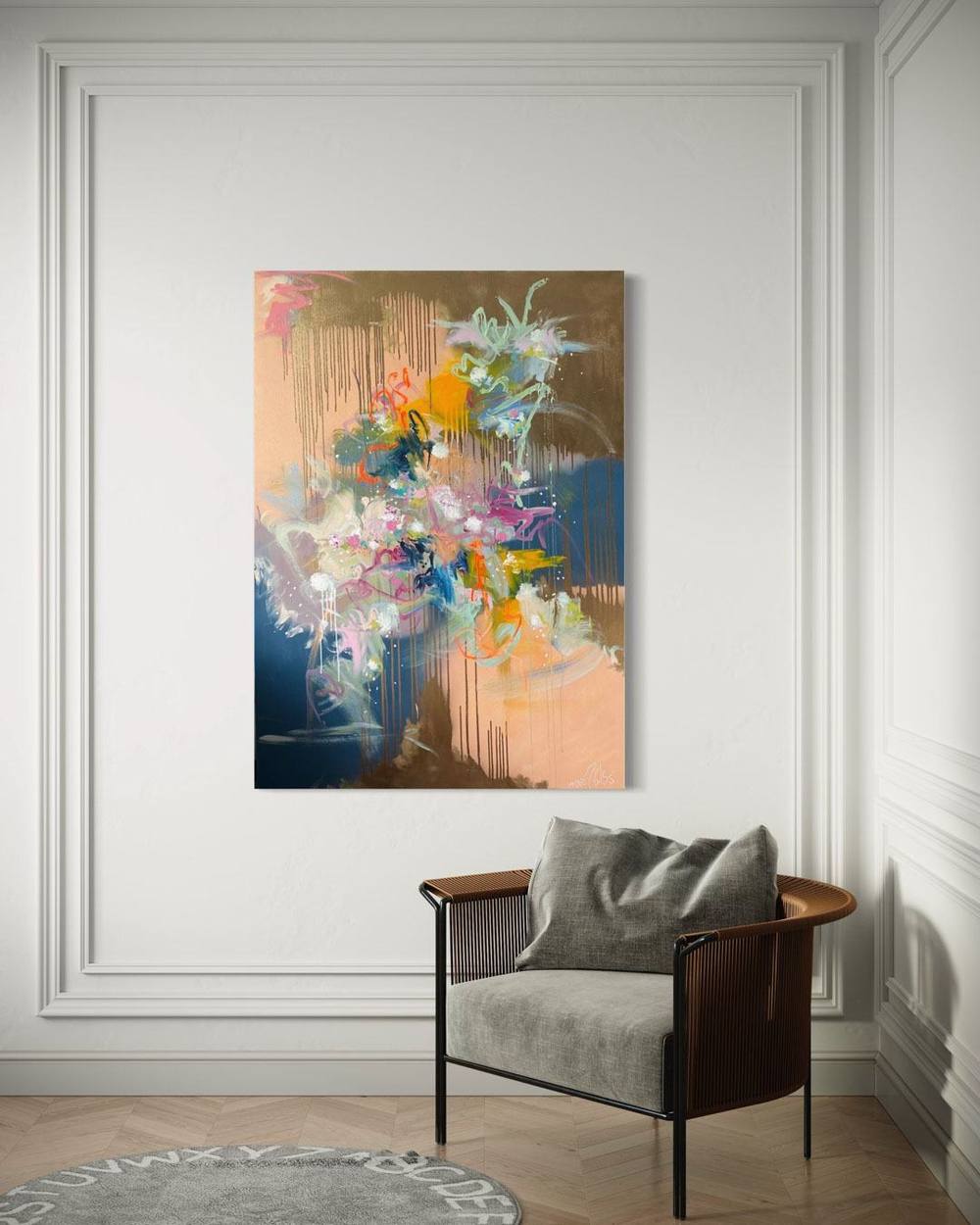
For a first orientation, try the art advisor. In four steps covering colour, format, mood and budget, it shows the available originals that match. The shortlist can then be discussed with the team.
Corporate identity without a logo
Some houses want a work that tells their story without becoming advertising. In the Monogram series and the Signature Collection, Juliane Golbs works with signs, initials and symbols that merge into the painting. The same principle can shape a commission: a house’s colours, a founding year, a sign that only insiders recognise. The result remains a painting, not a logo on the wall.
Trial hanging: deciding in the real room
A work for a room that receives people should not be chosen on a screen alone. For a small fee, credited against the purchase price, an original can be hung in your space on trial. That way you can see how it looks in daylight and under artificial light in the evening, how it reads from the door, and how staff and guests respond. As the Exeter research suggests, that last point is no detail.
The path to the right work
- Describe the space: which wall, which light, who spends how long there?
- Make a shortlist: in the catalogue of works or with the art advisor.
- Involve the team: show two or three favourites and gather opinions.
- Trial hanging: experience the work on site.
- Decide or commission: acquire an existing original or request a commission.
A painting in a room that receives people is seen by many every day. It deserves the time a good decision takes. Enquiries from companies, law firms and practices are welcome through the contact form.
Frequently asked questions
Does office art really affect the people who work there?
Research suggests so. In studies at the University of Exeter with more than 2,000 office workers, people in spaces enriched with plants and pictures were 17 per cent more productive than in bare spaces, and 32 per cent more productive when they were allowed to shape their workspace themselves.
What kind of art suits a medical practice or waiting room?
Calm, light works with a clear palette that invite rather than demand. Floral abstractions in green, rosé or blue feel friendly without being intrusive. Very dark or dramatic pictures are better placed in rooms where people choose to spend time.
Can a company try a painting in its offices before buying?
Yes. For a small fee, which is credited against the purchase price, an original can be hung in your space on trial. For receptions in particular it is worth seeing the work in real light and with real visitors.
Does Juliane Golbs accept commissions for companies and practices?
Yes. Juliane Golbs creates unique works for specific spaces, if desired with the signs, initials or colours of a house. It always begins with a conversation about place, light and atmosphere.