Juliane Golbs – the artist who tells of life in gold and colour
A portrait of the painter who unites romance with the expressive line, works with 24-carat gold leaf and understands art as an attitude towards life.
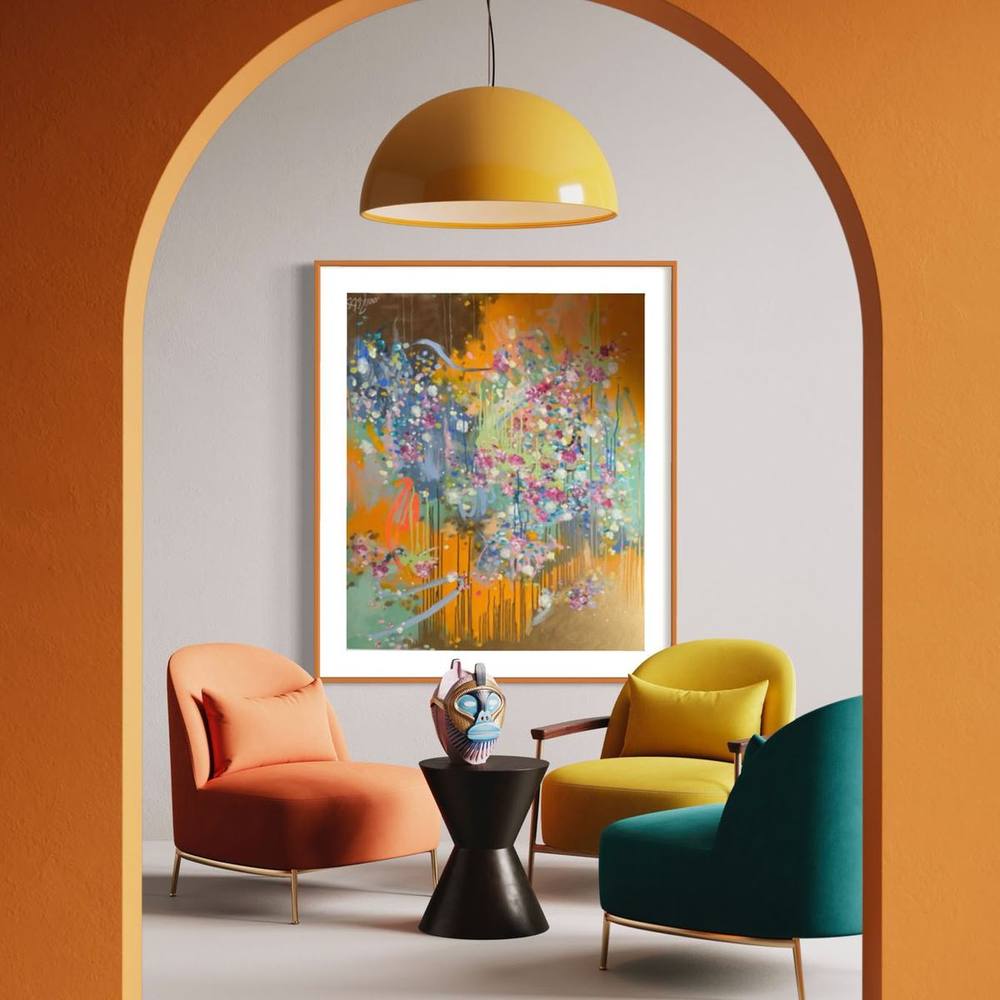
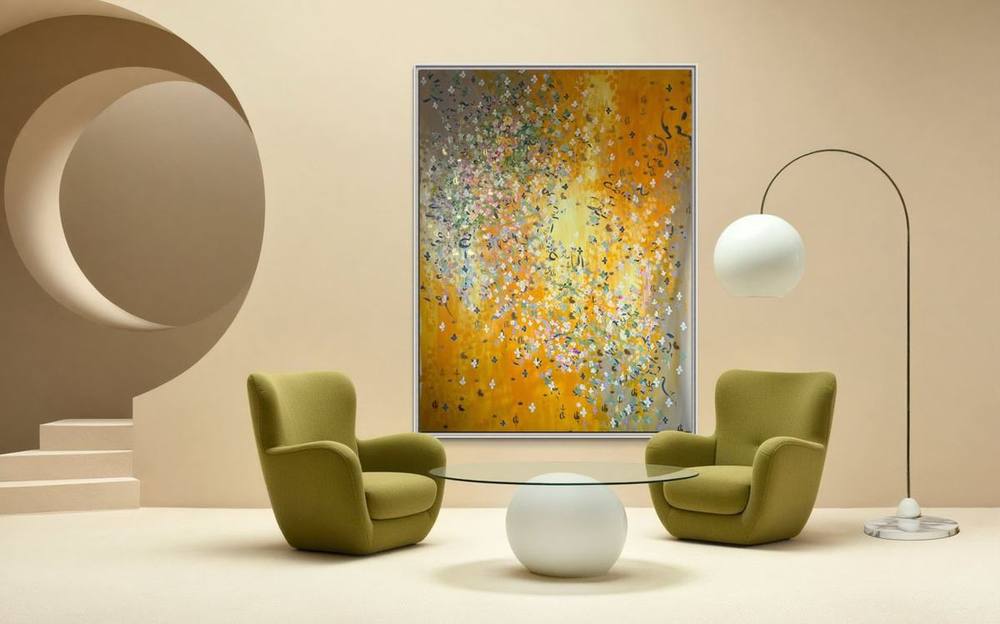
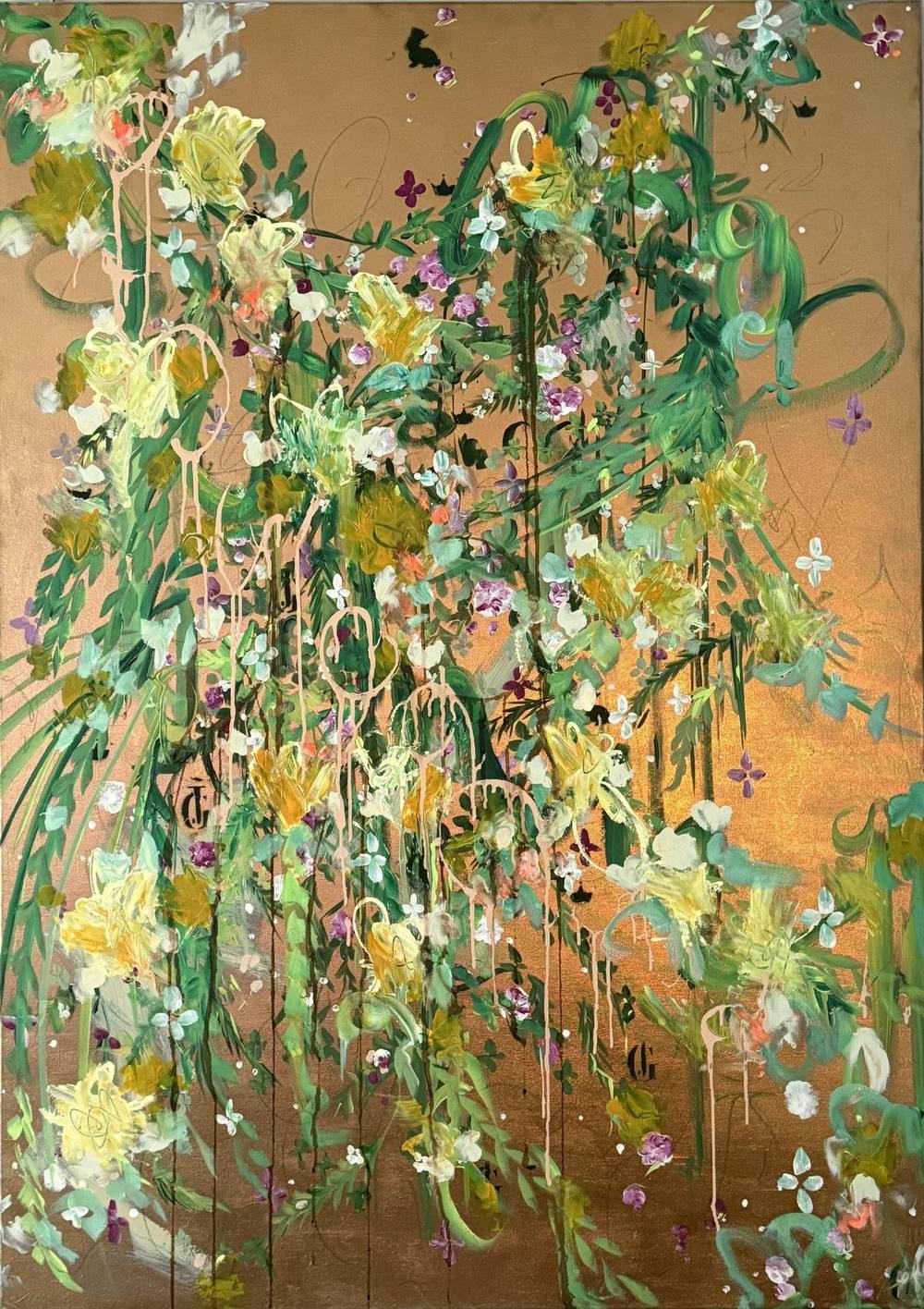
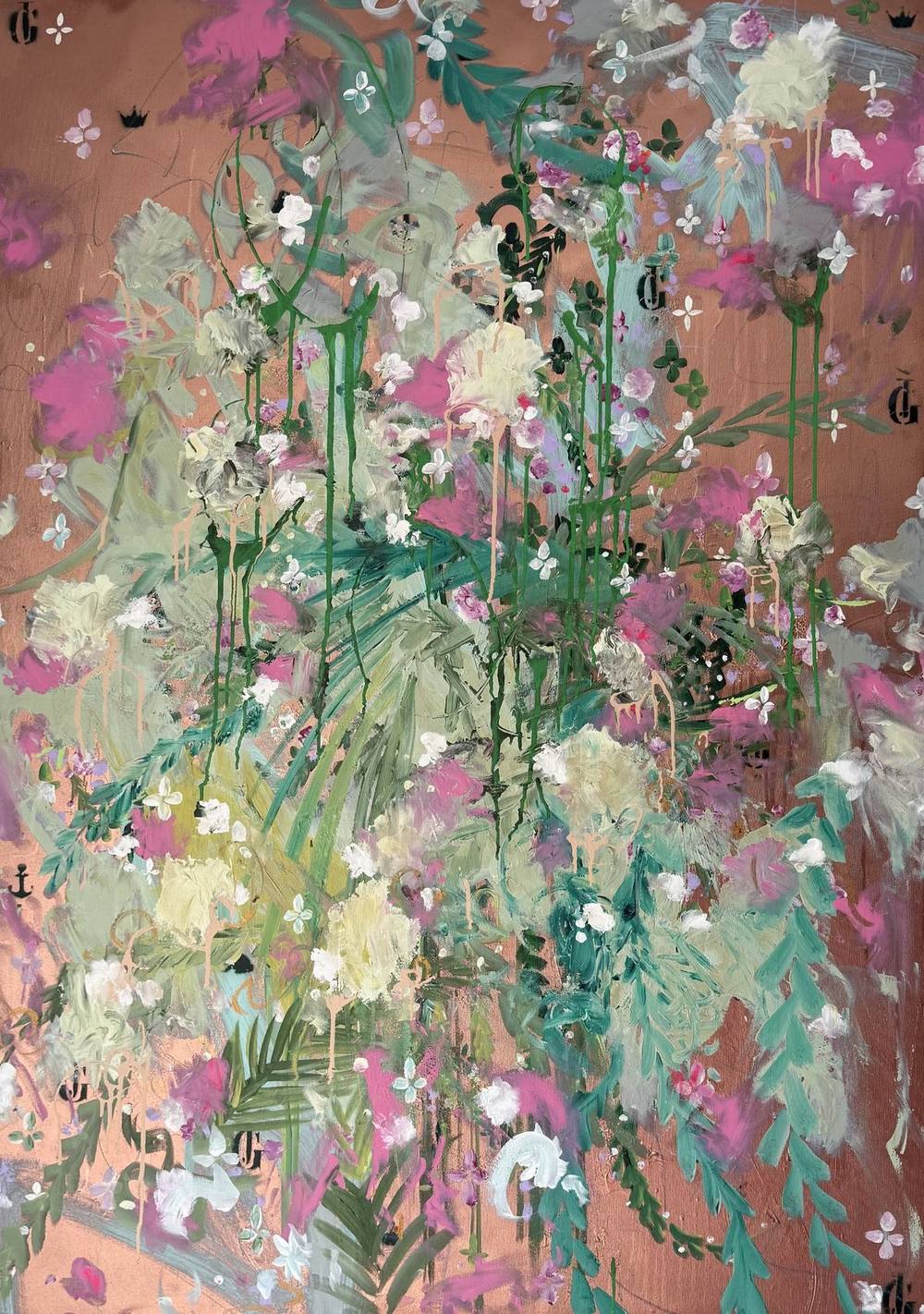
Standing before a painting by Juliane Golbs, the first thing you notice is the warmth of the colour. Then the traces of the hand. And when you tilt your head slightly, the gold, which grows lighter or darker depending on where you stand. The question of how it was made only comes afterwards.
This portrait tries to answer both: who the artist is, and why her work resonates in Hamburg and far beyond. It describes where she comes from, how she works in the studio, her series, the milestones of recent years, and how you can encounter one of her works in person.
From Schwerin to Hamburg
Juliane Golbs was born in Schwerin, in northern Germany. At 18 she moved to Hamburg, which has been her chosen home ever since. The two cities have more in common than one might think: both are shaped by water, both by a light that changes with the weather in a matter of minutes. In Schwerin it is the lakes around the castle; in Hamburg, the Alster and the Elbe.
She knew early on that she wanted to be an artist, and her father encouraged her. According to the Gastronomie-Journal, he eventually swapped her spray cans for canvas and paint so that she would stop painting other people's walls. The spray paint stayed. It is still one of her tools today – only now on canvas.
In Hamburg she found the space a painter needs: a city that values art without making a fuss about it. How the city finds its way into her paintings is the subject of the article A female artist in Hamburg.
A painter between intellect and intuition
Juliane Golbs studied art and philosophy, and her paintings show this double origin. They are spontaneous in execution and considered in attitude. Philosophy supplies the question; painting gives the answer that cannot be put into sentences.
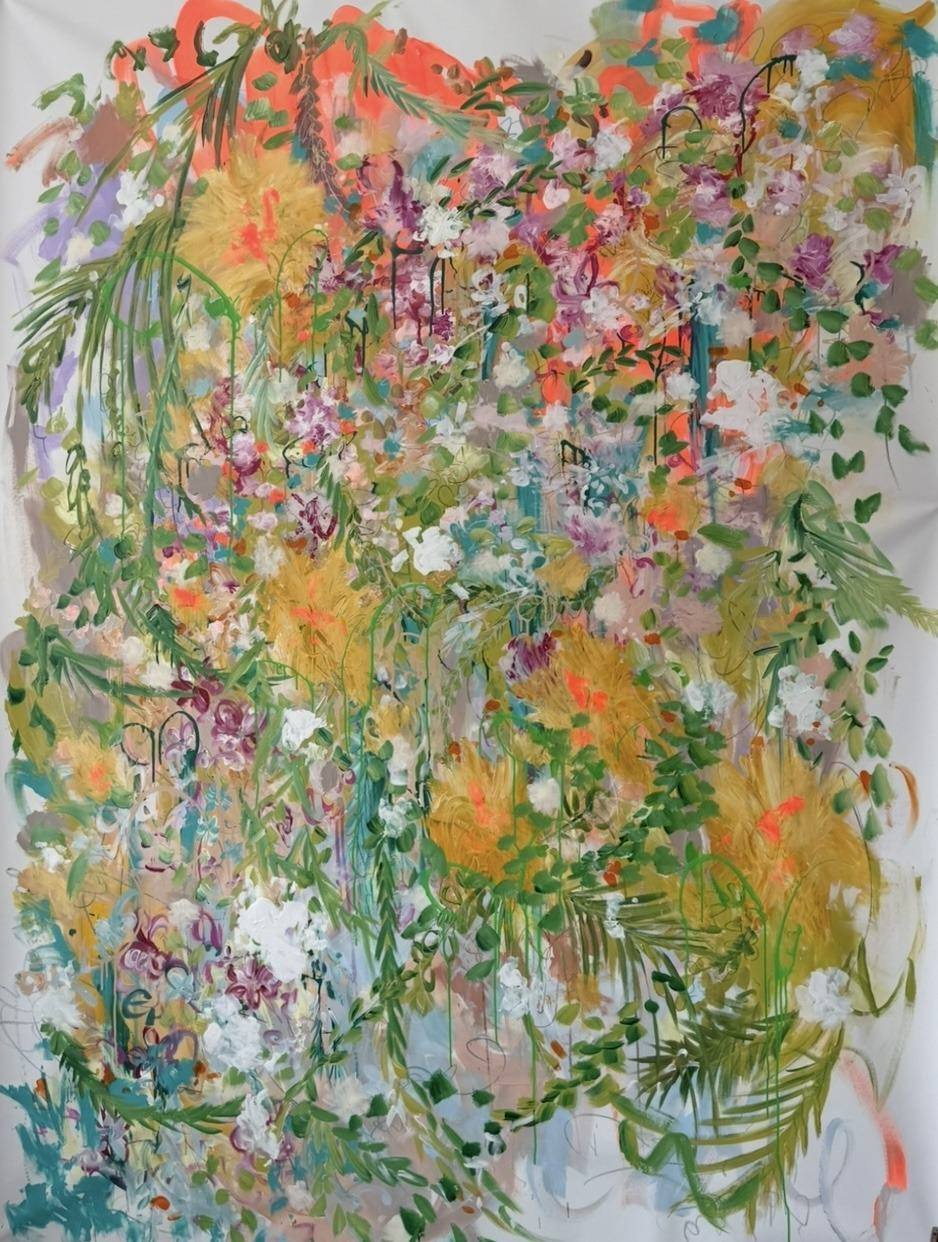
Her visual language joins two traditions that rarely meet: the romantic, with its blossoms, its light and its tenderness, and the expressive, with its lines, breaks and traces. Her paintings want to move the viewer. They deliberately stand against cynicism and show life as something beautiful and full. Golbs herself calls her art a homage to existence.
Among her sources of inspiration she names the sky, architecture and the colours the sun takes on over the course of a day – as described by Barlach Halle K for her exhibition in December 2021. The same page carries a sentence that sums up her outlook well; in translation: “Happiness is the sum of a thousand small wonders.”
Her attitude is clearest in the studio: Golbs does not want art to provoke. She sees it as a garden for the soul.
The signature: fingers, colour, gold
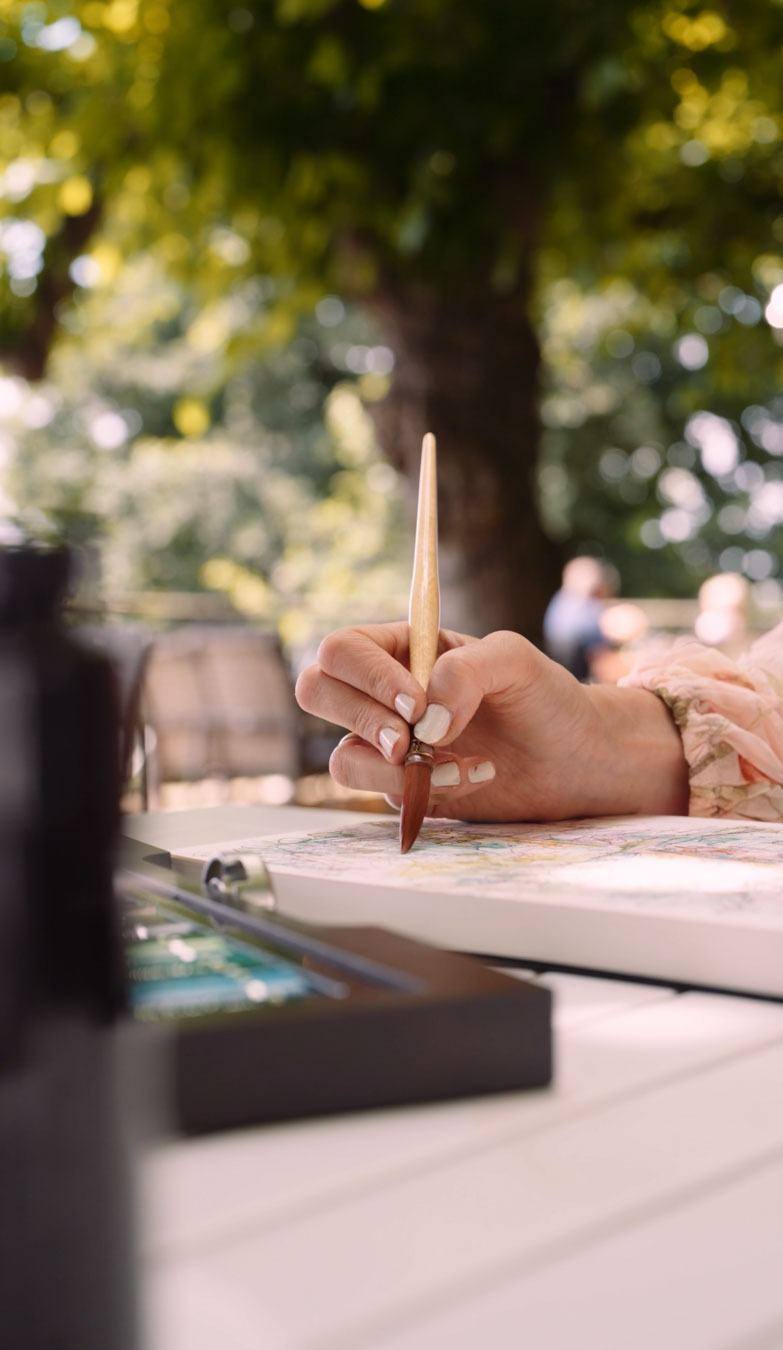
What makes the works of Juliane Golbs unmistakable is the way she handles material. She works with highly pigmented acrylics, with pastel and chalk, with lacquers and spray paint. Much of it she applies with her bare fingers. The hand remains visible in the painting, as the trace of a movement that cannot be repeated.
And then there is the gold. 24-carat gold leaf and fine gold creams are worked into the painting layer by layer. As a result, a picture changes with the daylight: in the morning it appears cool and clear, in the evening warm and almost glowing. How this technique works, and why gold in art history has never been mere decoration, is explained in Gold leaf in painting.
How a painting comes into being
A work by Juliane Golbs is not made in one sitting. It grows in layers that overlap and sometimes disappear again. In simplified terms, four phases can be distinguished.
The ground. It begins with the empty surface – for Golbs a place where every work starts afresh. The first fields of colour set the temperature of the painting: a warm apricot, a deep blue, a muted rosé. Later they are often visible only at the edges, yet they carry the mood.
The movement. Then come line and gesture. Here she works quickly and physically, with fingers, brush, chalk and spray can. Drips are allowed to remain where they give the picture depth. This is the phase in which the traces appear that one recognises later from close up.
The condensing. Gesture is followed by patience. Blossom forms are worked out, surfaces calmed, contrasts set. Much is painted over. What remains has prevailed over other possibilities.
The light. Finally come gold cream and gold leaf. They are not laid on as a flat surface but placed where the painting is meant to catch the light. Only now does it become clear how it will work in a room.
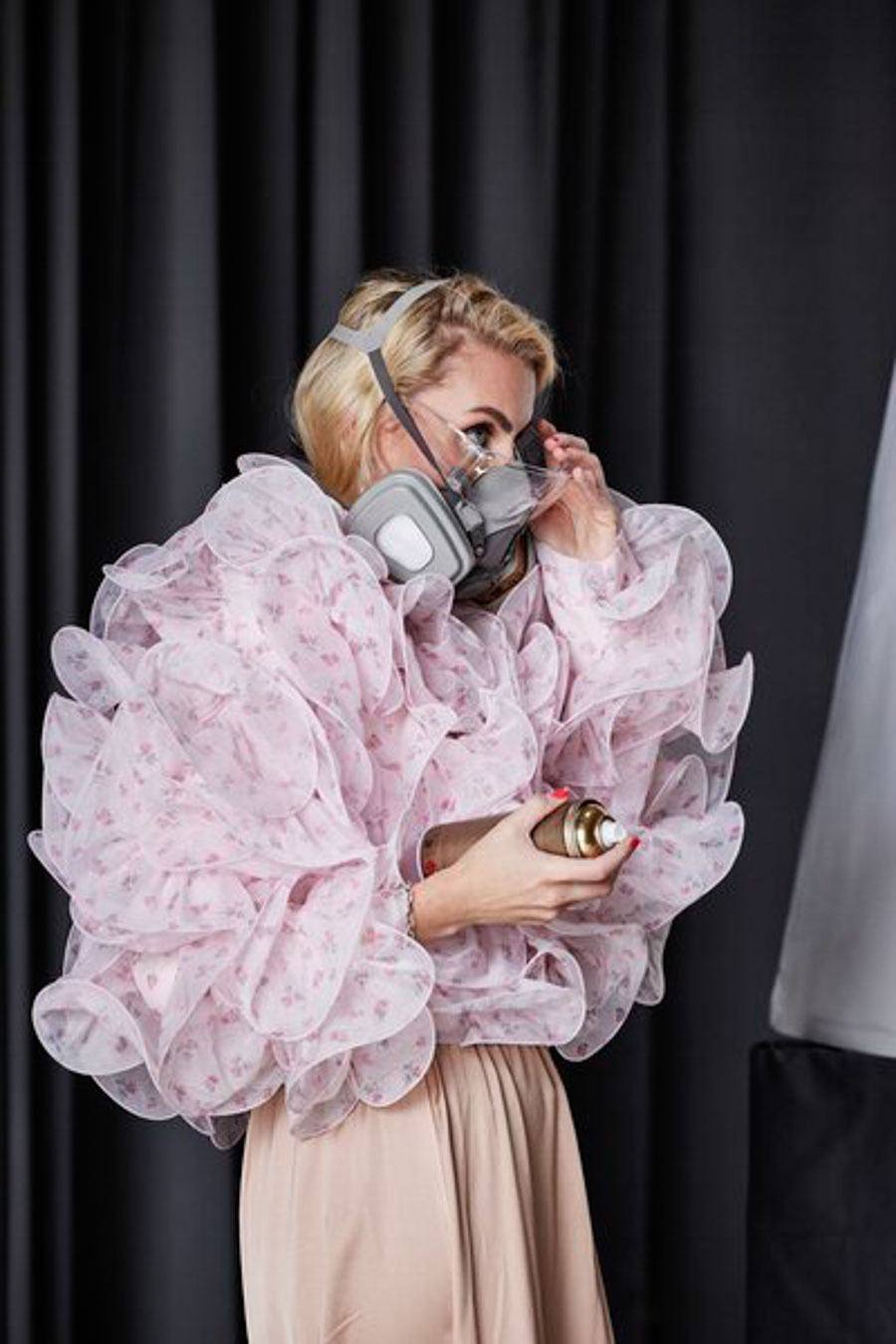
Working with lacquers and spray paint requires care: the paints are applied wearing a respirator, and each layer has to dry before the next one follows. This, too, explains why a work takes time. Golbs regularly shares the process on Instagram, where you can watch paintings emerge, change and sometimes be taken back again.
The series: atmospheres rather than categories
Juliane Golbs organises her work by atmosphere. Each series has its own tone:
- Heaven can’t wait – many-layered and drawn, with traces that the artist's daughter has also left.
- Fifth Season – born of an existential experience, carried by light and gratitude.
- The Signature Collection – the JG monogram with crown, hare and anchor as a coat of arms for the present.
- Golden Things – a study of gold and reflection.
- Everlasting Blossoms – floral abstractions that never wilt.
The series are not closed chapters but rooms to which the artist returns. What they share is a vocabulary: blossom, line, gold. What sets them apart is the mood that emerges from it. Anyone who collects several works comes to recognise this kinship over time.
The personal story behind Fifth Season and Heaven can’t wait is told in a separate article: When time becomes precious.
Exhibitions and milestones
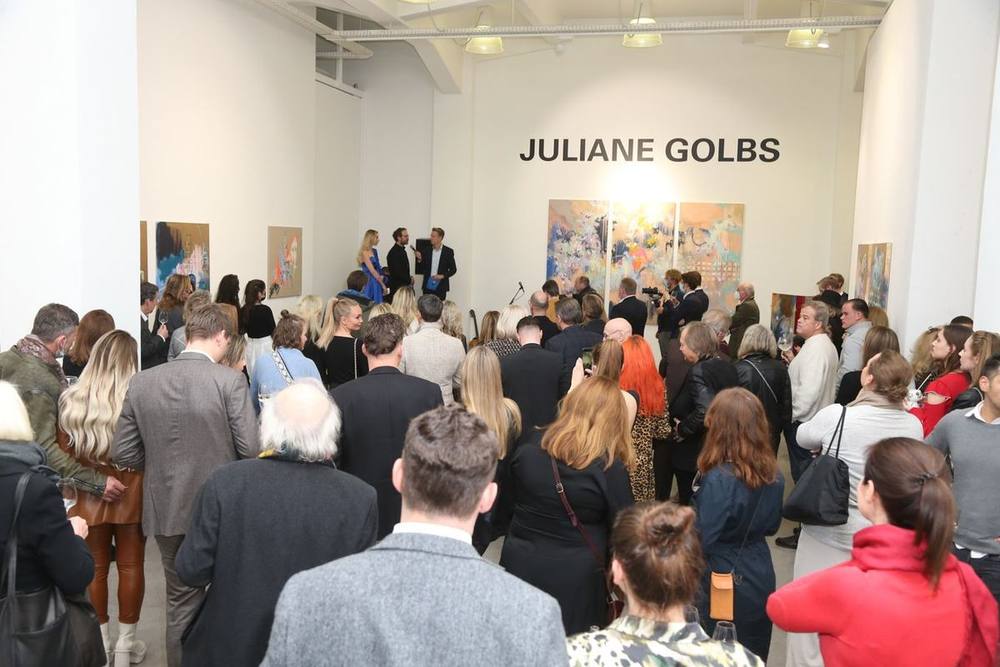
In Hamburg, Barlach Halle K showed an exhibition of unique works finished with gold cream, gold leaf, acrylic and lacquers from 9 to 11 December 2021. The exhibition was then made available as a virtual tour, so it could also be visited from afar. In 2024 Golbs presented the exhibition Fifth Season in Hamburg; in 2025 it was followed by the anniversary exhibition at the AEZ shopping centre, whose proceeds went in full to the NCL Foundation.
The artist's path leads from Schwerin via Hamburg to the Côte d’Azur, to Deauville and to Venice – places where light and water shape perception.
Collaborations: art in dialogue with brands
For Golbs, working with brands is an artistic form in its own right. She leaves the studio and paints where people come together: in a concert hall, in a church, at a trade fair. Some milestones:
- Elbjazz Festival 2026: In the Grand Hall of the Elbphilharmonie she painted live, to the music of Joss Stone, a large-format picture of the Elbphilharmonie – a unique work in the Golden Things series. It was auctioned for the benefit of the NCL Foundation.
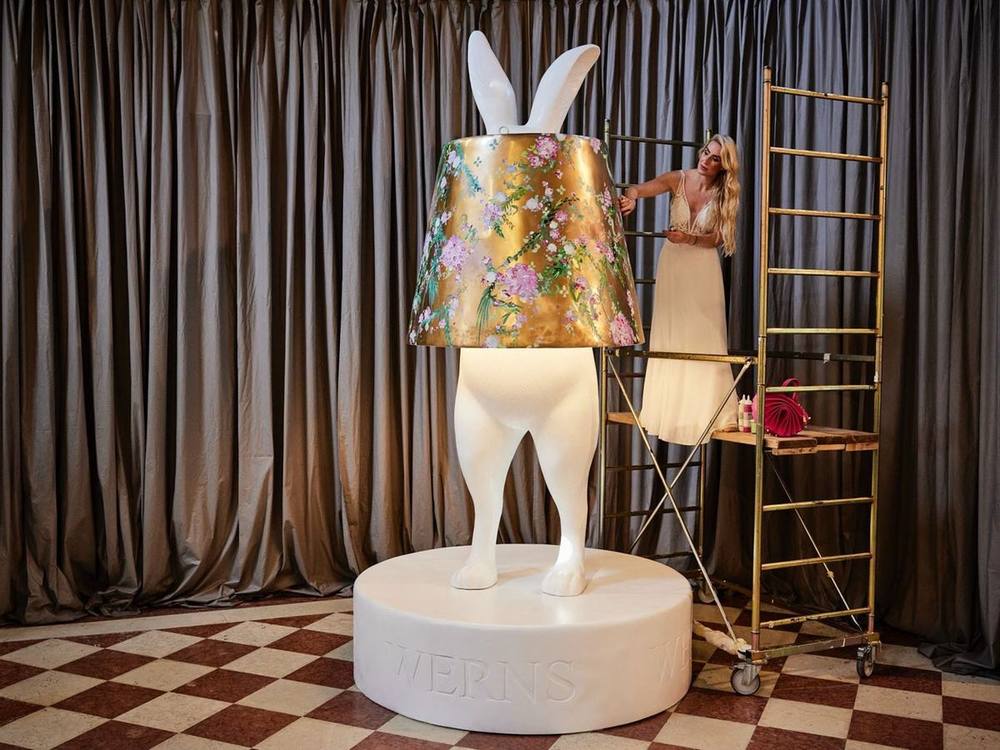
- Venice Design Week 2025: Together with the design label WERNS she transformed a hare sculpture some 3.5 metres tall into a work of art, live, in the church of San Leonardo. The installation became the emblem of the festival. More in the article The emblem of Venice.
- IFA Berlin 2025: For Roborock she created “Hidden Garden”, a painted robot vacuum cleaner as a poetic statement about technology in everyday life.
- Deauville 2023: With the hat maker Maison Laurette she painted straw hats live, surrounded by classic Porsche cars.
- Windspiel: In 2021 she designed the label of a pistachio gin for the distillery in Germany's Eifel region, limited to 999 bottles and sold out within a few days. Because demand was so great, a second, separate edition followed in 2024: a different pistachio gin with less alcohol, intended for summer.
- Louis C. Jacob: Since 2025 she has been artist in residence at the historic hotel on Hamburg's Elbchaussee. The article Artist in residence at the Louis C. Jacob describes what is created there.
What all these projects share is that the work is made in front of an audience. Live painting demands a different concentration from studio work: there is no second attempt, and the audience sees every decision. All partnerships at a glance can be found on the Dialogues page.
Responsibility as part of the work
Since 2018 Juliane Golbs has been an ambassador for the NCL Foundation (NCL-Stiftung), which funds research into NCL, a rare form of childhood dementia. She donates works, time and proceeds. For the foundation she has created joint works with the swimmer Leonie Beck and the singer Joss Stone. The proceeds of her 2025 anniversary exhibition at the AEZ went in full to the foundation. Why this commitment is no side issue for her is explained in Art that carries responsibility.
Why her art moves collectors
The works of Juliane Golbs are made for rooms in which people live. They change with the light of the day. They hold up to a gaze that returns over years. And they remind us that one can choose beauty.
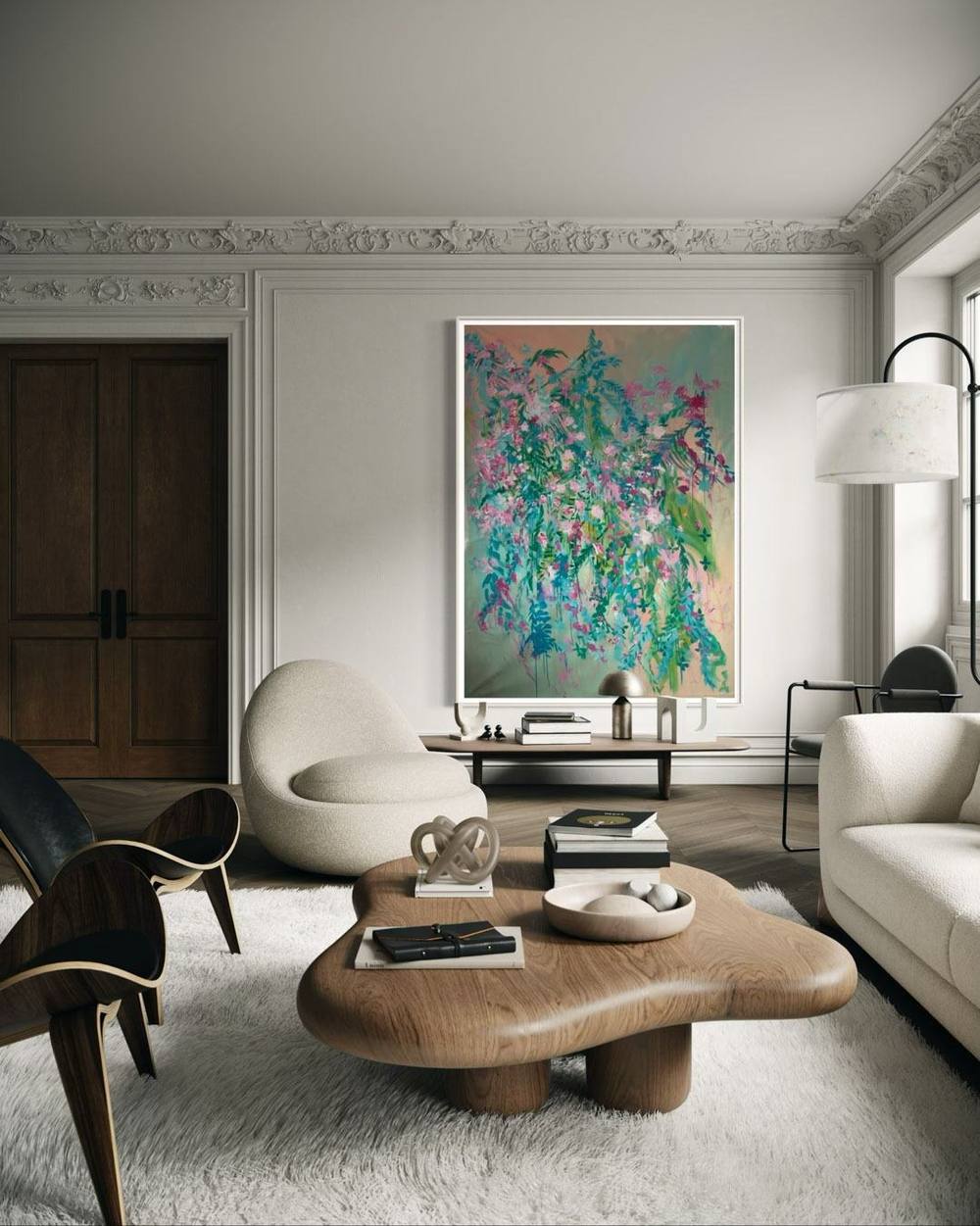
Large-format works in particular need room to breathe. A calm wall, a little distance, daylight from the side: more is rarely needed. The gold reacts to every light source, so it is worth looking at a painting again in the evening under warm light.
Seeing and acquiring a work
There are several ways to encounter a work by Juliane Golbs:
- In the studio. The studio in Hamburg opens for private appointments. You see finished works and those still in progress.
- At the Louis C. Jacob. As artist in residence, Golbs shows works there in changing formats.
- Online. The catalogue of works shows available originals with dimensions and technique.
- At home. If you are unsure whether a work suits your space, you can have it hung on trial for a small fee, which is credited against the purchase price.
Guidance on acquiring an original is given in Buying abstract art. If you would like a painting for a particular room, read the article on commissioning a work. And if you would like to enquire directly, you can reach the studio via the contact form.
Works from this article
Frequently asked questions
Who is Juliane Golbs?
Juliane Golbs is a contemporary painter with a studio in Hamburg, Germany. She combines romantic motifs with expressive lines and finishes many of her works with 24-carat gold leaf.
Where can I see works by Juliane Golbs?
In her Hamburg studio by appointment, at Hotel Louis C. Jacob on the Elbchaussee, where she is artist in residence, and in the online catalogue of works on julianegolbs.com.
Can I buy works by Juliane Golbs?
Yes. Originals are sold directly through the studio. Enquiries about acquisitions and commissions are handled via the contact form on julianegolbs.com.
Which materials does Juliane Golbs use?
Highly pigmented acrylics, pastel and chalk, lacquers, spray paint, gold cream and 24-carat gold leaf. She applies many of the layers with her bare fingers.
Where does Juliane Golbs come from?
She was born in Schwerin and moved to Hamburg at the age of 18, where she still lives and works today.
Sources
5 sources
- Gastronomie-Journal: Eine Hommage an das Dasein (14.09.2022)
- Barlach Halle K: Juliane Golbs (Ausstellung Dezember 2021)
- about-drinks: Windspiel präsentiert Art Edition mit Juliane Golbs (13.06.2024)
- WERNS: Venice Design Week 2025
- Tageskarte: Louis C. Jacob startet langfristige Kunst-Kooperation mit Juliane Golbs (29.09.2025)