Abstract floral painting: from the still life to abstraction
For four hundred years artists have painted flowers that never existed. A short history of floral painting, from the lavish bouquet to abstraction.
Few motifs are as old, and as alive, as the blossom. Artists have painted flowers for centuries, yet they have almost never simply recorded what stood before them. Even the first great flower pieces showed bouquets that never existed. From there a surprisingly direct path leads to the abstract floral painting of today.
Around 1600: the impossible bouquet
Around 1600 the flower piece became an independent genre in the Netherlands. The Kunsthistorisches Museum in Vienna describes the painters’ ambition as outdoing nature herself by uniting flowers from different seasons in a single arrangement. In his Great Bouquet of 1606/07, Jan Brueghel the Elder gathered some 130 rare flowers, more a painted inventory than a real bouquet.
Ambrosius Bosschaert, whom the Mauritshuis describes as the first painter to devote himself entirely to the flower still life, painted each blossom from nature but assembled them into an invented whole. In one of his bouquets of around 1618, some thirty flowers bloom together that would never have flowered at the same time.
The flowers were precious. In the 1630s tulip bulbs became objects of speculation, until the market collapsed in 1637 and ruined many buyers. A painted bouquet outlasted any real one, and it was a sign of knowledge, wealth and worldliness. Painters such as Rachel Ruysch carried the genre into the eighteenth century.
The blossom as a parable
Beyond splendour, many flower pictures carried a second layer. In Jan Brueghel’s Bouquet in a Clay Vase of around 1607, an uprooted cyclamen and scattered coins and jewellery point to the impermanence of earthly things. The flower picture was always also a picture of time: what blooms now will soon wilt. Painting holds the moment that nature cannot.
This tension between abundance and transience runs through the whole history of floral painting. It has not disappeared today.
Monet: the picture as a room
Around 1900 the question shifted. The single blossom was no longer the focus, but the light around it. For decades Claude Monet painted the water lilies on the pond in his garden at Giverny. On 12 November 1918, the day after the Armistice, he offered paintings from the cycle to the French state as a gift. The cycle comprises almost 300 paintings, more than 40 of them in large format.
At the Musée de l’Orangerie in Paris, eight compositions were installed in two oval rooms and opened in May 1927, a few months after Monet’s death. They cover about 200 square metres across nearly 100 linear metres, lit by daylight from above, and change with the weather. Here the flower is barely an object any more. It is colour on water, light on a surface: a decisive step towards abstraction.
O’Keeffe: the blossom up close
In the 1920s Georgia O’Keeffe took a different route. Instead of widening the view, she moved in close. Inspired by modern photography, especially Paul Strand, she tightly cropped small, ordinary flowers and enlarged them onto canvases more than a metre high. Her Flower Abstraction of 1924, now at the Whitney Museum, measures about 122 × 76 centimetres; the blossom seems to grow beyond the edges. The closer you come, the more the flower dissolves into form and colour.
Monet and O’Keeffe mark two roads to floral abstraction: dissolution into light, and dissolution through closeness. Both live on today.
Abstract floral painting today
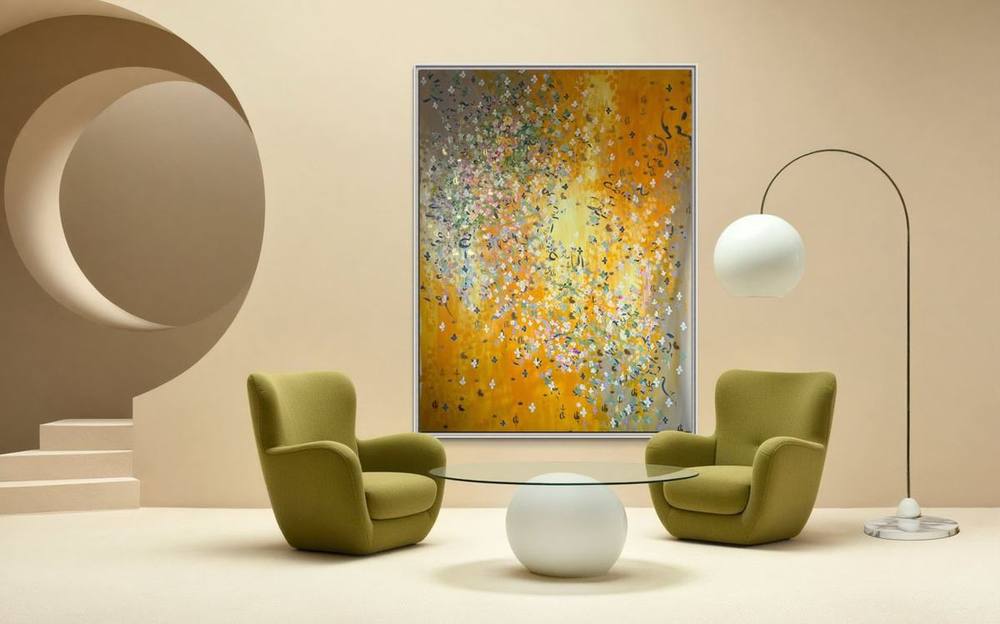
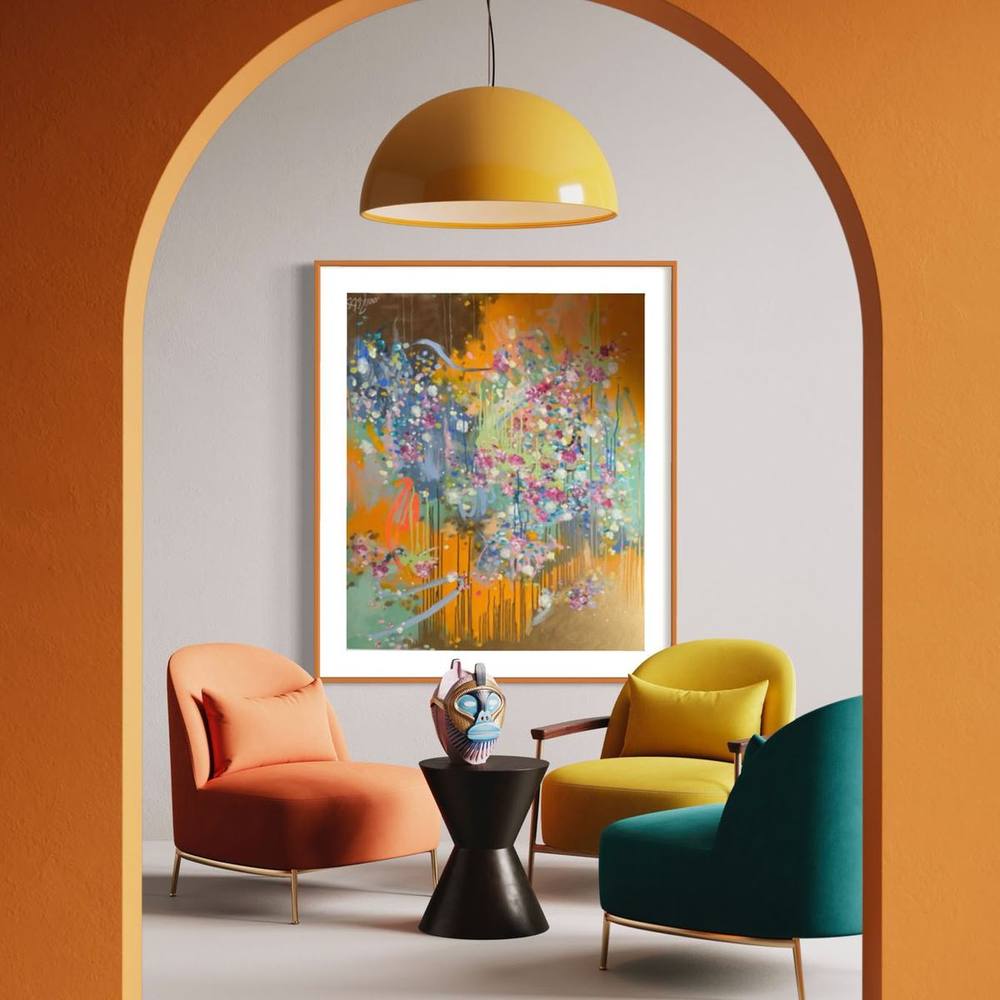
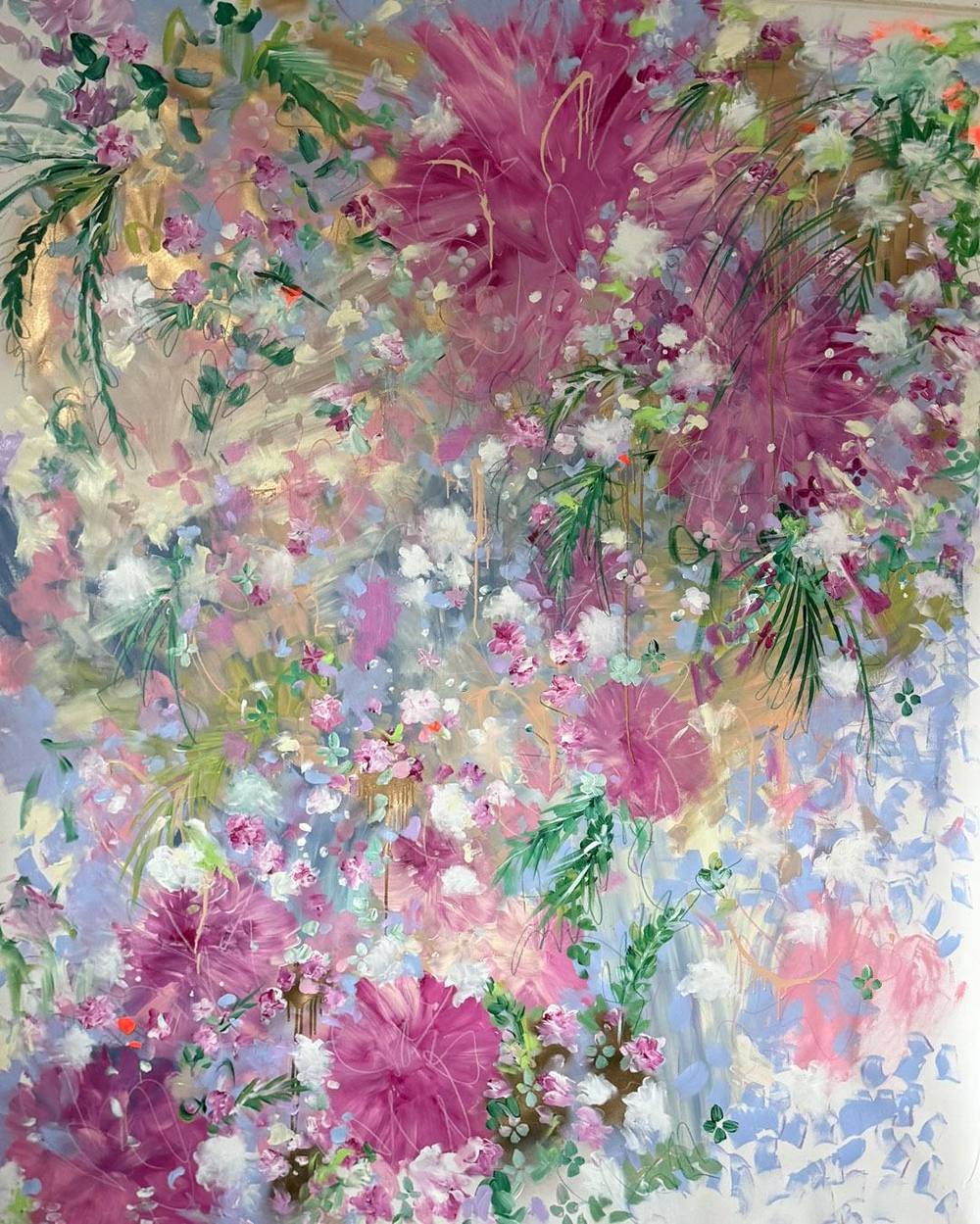
Contemporary floral painting no longer has to prove the flower. It may suggest. A chord of colour, a sequence of dabs, a rhythm of gestures is often enough to recall a garden, a meadow, a bouquet. That is where its strength in a home lies: abstract floral paintings bring nature indoors without forcing a story, and they change with the light of the day.
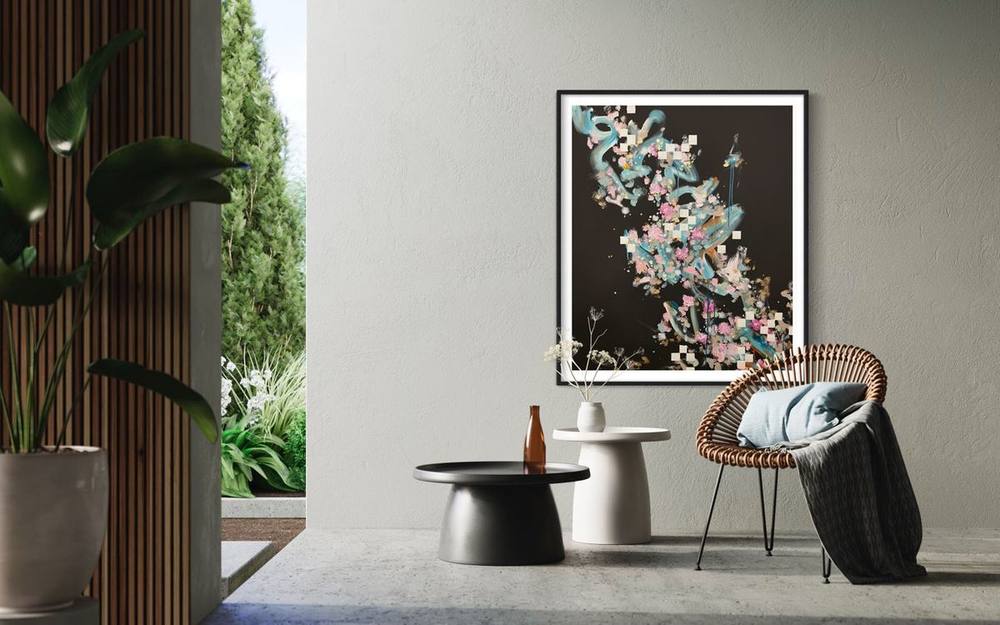
For Juliane Golbs, the blossom is one of the central motifs. In the Everlasting Blossoms series, floral abstractions resist transience; part of the proceeds goes to the NCL Foundation. A work such as 02 | 2023 sets blossoms on a black ground in acrylic, lacquer and gold lacquer, recalling the dark backgrounds of the old flower pieces from which the colours shine.
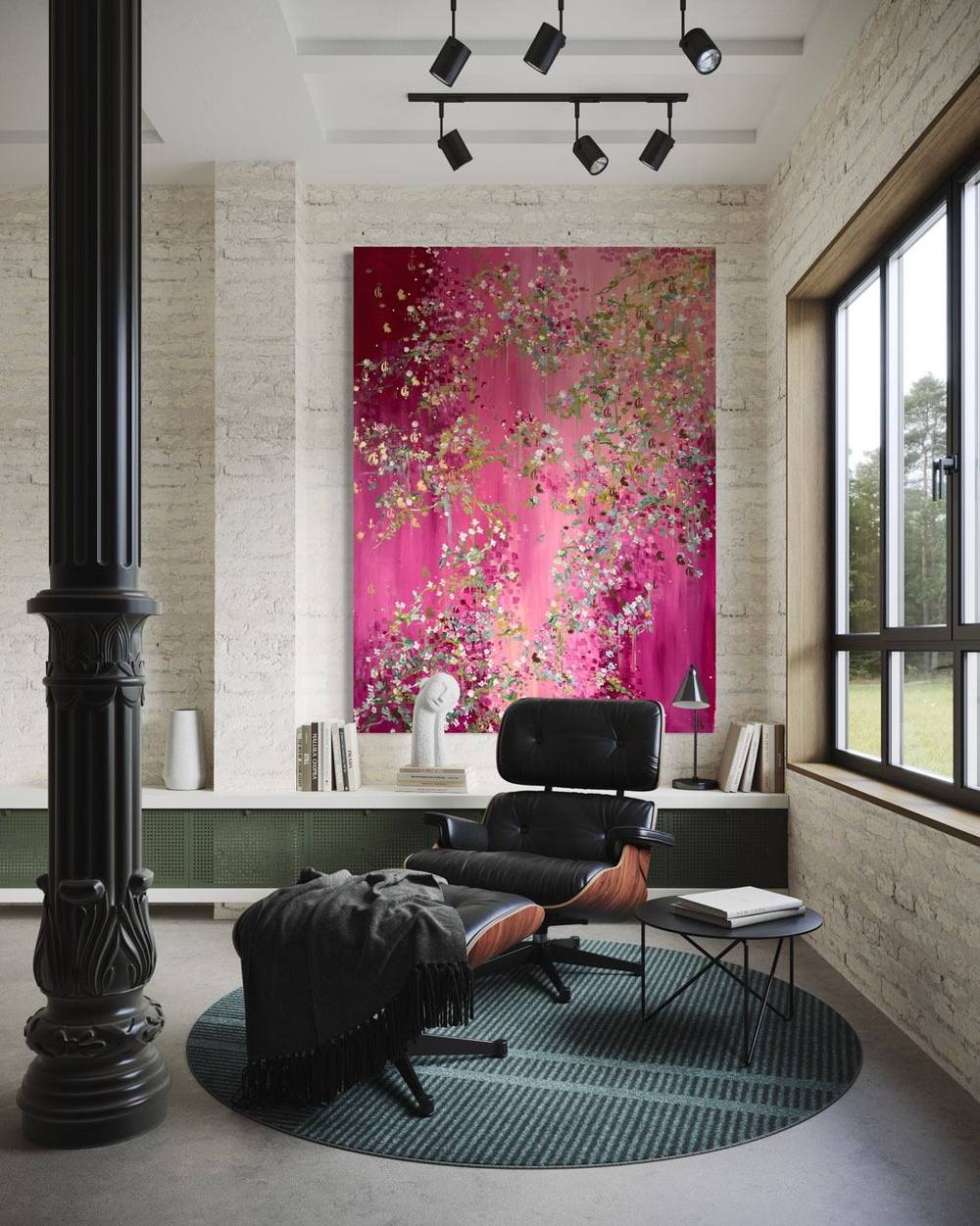
In the series Fifth Season #heaven can wait, blossoms form and dissolve again, often with drawn traces of pencils and chalk. Large formats such as 09 | 2026 or 03 | 2026, each 150 × 200 centimetres, stand in the tradition of the great floral field, while smaller works such as 07 | 2026, at 30 × 40 centimetres, speak the same language at an intimate scale.
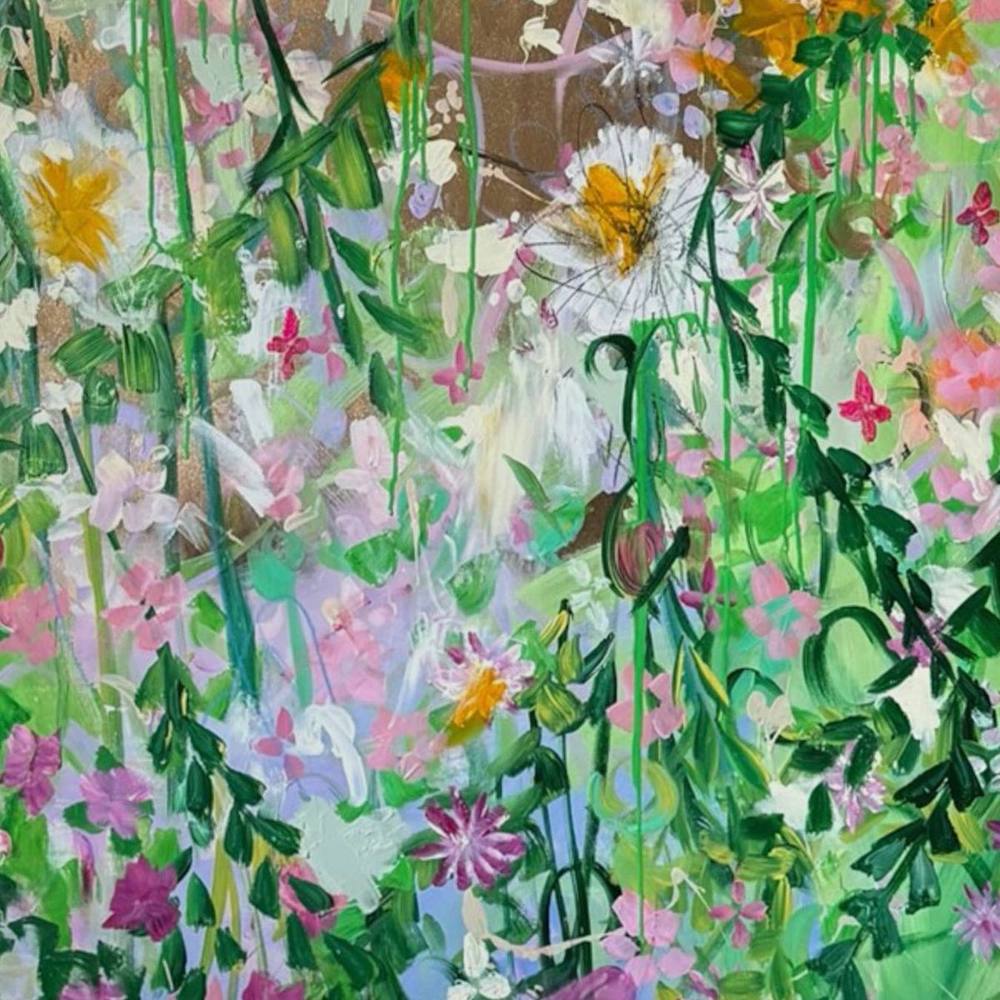
The old device of the Dutch painters, uniting flowers of different seasons in one picture, has taken on a new meaning. The Fifth Season series is about lived time and the light of the present. A “fifth season” in which everything blooms at once has been possible in painting for as long as flower pictures have existed.
How to read an abstract floral painting
An abstract floral painting opens up differently from a still life. You do not look for the tulip or the rose; you follow the movement of colour. Three questions help:
- Where does the light come from? In many floral abstractions, brightness comes not from a light source but from layers. Light dabs on a dark ground look like blossoms at dusk; white between fields of colour, like light falling through leaves.
- How does the picture move? Tendrils, runs of colour and gestures set a direction. Some pictures grow from the bottom up like a flower bed; others fall from above like a curtain of blossom.
- What happens up close? From a distance you see a garden; up close you see material: impasto passages, fine lines, the sheen of lacquer or gold. This double reading distinguishes an original from any reproduction.
It is precisely this link between distance and closeness that connects contemporary floral painting with its forerunners. The Dutch painters already wanted viewers to step close to discover dewdrops and insects. Today one discovers brushstrokes, chalk lines and reflections of light.
The colour of the blossom
Floral painting is always also painting in colour. Each palette tells something different:
- Rosé, peach and white recall cherry and apple blossom, the beginning of a year.
- Pink and magenta are the colours of high summer, intense and self-assured.
- Green and turquoise bring the plant to the fore, less the bloom than the growing.
- Gold turns the garden into an image of permanence, like the gold ground of early panel painting.
In the work of Juliane Golbs these colour worlds often meet on one surface, sometimes with gold lacquer or gold leaf that catches the light of the room.
Flowers that never wilt
The old flower pieces were coveted partly because they bloomed in winter. A painted bouquet outlasted every season. Floral painting still carries that promise. In a living space, a flower picture changes with the light: in the morning cool tones look fresher, in the evening warm colours and gold surfaces begin to glow. In summer the picture mirrors the garden outside; in winter it replaces it.
Juliane Golbs gave this idea a name in the Everlasting Blossoms series: floral abstractions that never wilt. That part of the proceeds goes to the NCL Foundation, which supports research into the childhood dementia NCL, links the old theme of transience with a very present responsibility. The article on the NCL Foundation tells more.
Choosing a floral painting
If you are looking for an abstract floral painting for your own space, ask about the colour world first, then the format.
- Light, pastel works feel like an open garden and suit calm living rooms and bedrooms.
- Strong colours such as pink, magenta or orange create a focal point and tolerate plain surroundings.
- Dark grounds with gold feel festive and elegant, especially under warm evening light.
In the catalogue of works you can filter works by colour, and the art advisor asks about mood and format directly. For a small fee, credited against the purchase price, any available work can be hung on trial.
Four hundred years after the first impossible bouquets, artists still paint flowers that do not exist. Perhaps that is exactly why they endure.
Frequently asked questions
When did the flower still life become a genre of its own?
Around 1600 the flower piece became an independent genre in the Netherlands. Painters such as Jan Brueghel the Elder and Ambrosius Bosschaert combined blossoms from different seasons into bouquets that could never have existed in nature.
What distinguishes abstract floral painting from the classical still life?
The classical still life depicts flowers with botanical precision, often with symbolic meaning. Abstract floral painting dissolves the form: colour, gesture and rhythm speak of the flower without depicting it.
Which works by Juliane Golbs are floral?
A large part of her work uses blossom motifs, especially the series Everlasting Blossoms, Fifth Season and Fifth Season #heaven can wait. Part of the proceeds from Everlasting Blossoms goes to the NCL Foundation.
How should a large floral painting be hung?
In calm surroundings and with good, warm light. Floral abstractions are strongest when they do not compete with many other pictures.
Sources
4 sources
- Mauritshuis: In Full Bloom – Overview of the 17th-century Dutch flower still life 1600–1730
- Kunsthistorisches Museum Vienna: Netherlandish Floral Still Life Painting (Room 17)
- Musée de l’Orangerie: History of the Water Lilies cycle
- Whitney Museum of American Art: Georgia O’Keeffe, Flower Abstraction (1924)