Buying Abstract Art in Hamburg: A Calm Guide for Collectors
Buying an original is an intimate decision. This guide helps you make it calmly: with an eye on material, provenance, space and your own feeling.
Buying abstract art is a lovely task and a difficult one. There are no motifs to hold on to, no story the picture tells. What remains is the question: what does this painting do to me? This guide is meant to help you answer that question calmly – without overlooking the things that make a good original: material, provenance, space, light, care, and the sober questions of tax and rights that rarely come up before a purchase.
1. Start with the feeling, not the sofa
The most common mistake when buying art is to choose a picture to match the interior. Furniture changes, and so do wall colours. A good work of art stays with you for years, often through several moves. So it pays to start with a different question: which picture do I want to see every morning?
Abstract painting acts directly on mood. Some pictures calm, others energise, some do both depending on the time of day. Take time to look at a work several times, ideally in different light. A picture that pleases at first glance and bores at the third is a decorative object. A picture that shows something new at the third glance is a candidate.
The reverse test helps too: what bothers me? A colour that is too loud, an area that feels empty? Whoever can name their objections understands more quickly what they are really looking for.
2. Original, unique piece or edition?
Terms are not always used precisely in the art trade. The key differences:
- Original / unique piece: a single work made by hand. It exists exactly once.
- Limited edition: a fixed, numbered run, often a print or an object.
- Art print / poster: an unlimited reproduction without collector’s value.
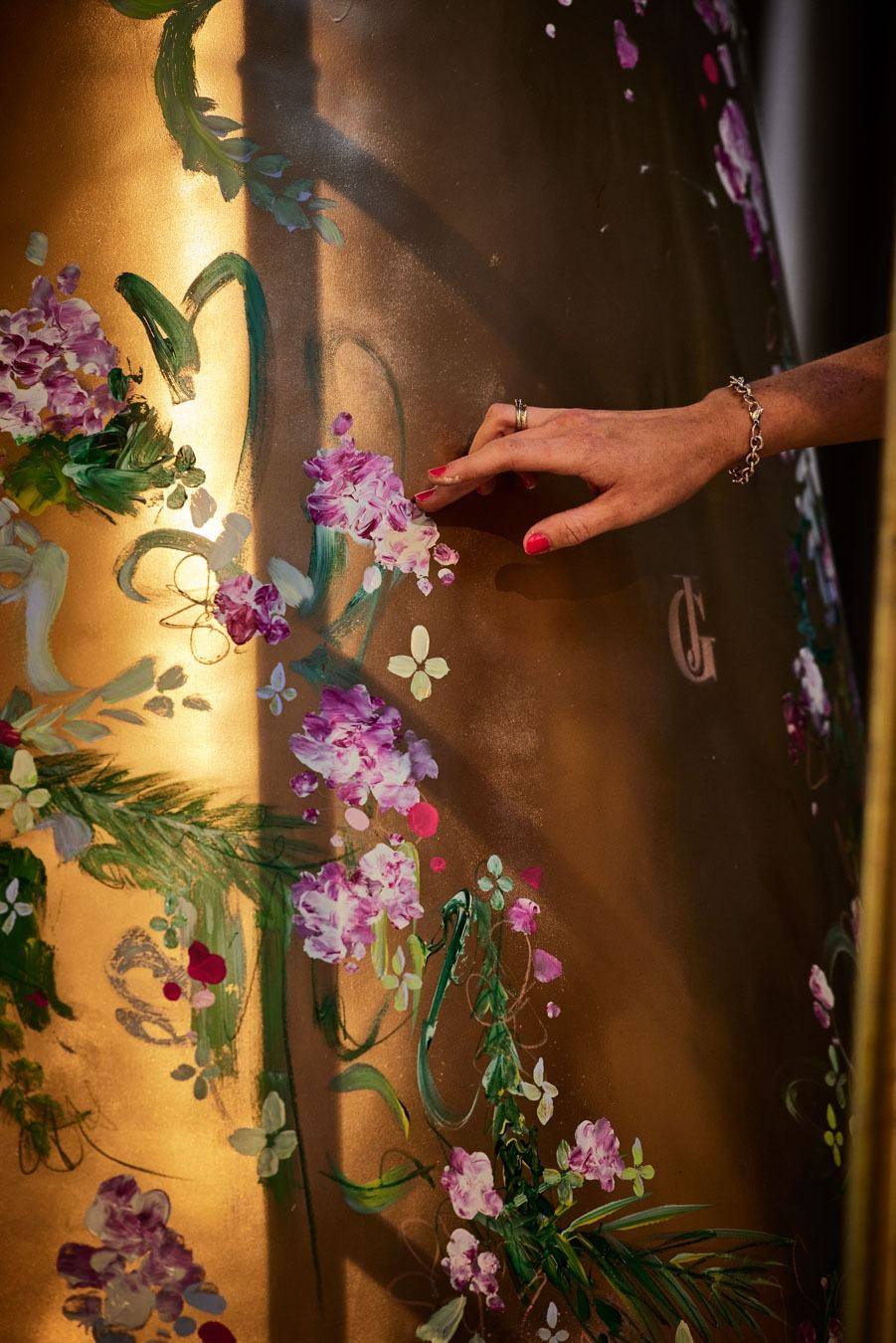
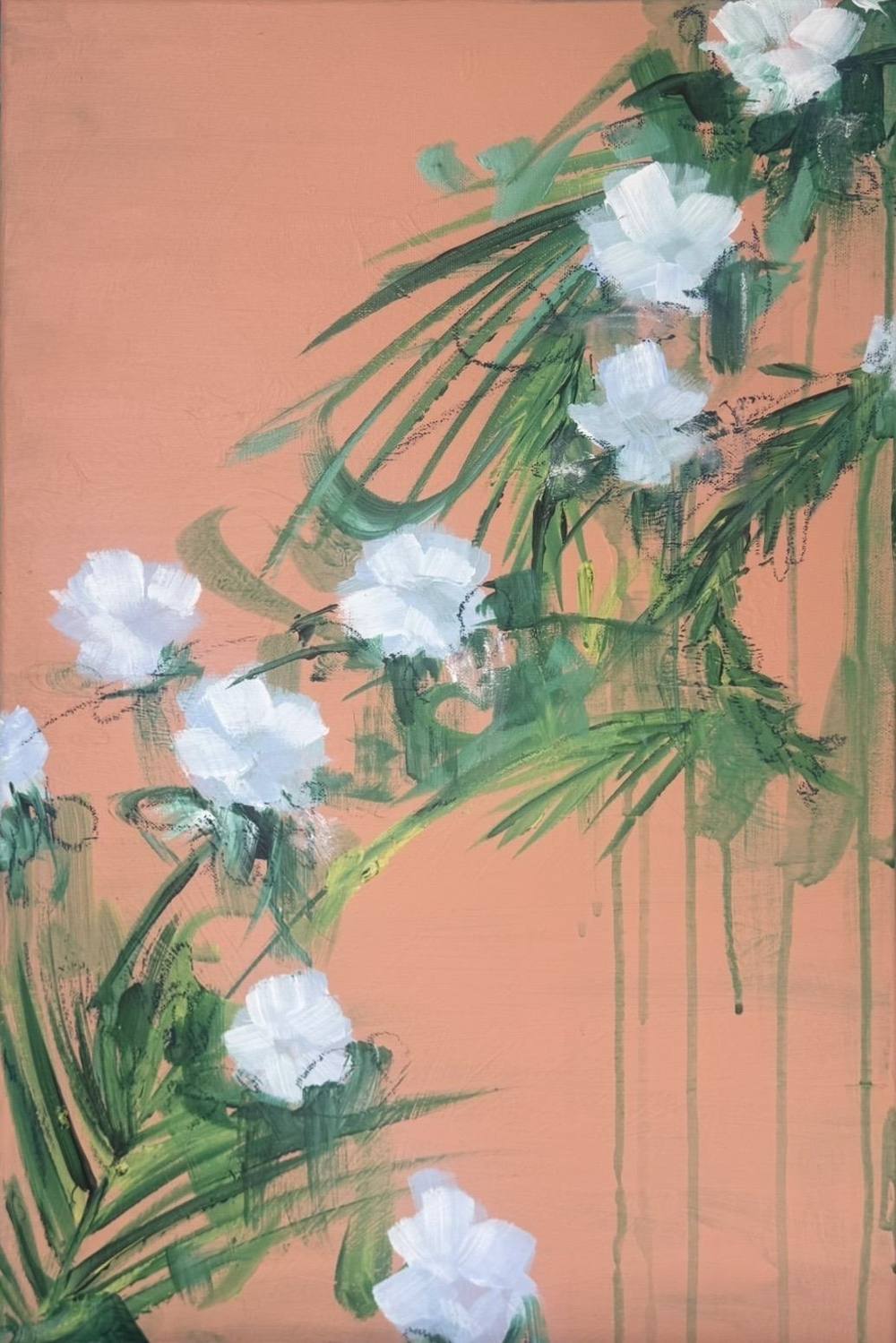
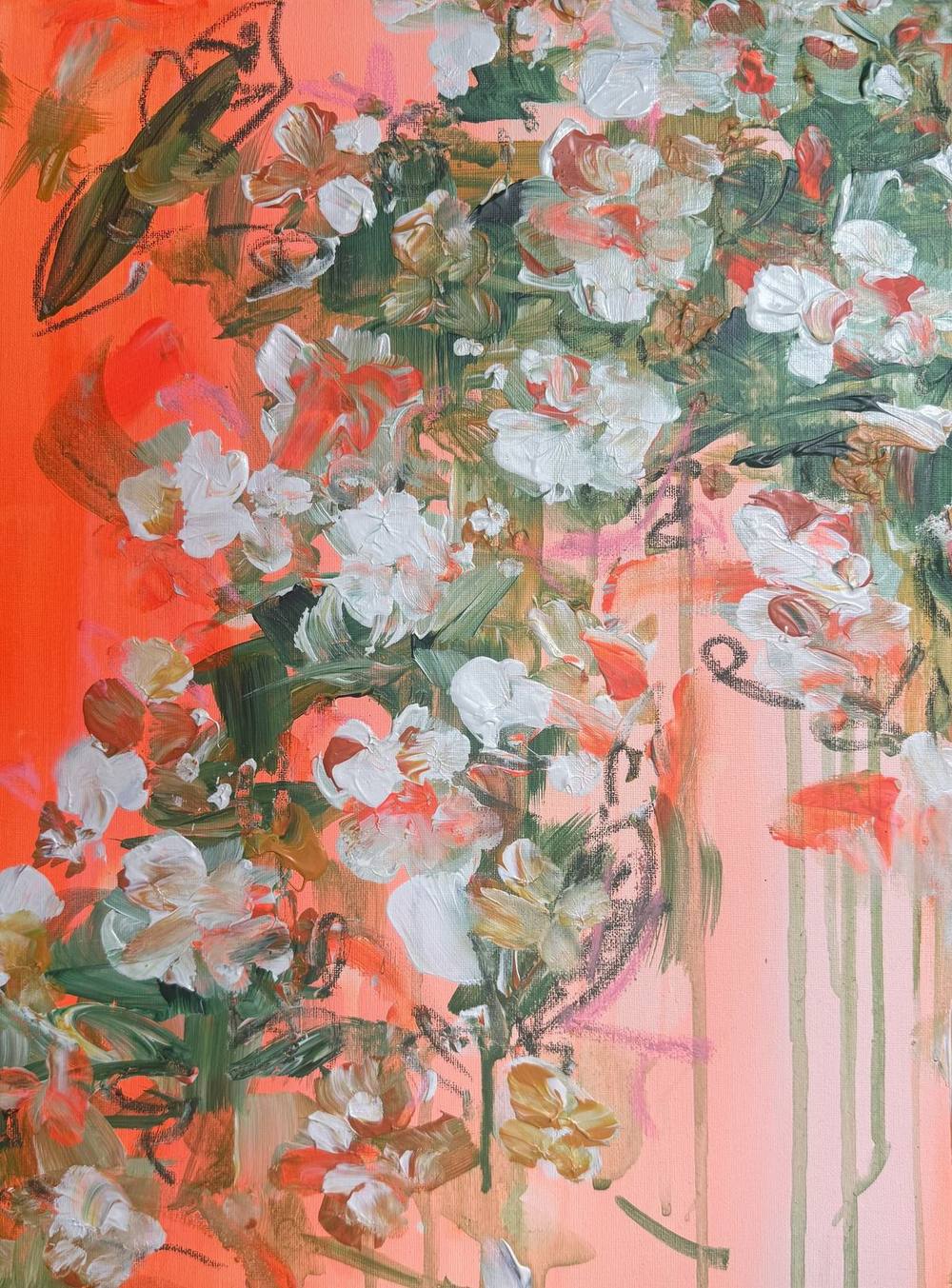
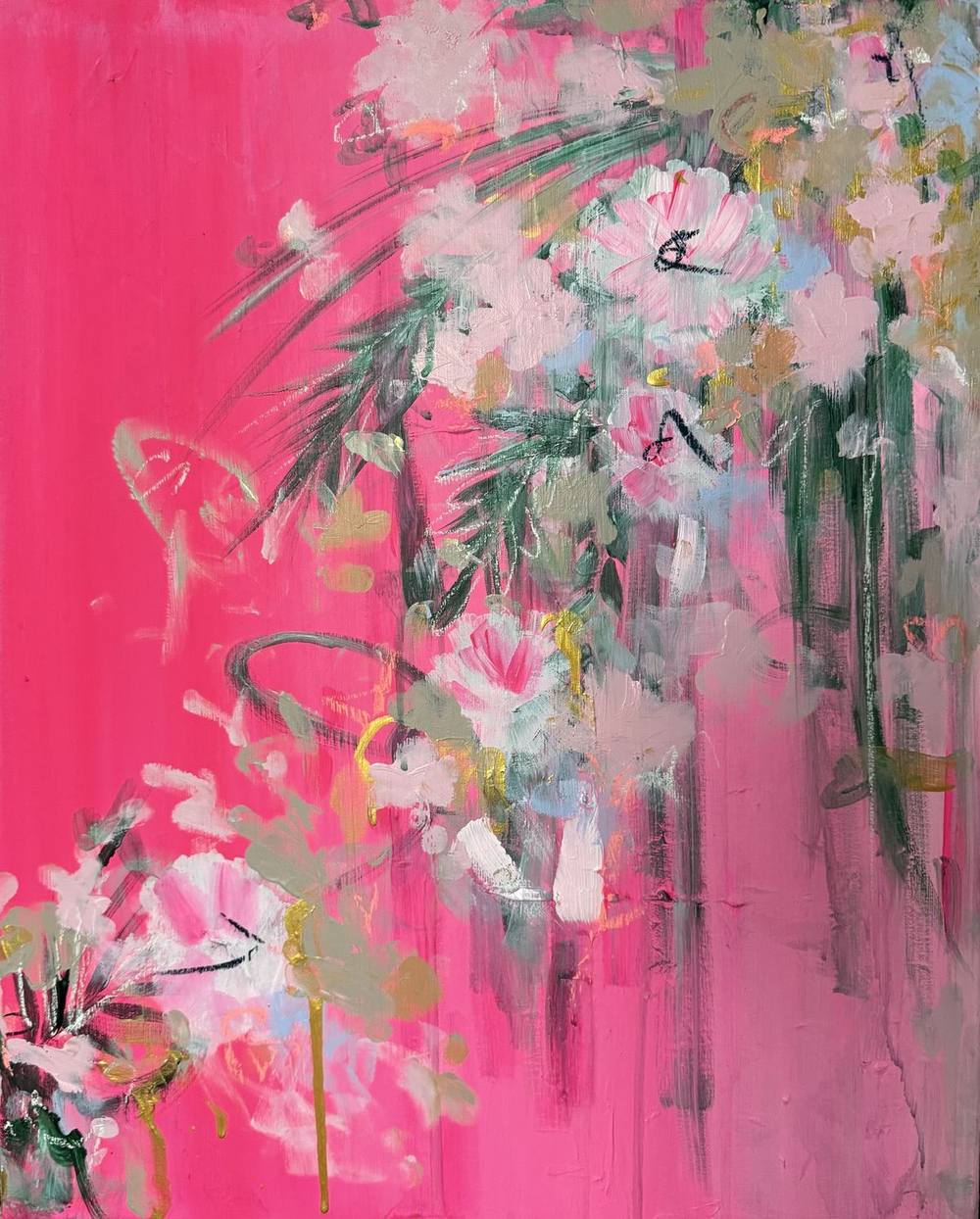
The paintings of Juliane Golbs are unique pieces. She applies many layers of paint with her fingers, and the gold is laid by hand. No work can be repeated. The limited editions that arise from collaborations are clearly identified as such: the first art edition with Windspiel in 2021 was limited to 999 bottles and sold out within a few days. An edition is a different object from a painting, and an honest sale states that difference plainly.
3. Reading a work title
Many works by Juliane Golbs carry no narrative title but a combination of number and year, such as “503 | 2024”. This is deliberately restrained: the title does not steer perception in one direction; the picture may speak for itself. For collectors the system has a practical advantage. Work and year are unambiguously linked, and the details on the certificate can always be checked against the catalogue.
In addition, each work belongs to a series or stands alone. The series – from Fifth Season to the Signature Collection – provide context: a work from a series is in conversation with other works from the same phase. An overview is on the Works page.
4. Understanding the material
The material determines effect and durability. Ask what a picture was painted with. High-quality, highly pigmented acrylics are lightfast and intense. With gold it is worth looking closely: genuine 24-carat gold leaf does not tarnish, whereas imitation metal leaf can. More in the article Gold leaf in painting.
The support matters as well. A canvas on a sturdy stretcher warps less; a painting panel is rigid and suits works with many layers of lacquer. The work details for Juliane Golbs’s paintings include combinations such as acrylic, acrylic lacquer and gold lacquer on canvas, chalk, coloured pencil or ink. Each of these says something about how the picture will age and how it wants to be cared for.
5. Provenance and documentation
A genuine original comes with documentation. This includes:
- the signature of the artist,
- a certificate of authenticity with title, dimensions, technique and year,
- a traceable provenance, meaning the path of the work from the studio to you.
Buying directly from the studio gives the shortest and clearest provenance there can be. Keep the certificate and invoice together, ideally with a good photograph of the work. You will need these three things later for insurance, for a possible resale and for heirs who should know what is hanging on the wall.
6. Thinking about the space
A picture does not work in a vacuum. Pay attention to:
- Light: side daylight and warm, directed artificial light are ideal. With works that contain gold, light changes the effect especially strongly over the course of the day.
- Distance: large formats need distance; small ones invite you to step closer. As a rough guide, you should be able to view a picture from a distance of about one and a half to two times its diagonal.
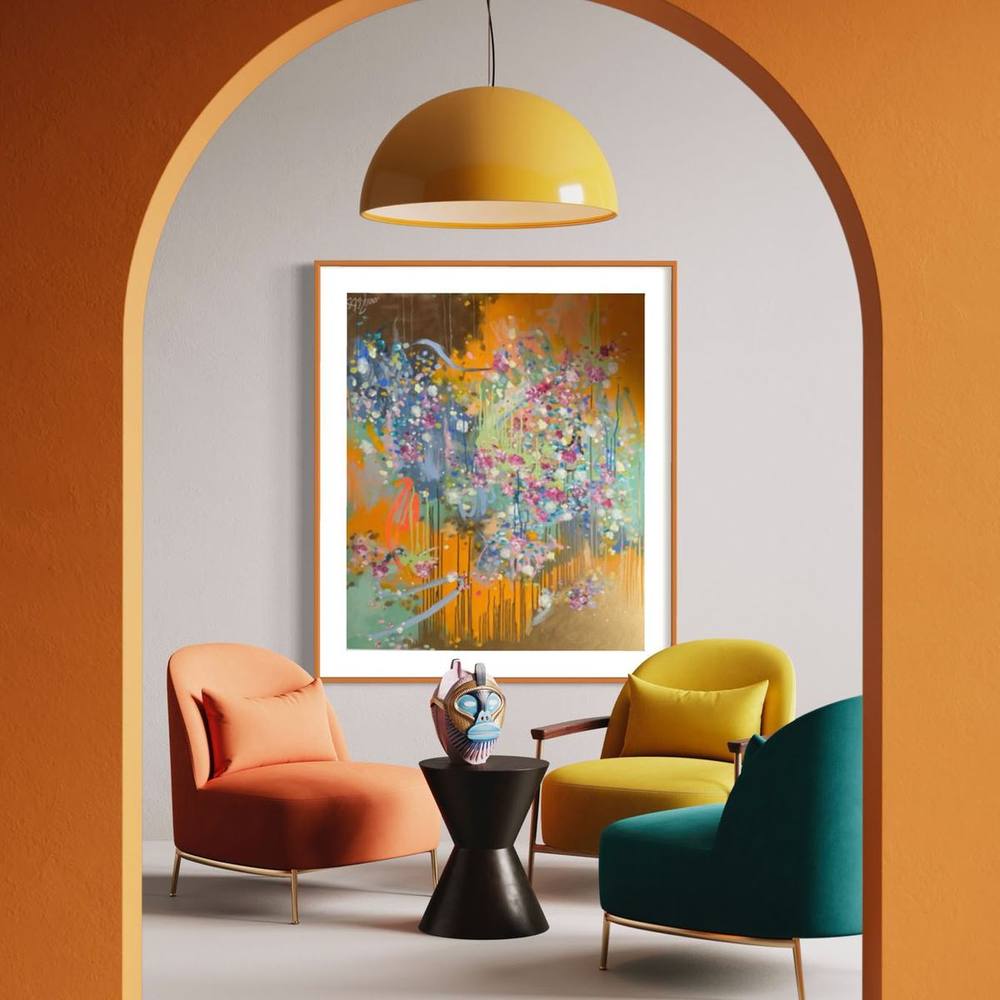
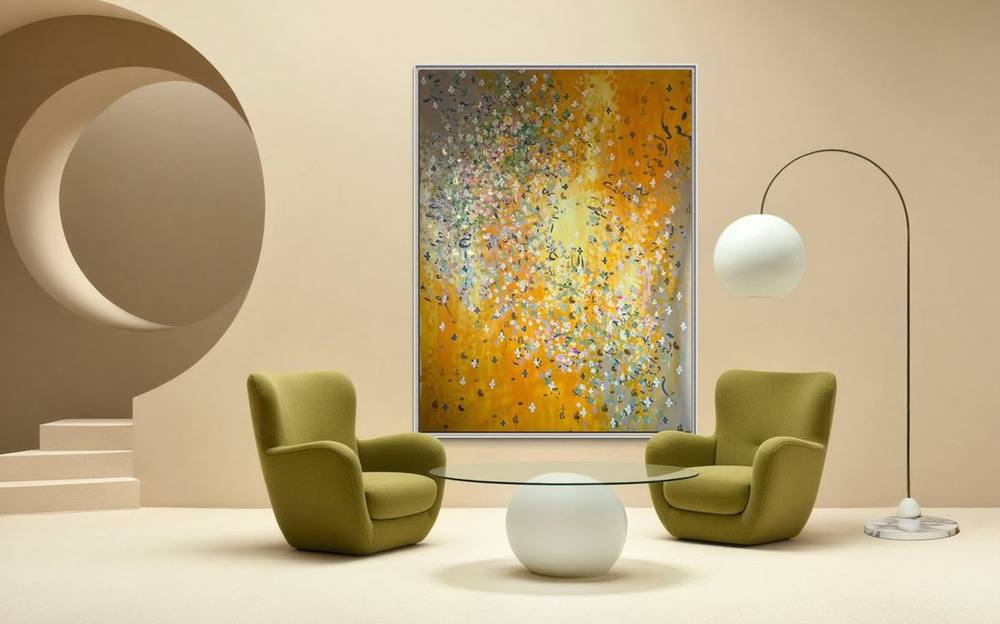
- Height: as a rule of thumb, the centre of the picture sits at eye level. Often quoted is 145 centimetres above the floor; museums tend to hang slightly higher, at around 150 centimetres. Above a sofa or sideboard: better 20 to 25 centimetres of air between furniture and the lower edge of the frame than a picture floating beneath the ceiling.
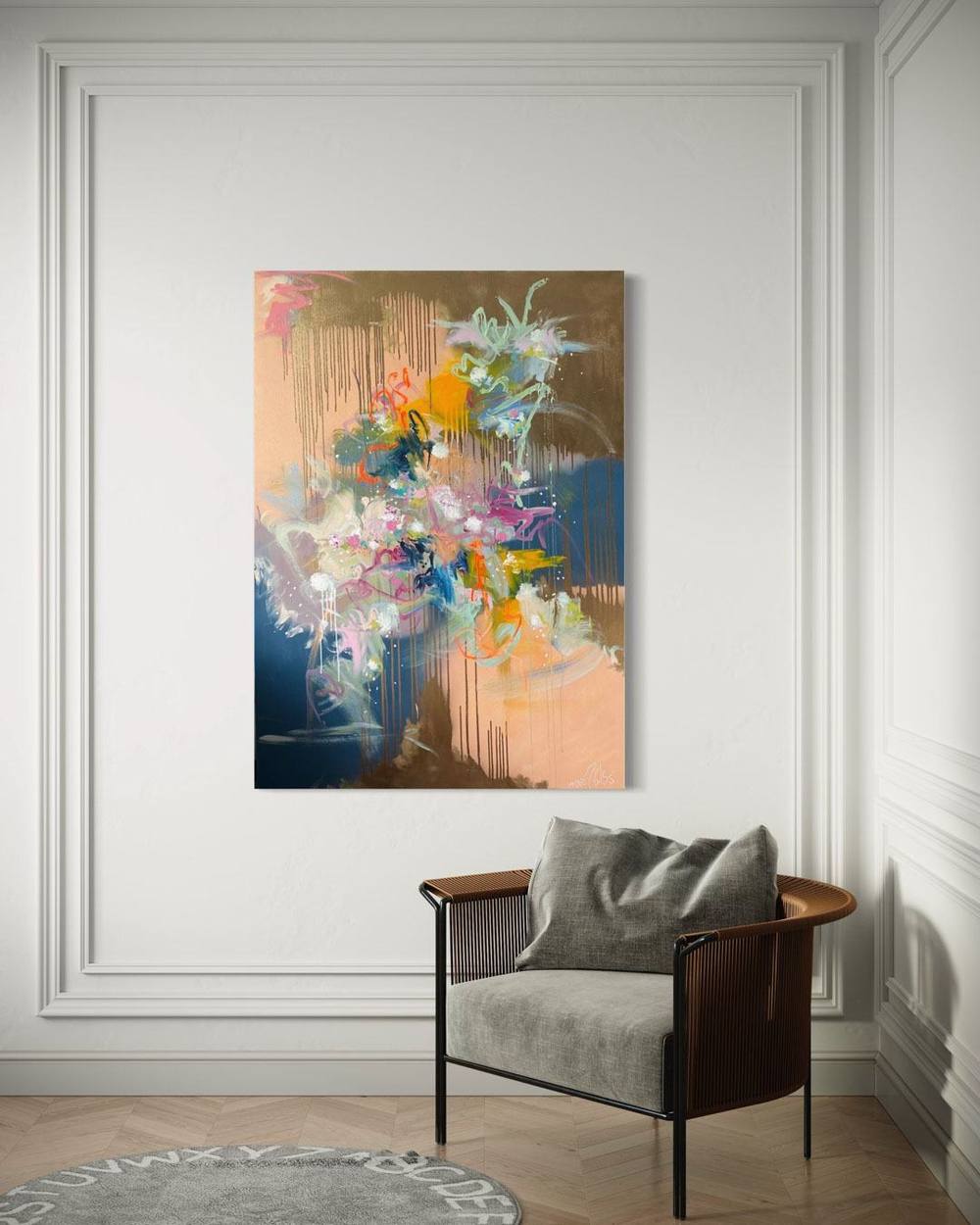
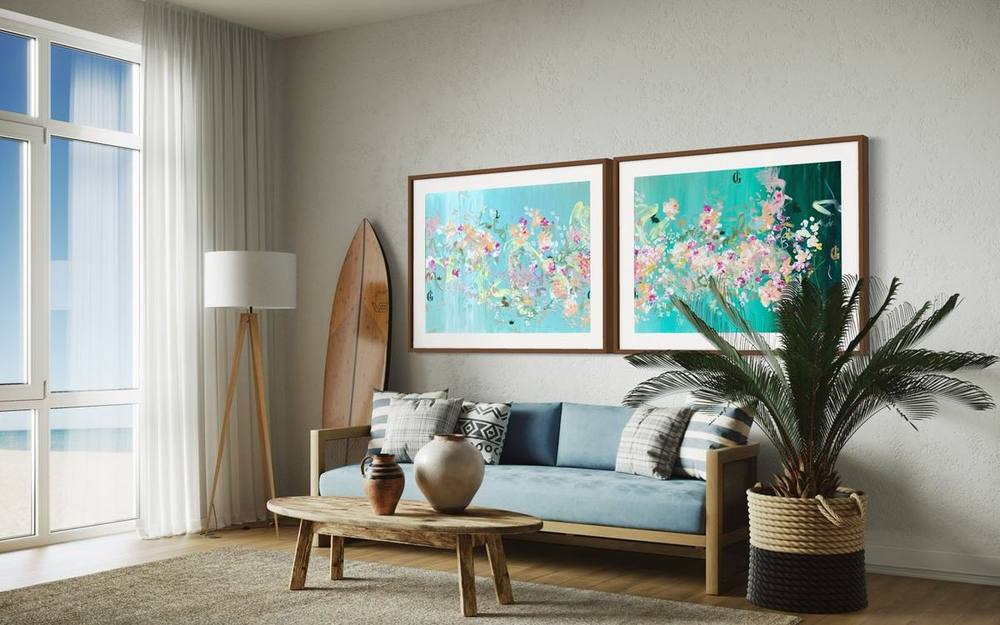
A large portrait format above a single armchair works differently from the same picture above a wide sofa. One creates a place to linger, the other an axis in the room. Pairs or diptychs need an even, rather narrow gap between the pictures so that they read as a unit.
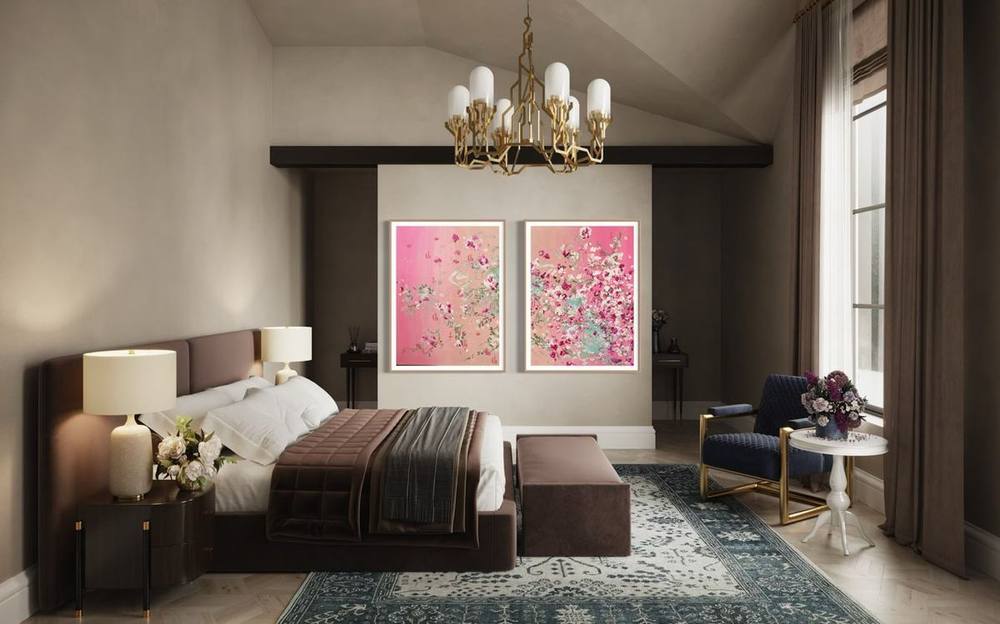
To take away uncertainty, every work page shows a to-scale size comparison with a door, a sideboard and an armchair, and the art advisor suggests available works that suit your colours, wall and budget.
If you want to be completely sure, you can also hang a picture on approval: for a small surcharge the original comes to you for a while. If you decide to buy, the amount is credited in full. With works in gold leaf in particular, this is the most reliable test, because no screen shows how gold answers your own evening light.
7. Light and care: keeping a picture as it is
Light makes pictures visible and ages them at the same time. Museums work with guideline values: for oil and comparable paintings, around 200 lux is considered appropriate, for very sensitive works on paper considerably less. Ultraviolet light contributes to damage without adding anything to visibility and should be kept as low as possible. In practical terms at home:
- No direct midday sun on the painted surface. A spot with indirect daylight is better than the wall opposite a south-facing window.
- LED spotlights with a warm colour temperature produce hardly any UV radiation or heat. Halogen spots at close range, by contrast, dry things out.
- No radiators or fireplaces directly beneath the picture. Rapid changes in temperature and humidity stress canvas and paint layers.
A painting is cared for with restraint. Remove dust with a soft, dry brush or a clean feather duster. Water, glass cleaner and microfibre cloths used with pressure have no place on a painted surface. With gold leaf this applies twice over: the metal is wafer-thin. Genuine 24-carat gold does not oxidise but can be damaged by rubbing. If a work is damaged, the first call should be to the artist or a conservator, not to the cleaning cupboard.
8. Tax, rights, resale: the sober questions
Money and law are rarely discussed when buying art, yet a few basics bring clarity. The following applies to purchases in Germany. (This section is general orientation, not legal or tax advice.)
VAT
In Germany the reduced VAT rate of 7 per cent applies to supplies of works of art such as paintings. Until the end of 2024 this was only the case when the artist sold directly; galleries and dealers often had to apply 19 per cent or the margin scheme. With the Annual Tax Act 2024 this restriction was lifted on 1 January 2025. Since then the reduced rate has applied generally under section 12(2) no. 1 of the German VAT Act in conjunction with no. 53 of Annex 2, regardless of who sells. For buyers outside Germany, different VAT and import rules may apply depending on the destination; the studio will clarify the details with you for each delivery.
Ownership is not copyright
Whoever buys an original acquires ownership of that one object. The copyright remains with the artist. Section 44 of the German Copyright Act states it clearly: by selling the original, the author does not, in case of doubt, grant any right of use. The owner may, however, exhibit the work publicly – in a hotel lobby or a law firm, for instance – unless this was expressly excluded at the time of sale. Anyone who wishes to use the picture for prints, advertising or products should speak to the artist first.
Resale right
If an original is later resold through a gallery, a dealer or an auction house, the artist is entitled to a small share of the proceeds. This resale right (droit de suite) is governed in Germany by section 26 of the Copyright Act. It applies from a sale price of 400 euros and amounts, on a sliding scale, to 4 per cent of the portion up to 50,000 euros, less above that, with a maximum of 12,500 euros per sale. The seller pays. A purely private sale without the involvement of the art trade is not covered.
Insurance
An original is not automatically adequately covered by household contents insurance. Many policies have compensation limits for valuables. Check whether the value of the work falls within them, or ask about fine-art insurance. Invoice, certificate and photograph are the basis for this.
9. Buying in Hamburg: gallery, fair or studio?
Hamburg offers many paths to art. Galleries provide choice and advice, art fairs comparison. The most personal path leads to the studio. There you see works in progress, speak directly with the artist and understand what lies behind a picture.
Juliane Golbs’s studio in Hamburg opens by appointment, and a visit carries no obligation. If you would rather see the work in a public setting, you will find pieces at the Hotel Louis C. Jacob on the Elbchaussee, where the artist has been artist in residence since 2025. More about the artist in the article Female artist in Hamburg.
10. Delivery and hanging
An original travels differently from a parcel. Over short distances, personal handover is the gentlest solution; further afield it needs sturdy packaging and, for large formats, a specialist art transport. Ask before buying how the picture will reach you and who bears the risk on the way. Delivery abroad is arranged individually with the studio, depending on the size of the work and the destination.
Take care with the hanging. A large work belongs on two hooks or a gallery rail, not on a single nail. The wall must bear the weight; plasterboard needs suitable fixings. Take your time with the position: hold the picture against the wall with a second person, step back, and only then mark it.
11. When the right picture does not yet exist
Sometimes you are looking for a work for a particular room that does not yet exist. Then a commission is the right way. How one comes about is described in the article Commissioning art: how a unique piece is created for your space.
A final thought
Buying art means entering into a relationship with a work. A good picture grows over time; years later you still discover details you never noticed. So choose the picture you want to live with, and give the decision the time it deserves.
The studio gives prices on request. For an enquiry about a particular work, about hanging on approval or for a private appointment at the studio, the contact form is open.
Works from this article
Frequently asked questions
How do I recognise an original?
By the signature, by a certificate of authenticity stating title, dimensions, medium and year, and by the visible handwork. Every painting by Juliane Golbs is a hand-signed unique piece.
Where can I buy abstract art in Hamburg?
In galleries, at art fairs and directly from artists. Works by Juliane Golbs are acquired directly through her studio in Hamburg, including private visits by appointment.
Can I see a painting in my own space before buying?
Yes. An original can be hung on approval for a small surcharge, which is credited in full if you buy. Each work page also shows a to-scale size comparison, and the art advisor helps you find works that suit your room.
How much VAT applies when buying a painting in Germany?
Since 1 January 2025 the reduced VAT rate of 7 per cent applies in Germany to supplies of works of art such as paintings, including sales through galleries. Previously it applied only when the artist sold directly.
Can I ship a work abroad?
Yes, international delivery is arranged individually with the studio, depending on the size of the work and the destination. Please mention your country when you enquire.
May I photograph and publish a painting I have bought?
With the original you acquire ownership of the work, not the copyright. You may usually display it; reproductions such as prints or advertising require the artist’s consent.
Sources
6 sources
- Bayerisches Landesamt für Steuern: Ermäßigter Steuersatz für Kunstgegenstände ab 1. Januar 2025 (14.01.2025)
- Bundesregierung: Ermäßigter Steuersatz für Kunsthandel kommt ab 2025
- Urheberrechtsgesetz § 26: Folgerecht
- Urheberrechtsgesetz § 44: Veräußerung des Originals
- Conservation Wiki (American Institute for Conservation): Light
- Genkin: How to Hang and Arrange Artwork at Home (145-cm-Regel)