Commissioning Art: How a Unique Piece Is Created for Your Space
Sometimes the right picture does not yet exist. Then it is made. On the path from the first conversation to a work painted for one place only.
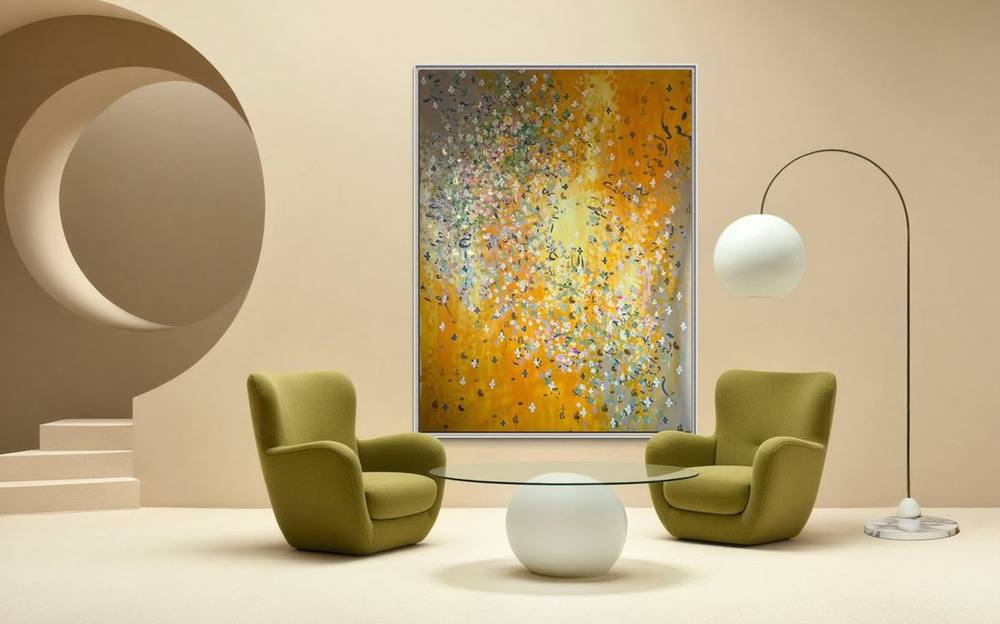
Sometimes you are looking for a picture for one particular place. The wall above the fireplace, the entrance hall that shapes the first impression of a house, a conference room meant to be more than functional. And sometimes you realise: the right work does not yet exist. That is when a commission begins.
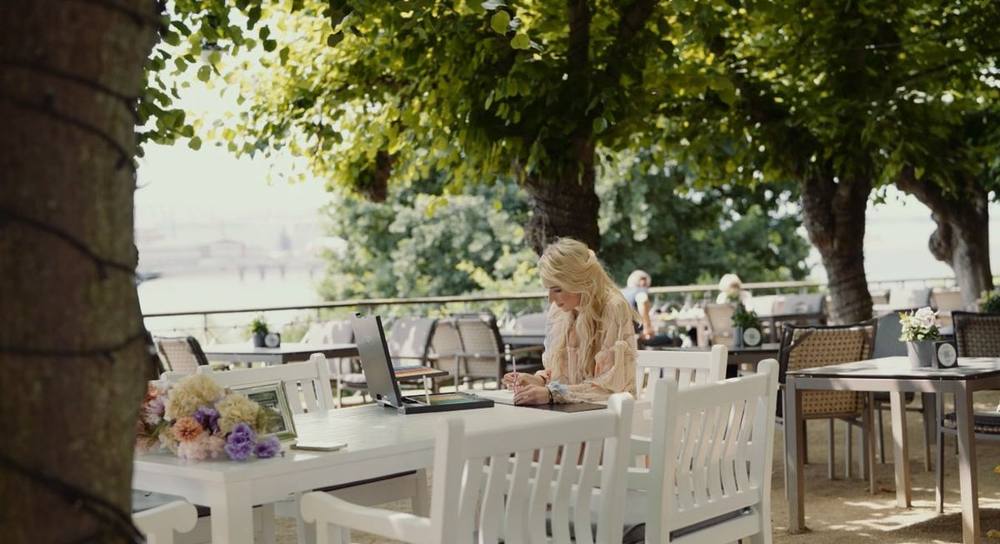
With the Hamburg artist Juliane Golbs, a commission begins with a conversation and ends with a unique piece painted for exactly that place. In between lie weeks in which a work forms layer by layer – and a series of decisions that are better made together than alone.
What a commission is – and what it is not
A commissioned work remains a free work of art in the artist’s own hand. What changes is the starting point: instead of a blank canvas, the work begins with a room, a person, a story.
It is not about copying an existing picture or painting from a photograph. Juliane Golbs develops a new work that responds to format, light and atmosphere and is at the same time entirely her own.
This freedom is not a reservation but the real value. Whoever commissions a work chooses an artistic stance, not a colour template. The wishes flow in – in format, colour harmony, the amount of gold and the mood. How they translate onto the canvas is decided by the hand that paints. That is what distinguishes a commission from made-to-measure decoration: in the end there is a picture that would hold its own even without the room it was painted for.
An old practice
Art made to commission is no exception of our time; for long stretches of art history it was the norm. Altarpieces, portraits, ceiling paintings and interiors were created for specific places and people; the work painted without a patron for an open market is, historically, the younger form. Today’s commissions take up this tradition without adopting its hierarchy. The patron no longer dictates what is painted. They open a space, and the artist responds to it.
The path to a unique piece
The first conversation
It begins with a conversation, in the studio in Hamburg, on site or by video call. It is about the room, but also about feelings: what should the work evoke? Calm, energy, warmth? Are there colours that matter, or ones to avoid? Is there a story that should resonate?
It helps to bring a few things to the conversation:
- the dimensions of the wall and the distance from which the picture will mostly be seen,
- photos of the room, ideally once in daylight and once in the evening with the usual lighting,
- materials and colours that shape the room: wood, stone, textiles, wall colour,
- and, if there are any, works by Juliane Golbs that particularly appealed to you. The catalogue and the art advisor are a good starting point.
Understanding space and light
A work with 24-carat gold leaf responds strongly to light. That is why it matters where the picture will hang: where does the daylight come from? How is the room lit in the evening? Which materials surround the wall? From these answers come format, colour harmony and the use of gold. Why this matters so much is explained in the article Gold leaf in painting.
An example: in a room with cool north light, a generous area of gold can bring in warmth. In a room with a lot of direct sunlight, the same area may dazzle at midday and glow in the evening. Both can be intended. What matters is that it is a conscious decision.
Setting the direction
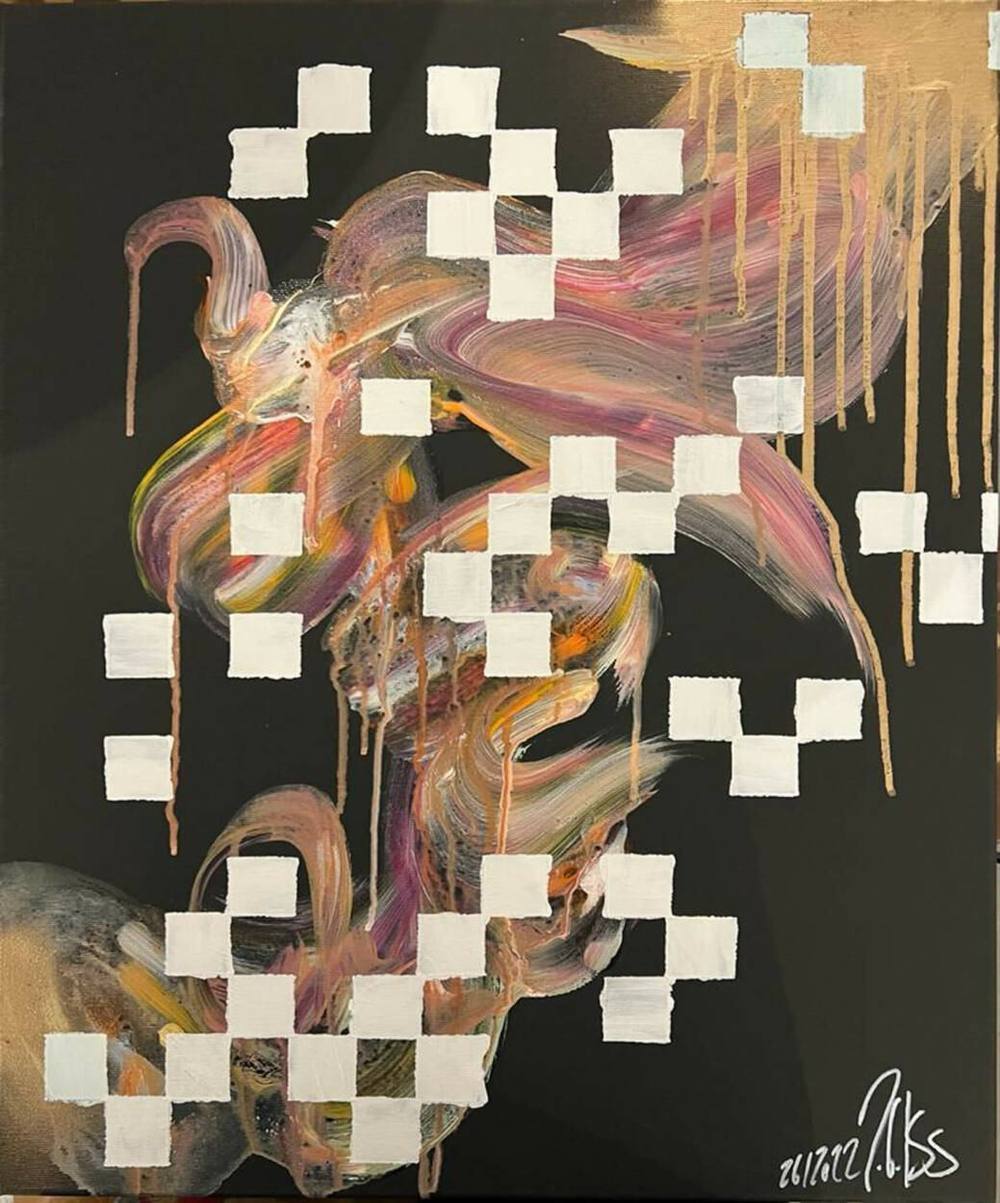
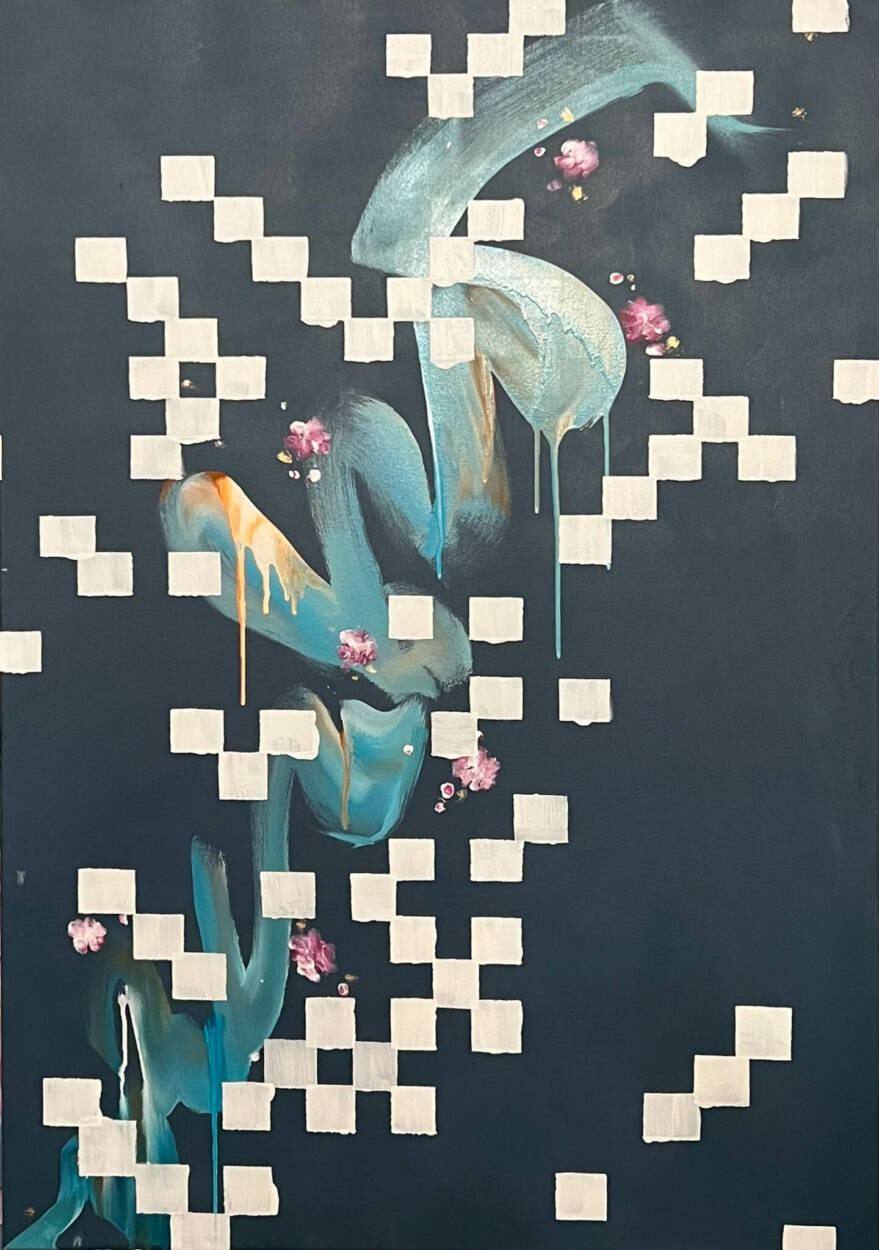
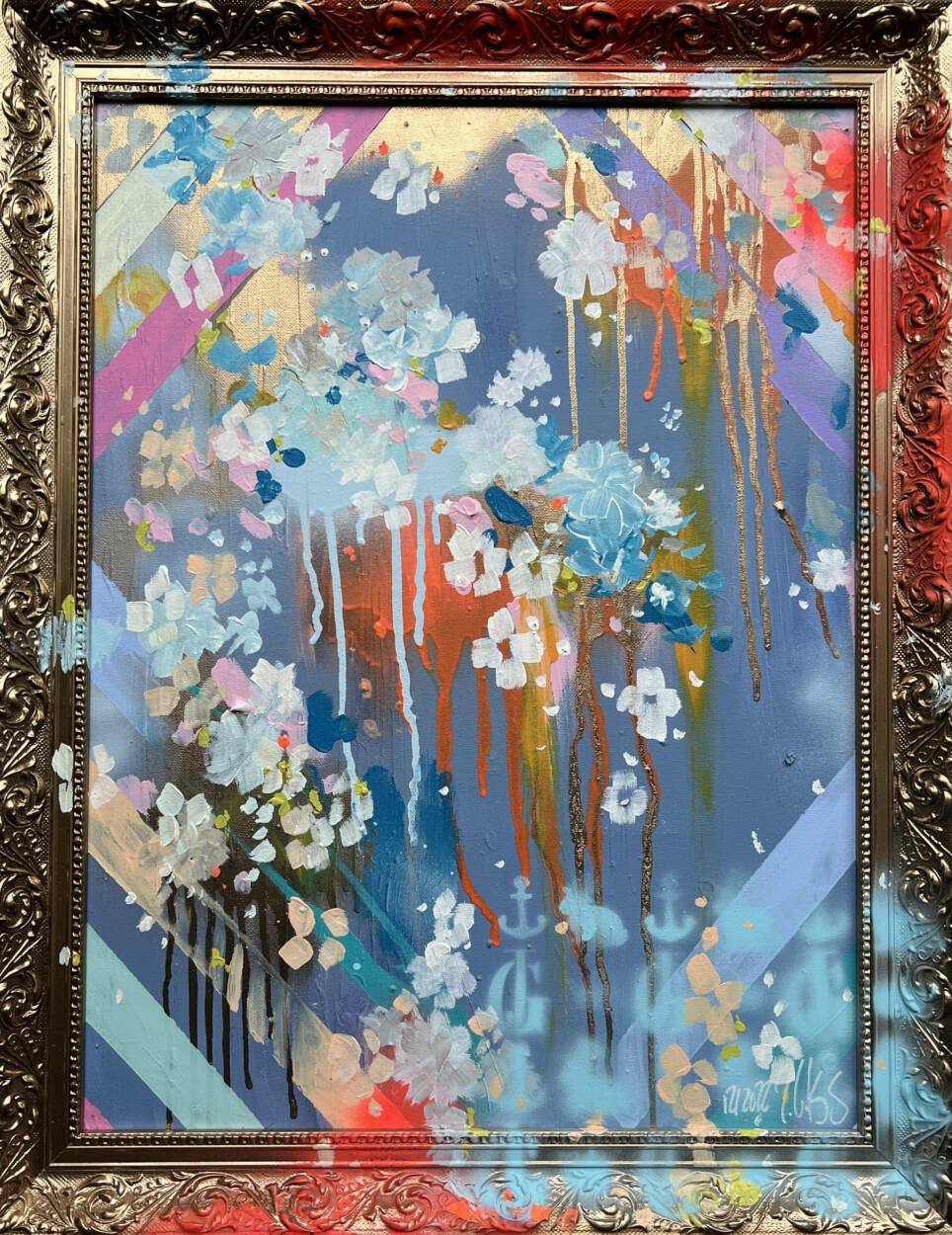
The direction is decided together. An existing series often serves as a starting point: the floral lightness of Everlasting Blossoms, the light of Golden Things or the personal symbolism of the Signature Collection, in which monogram and signs become a coat of arms of their own.
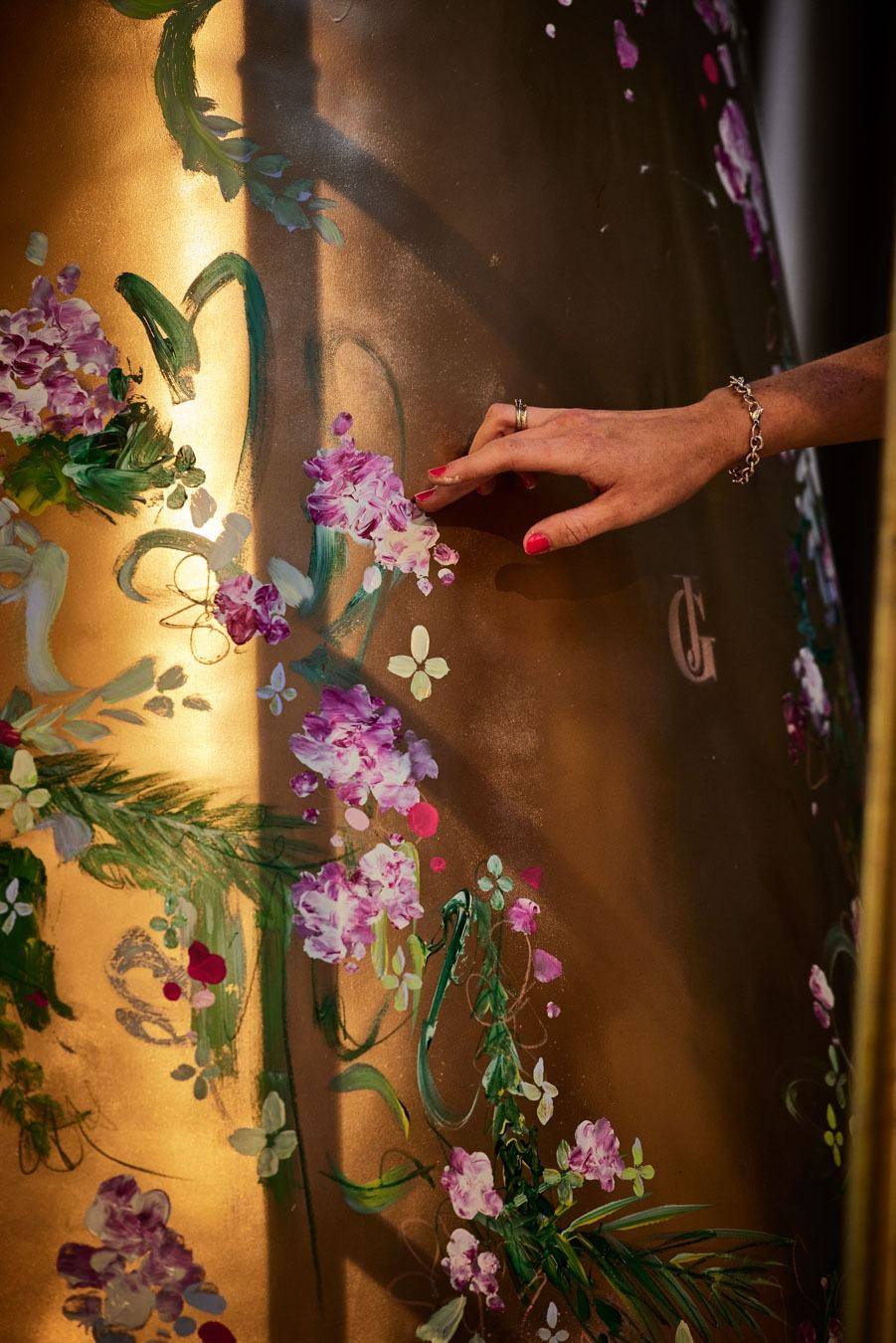
The Signature Collection is especially suited to commissions meant to carry a family, a house or a company. Initials, dates or signs are not painted on as lettering but woven into the painting, so that they reveal themselves only on closer inspection. A work of this kind is personal without being obvious.
The making
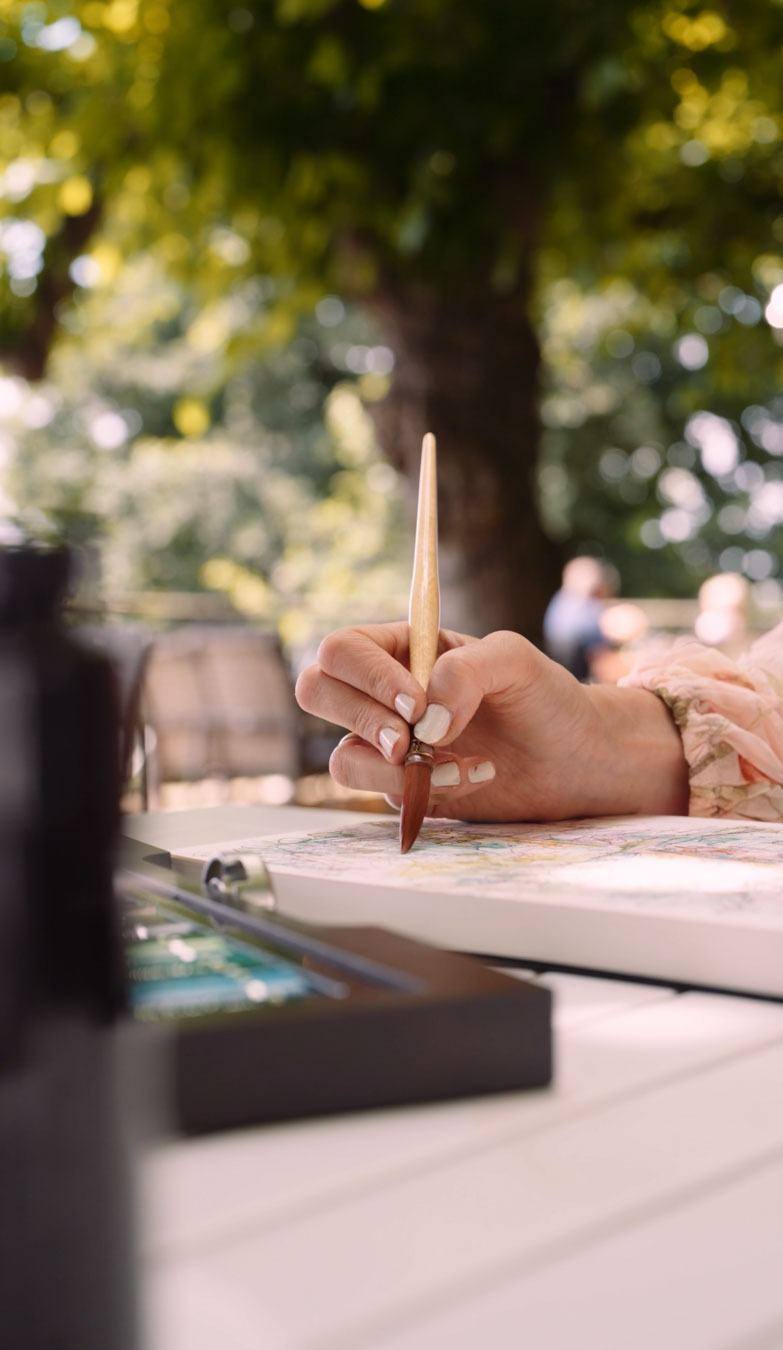
Then the work withdraws into the studio. It develops layer by layer, with pigment, pastel, lacquer and gold, much of it applied with the fingers. Because every layer needs time to dry, a commission takes weeks.
In this phase the work needs quiet. A painting made of many layers cannot be hurried without losing depth. The gold leaf is laid only when the ground is ready for it, and then protected. If you are planning a commission for a fixed date – a move, an opening or an anniversary – it is best to mention that date early.
The handover
At the end comes the handover of the signed original with a certificate of authenticity. If you wish, the artist will also accompany the hanging, so that the light falls on the work exactly as intended.
Who a commission is for
- Private collectors looking for a work for a special room that no one else owns.
- Families who want to mark an occasion, be it a birth, an anniversary or a new home.
- Companies that want to give their spaces a stance.
- Hotels and restaurants that want to show their guests something lasting. What this can look like is shown by the artist’s residency at the Louis C. Jacob.
- Brands looking for their own edition, as in the collaborations with WERNS, Windspiel or Maison Laurette. More on the Dialogues page.
When brands are looking for an edition
A commission does not have to end on a wall. With the gin distillery Windspiel, an art edition was created in 2021 whose design is based on works by Juliane Golbs. It was limited to 999 bottles and sold out within a few days. In 2024 the collaboration was renewed: a second, differently composed pistachio gin followed, lower in alcohol and intended for summer.
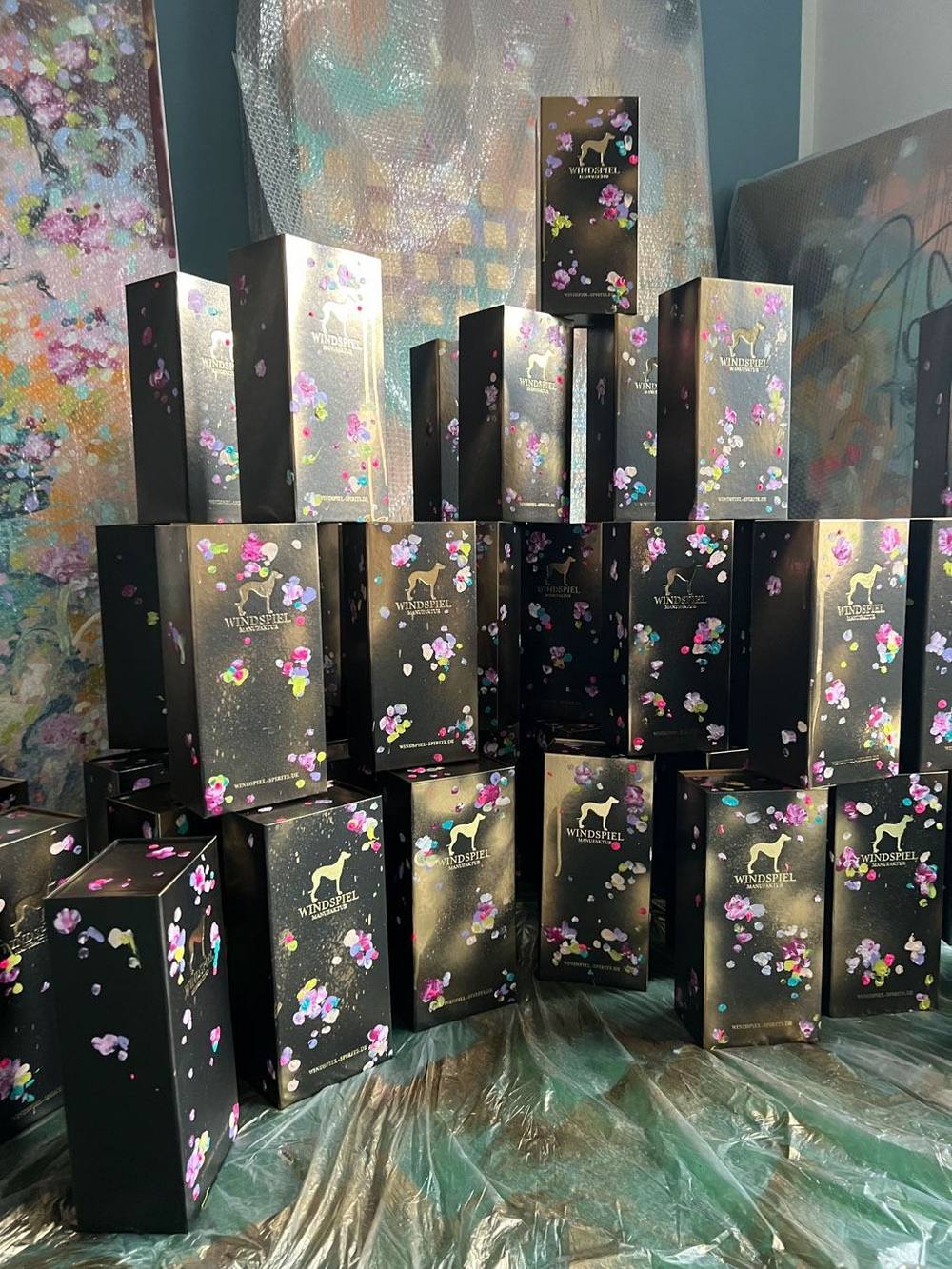
The logic is the same as for a painting for a room: it starts with the question of what a brand stands for and what feeling a product should carry. Only then does the design follow. Collaborations of this kind add one point that often plays no role in a private commission: how, where and for how long the motif may be used is agreed contractually in advance.
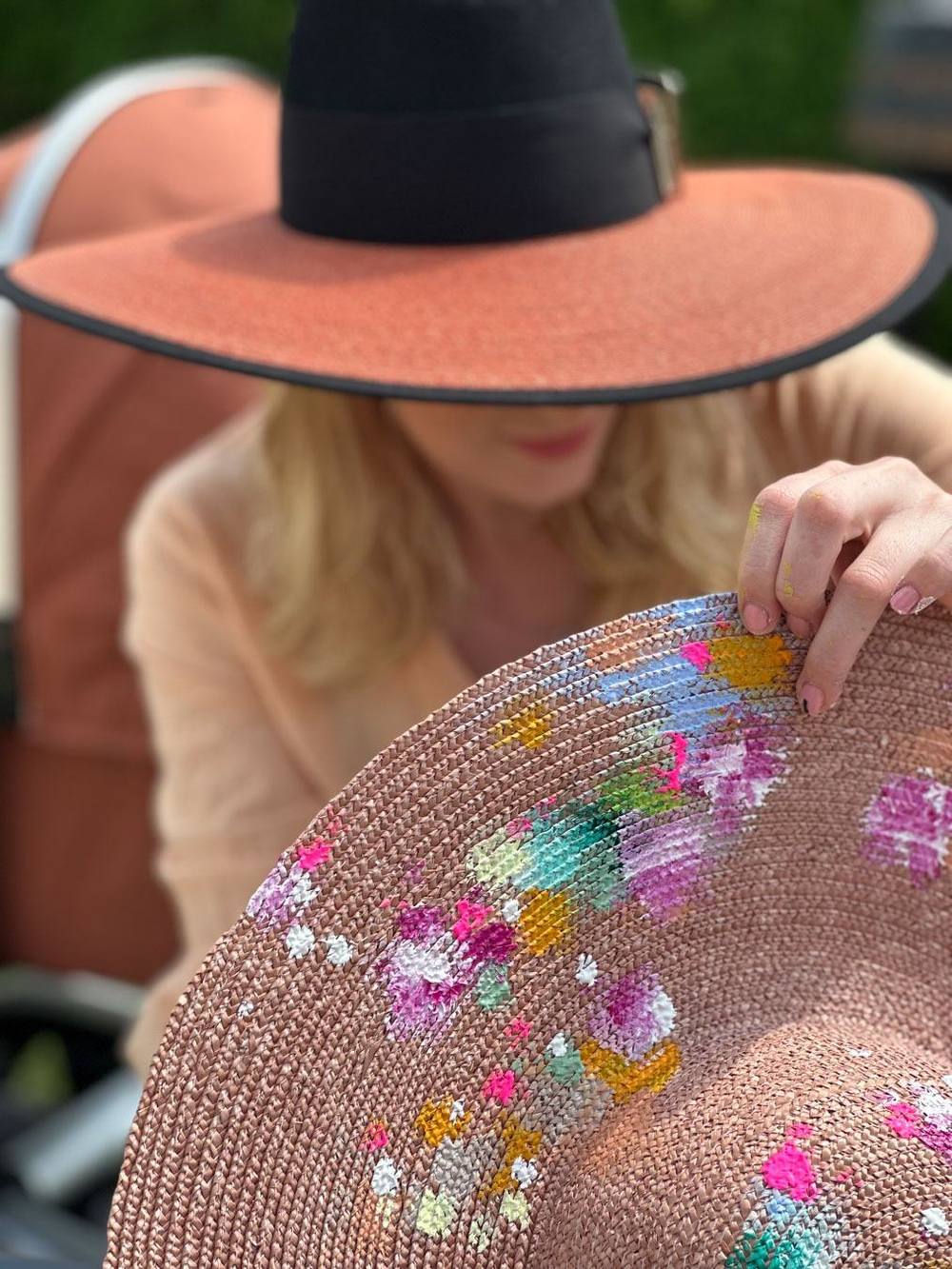
Sometimes the object itself is the canvas. In Deauville in 2023, Juliane Golbs painted a straw hat during a performance in which the making was as important as the result. That, too, is a form of commission: a work created for one moment and one place.
See first, then decide: hanging on approval
Not every decision is made in the studio. Sometimes you need to see a picture in your own light, over several days, morning and evening. That is why Juliane Golbs offers to hang works on approval. For a small surcharge an original comes to your home or office. If you then decide to buy, the amount is credited in full against the price.
This is particularly helpful before starting a commission: an existing work on the intended wall quickly shows which format, how much gold and which colour temperature suit the room. Sometimes it turns out that the picture you were looking for already exists. That, too, is a good result.
Agreements: what to settle beforehand
A commission is a matter of trust, and that is precisely why clarity pays off. In German law a commission is often classified as a contract for work: under section 631 of the German Civil Code, one party undertakes to produce the promised work and the other to pay the agreed remuneration. What is special about a work of art is that the “promised work” cannot be fixed down to the last detail – otherwise it would no longer be a free work. All the more important to record the key points in writing:
- format and support: dimensions, portrait or landscape, canvas or panel,
- the agreed direction: series, colour harmony, amount of gold, monogram or signs if any,
- timeframe and, if there is one, a fixed date,
- fee and payment terms, for example with a deposit at the start,
- handover, transport and hanging,
- rights of use, if the work is to be used beyond hanging it.
On the last point: whoever acquires an original receives ownership of the work, not the copyright. Under section 44 of the German Copyright Act, the author does not, in case of doubt, grant any right of use by selling the original. The owner may, however, exhibit the work unless this has been expressly excluded. For a company that wants to show its commissioned work in an annual report, on its website or in a campaign, this means: such use is agreed as part of the commission.
This section is general orientation, not legal advice. For larger projects, especially with brands, an individual contract is advisable.
What a commission costs
The price depends on format, technique and scope, in particular on how much gold leaf is used. It is set transparently after the first conversation. As with existing works, the studio gives prices on request, because every project is different.
The first step
If you are thinking about a work for a particular room, the best start is a short message: where should the picture hang, how large is the wall, what should it evoke? The contact form is ready for this. Everything else develops in conversation.
If you would first like to learn about acquiring existing works, the guide Buying abstract art offers orientation – from material and certificates to light, care and the sober questions of tax and rights.
Works from this article

Frequently asked questions
What is a commissioned work?
A work of art that an artist creates for a particular person, space or occasion. It remains a free work in her own hand, but is tailored to the place, format and wishes.
How long does a commission take?
That depends on format, technique and scope. Because layers of paint and gold leaf need time to dry, a work develops over weeks. The artist sets the timeframe in conversation.
Does Juliane Golbs also paint for companies and hotels?
Yes. Besides private commissions, works are created for houses, hotels and brands, for example as part of her residency at the Hotel Louis C. Jacob in Hamburg.
Can I hang a picture on approval before buying?
Yes. For a small surcharge an original can be hung on approval. If the picture is then purchased, the amount is credited in full.
What information helps with a first enquiry?
Where the work is to hang, the dimensions of the wall, a few photos of the room by day and in the evening, and a sentence about what the picture should evoke. Everything else is clarified in the first conversation.
Who owns the rights to a commissioned work?
The original becomes your property; the copyright remains with the artist. You may display the work; any further use, such as prints or brand communication, is agreed separately.
Can I commission a work from abroad?
Yes. The first conversation can take place by video call, and delivery abroad is arranged individually with the studio.