Gold leaf in painting: how 24 carats store light
Gold is the only material that seems not merely to reflect light but to multiply it within a room. On a centuries-old technique and its contemporary form.
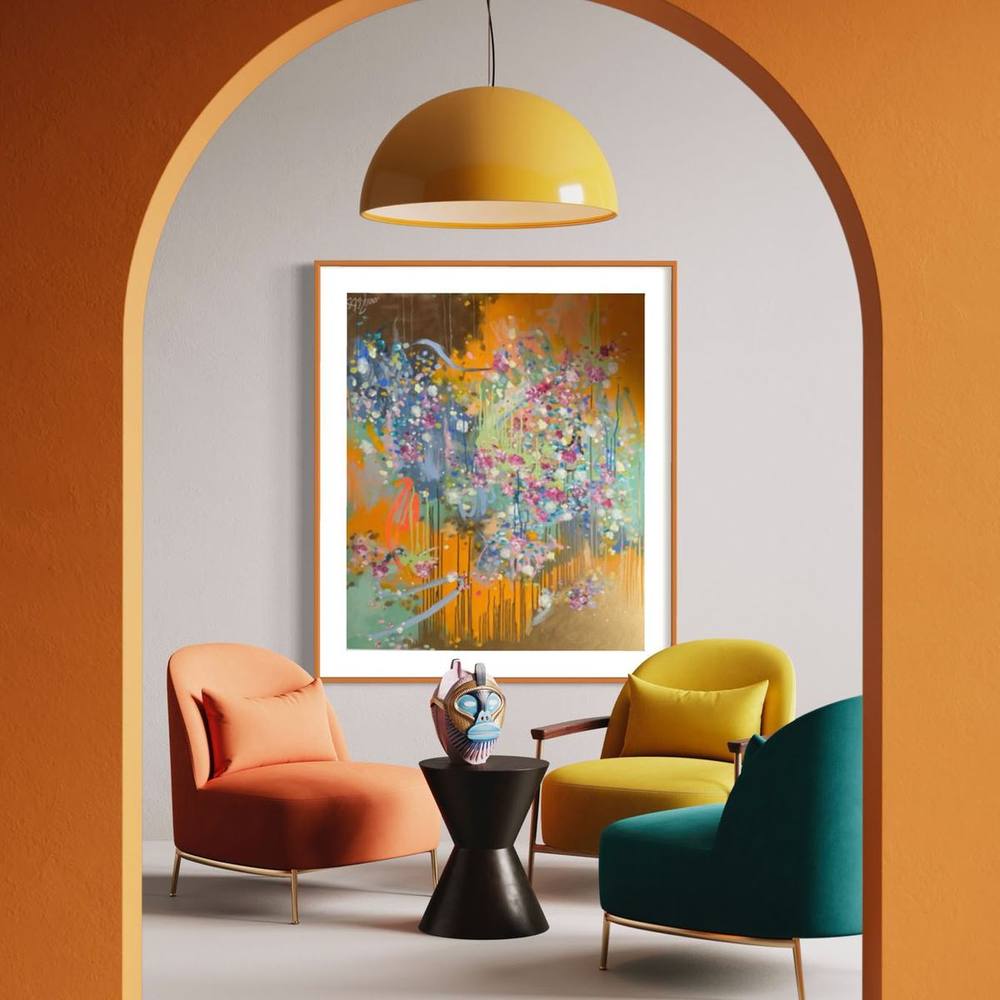
Few materials have as long a history in painting as gold. For centuries it stood for the sacred, the imperishable and the precious. In contemporary art it has found a new role. For the Hamburg artist Juliane Golbs, gold leaf becomes a carrier of light.
A short history of gold in art
The gold ground: light instead of space
The gold ground, a background of gold leaf, is documented in Western and Byzantine art from the 4th century onwards. It derives from Byzantine mosaics and was taken up in manuscript illumination and panel painting. Instead of a space, it presents a solemn, timeless surface against which the figures appear isolated. In Italy it was almost the rule for religious images until towards the end of the 15th century.
The gold ground is best understood if one imagines where these pictures hung: in churches lit by candles and narrow windows. The gold caught every flicker. The saints did not stand before a painted landscape but in a light that moved with the viewer.
Cennino Cennini: the craft behind the gleam
How elaborate this technique was we know from one of the most important sources in art history. Around 1400, the Florentine painter Cennino Cennini wrote his “Il libro dell’arte” (The Craftsman's Handbook), a manual for the workshop. In it he describes the gilding of a panel step by step.
On top of the gesso ground goes first a fine clay, Armenian bole, ground with egg white and applied in about four thin coats. Cennini recommends testing the quality of the bole by touching it to the lower lip; if it sticks, it is good. Gilding is done in mild, damp weather. The surface is moistened with diluted egg white, the leaf picked up with a piece of card, laid down and pressed on with cotton. Each new leaf slightly overlaps the previous one.
Only then does the gleam appear. Burnishing is done with a stone – preferably haematite, otherwise with gemstones or an animal's tooth – first in one direction, then across it. The gold is finished, as Cennini puts it in essence, when it looks almost dark from sheer brilliance. There is hardly a finer image for what gold does with light.
Disappearance and return
In the 16th century, landscape and perspective displaced the gold ground in Western painting. Only Byzantine and Russian icon painting held on to it. Around 1900 gold returned, most famously in the “golden period” of Gustav Klimt in Vienna.
Klimt's path there led through Ravenna. In December 1903 he visited the Basilica of San Vitale and studied the Byzantine gold mosaics of Emperor Justinian and Empress Theodora. He later spoke of their “incredible splendour” and called them a revelation. In the same year he began the Portrait of Adele Bloch-Bauer I, which he completed in 1907: oil, silver and gold leaf on canvas, 140 by 140 centimetres. The work hangs today in the Neue Galerie in New York.
In his painting “The Kiss” (1908/09) in the Belvedere in Vienna, real gold leaf lies on the figures, while the background is made of imitation leaf. Here gold stands for ornament, sensuality and modernity at once. Klimt brought a medieval material into the present without meaning it religiously.
Gold in Japan: Kōrin's Irises
While Europe abandoned the gold ground, Japan developed a gold culture all of its own. One of its most famous examples is “Irises” by Ogata Kōrin, a pair of six-panel folding screens usually dated to around 1705. Each screen measures about 151 by 339 centimetres. Kōrin painted the flowers in colour on gold foil over paper – no earth, no water, no bridge. Only the irises in blue and green, distributed rhythmically across the golden surface.
The motif comes from classical poetry, from an episode of “The Tales of Ise” in which irises by a river awaken a memory. Kōrin leaves out the narrative and keeps the mood. The screens belong today to the Nezu Museum in Tokyo and are designated a National Treasure.
For contemporary painting this work is remarkable because it uses gold not as a symbol of the sacred but as a space for blossoms and light. A surface that explains nothing and carries everything. Anyone looking at floral painting on a golden ground today sees something of this attitude again.
Today artists around the world are working with gold leaf once more, because no other material responds to light in the same way.
What makes gold leaf so special
Gold leaf is gold beaten into extremely thin sheets. A standard leaf is only about 0.1 micrometres thick, roughly a thousand times thinner than a human hair. In the 14th century it was still about 1 micrometre. It is laid onto a prepared ground that binds it. A distinction is made between genuine gold leaf and imitation leaf (also called Dutch metal), a cheaper alloy of copper and zinc.
The difference is not only one of price:
- 24-carat gold leaf is pure gold. It does not oxidise and keeps its lustre permanently.
- Imitation leaf can tarnish and discolour over time if it is not sealed.
- Gold creams and pastes allow softer transitions and can be worked like paint.
Two ways to bind gold
In the workshop, two basic methods are distinguished:
Water gilding. This is the method Cennini describes: gold leaf on a ground of bole and binder. Only in this way can the gold afterwards be burnished to a high gloss. The gold grounds of panel painting were made like this. The technique is demanding and sensitive to moisture.
Oil gilding. Here the leaf adheres to an oil-based gold size, the mordant. When the size has dried to a slight tack, the gold is laid on. The result is more robust and weather-resistant, which is why this technique is found, for example, on railings and church fittings outdoors. The gleam stays softer, more silky than mirror-like.
For painting on canvas the difference matters: a canvas moves, gives and reacts to climate. A rigid, burnished bole ground is ill-suited to it. Contemporary painting with gold therefore mostly works with flexible sizes that bond with the layers of paint.
The technique of Juliane Golbs
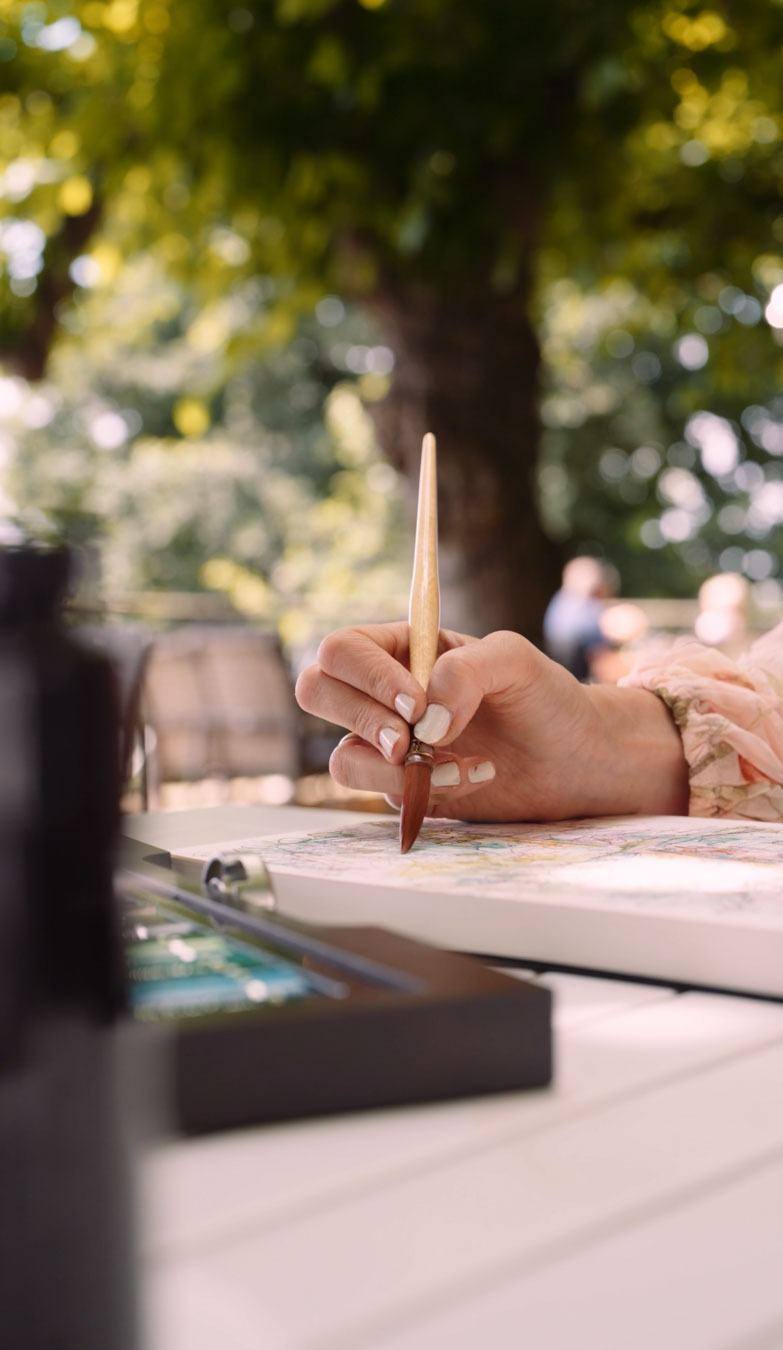
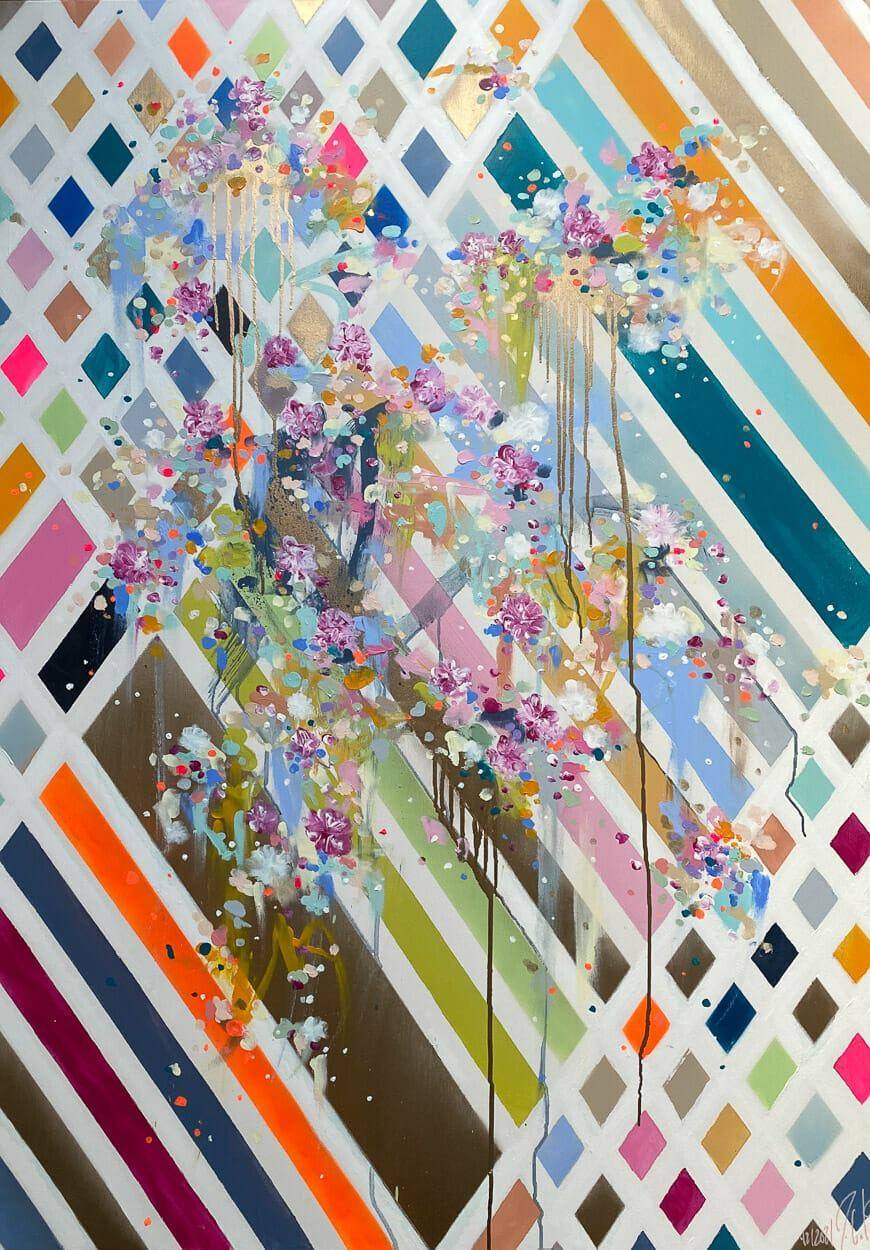
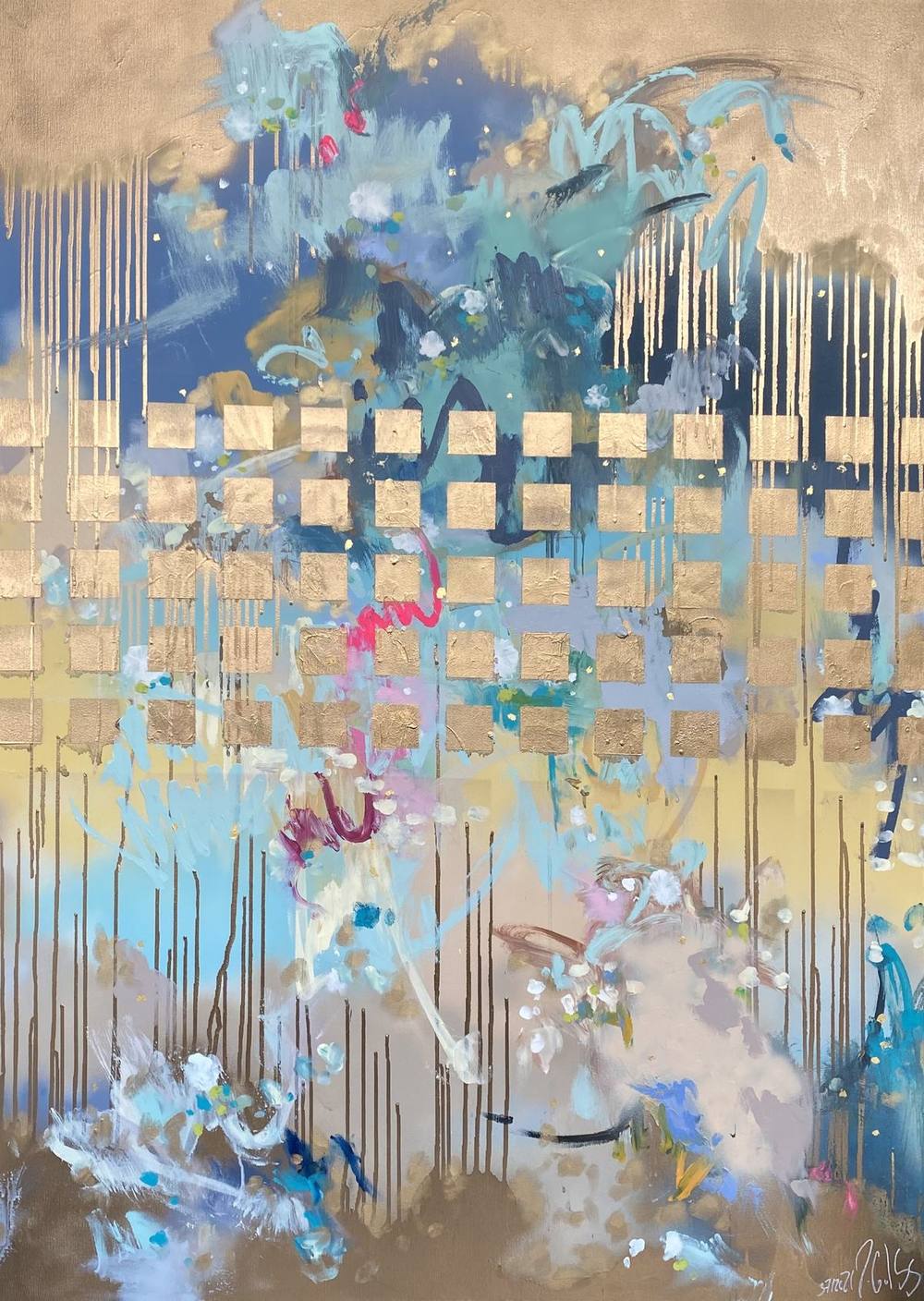
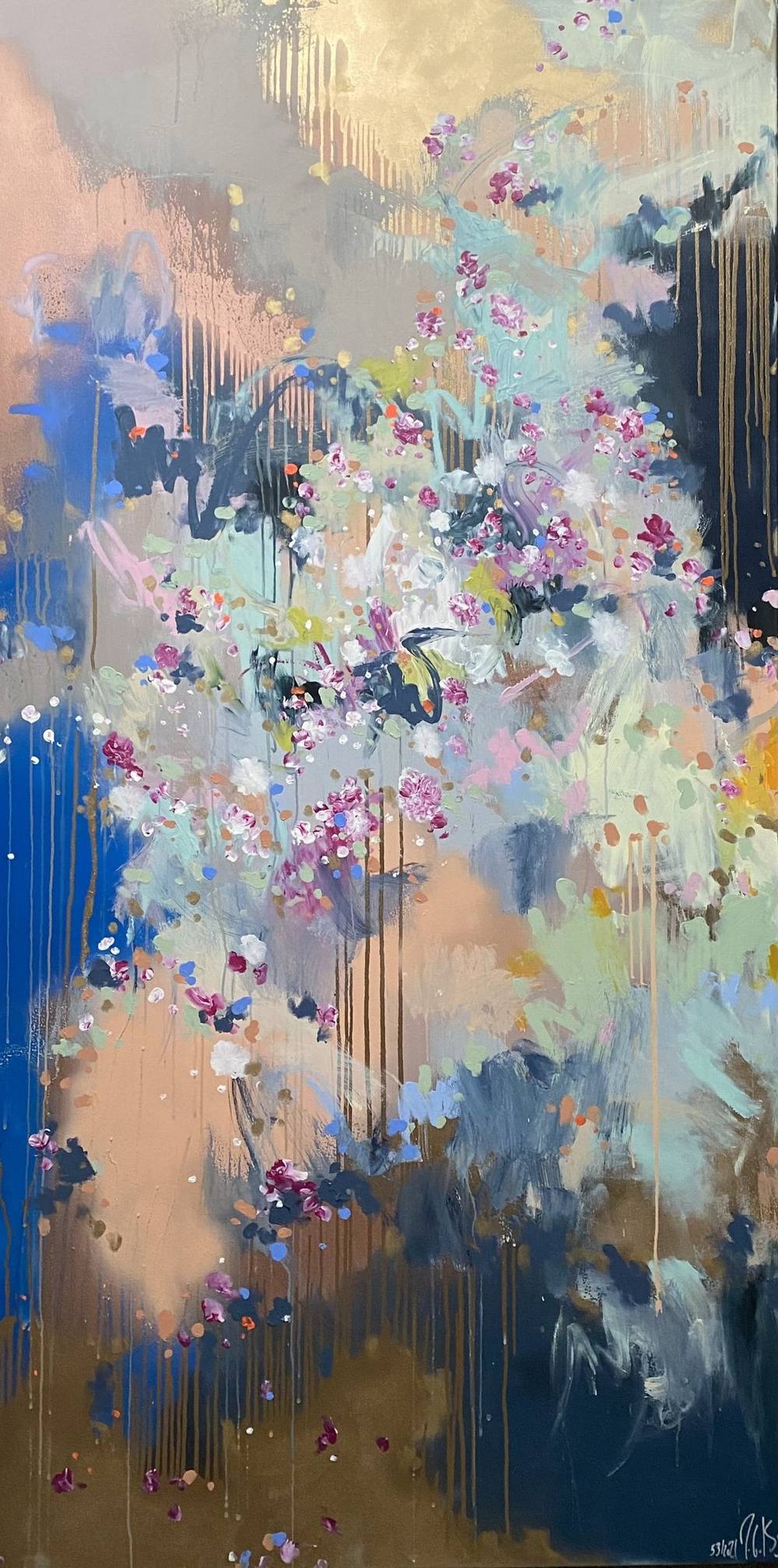
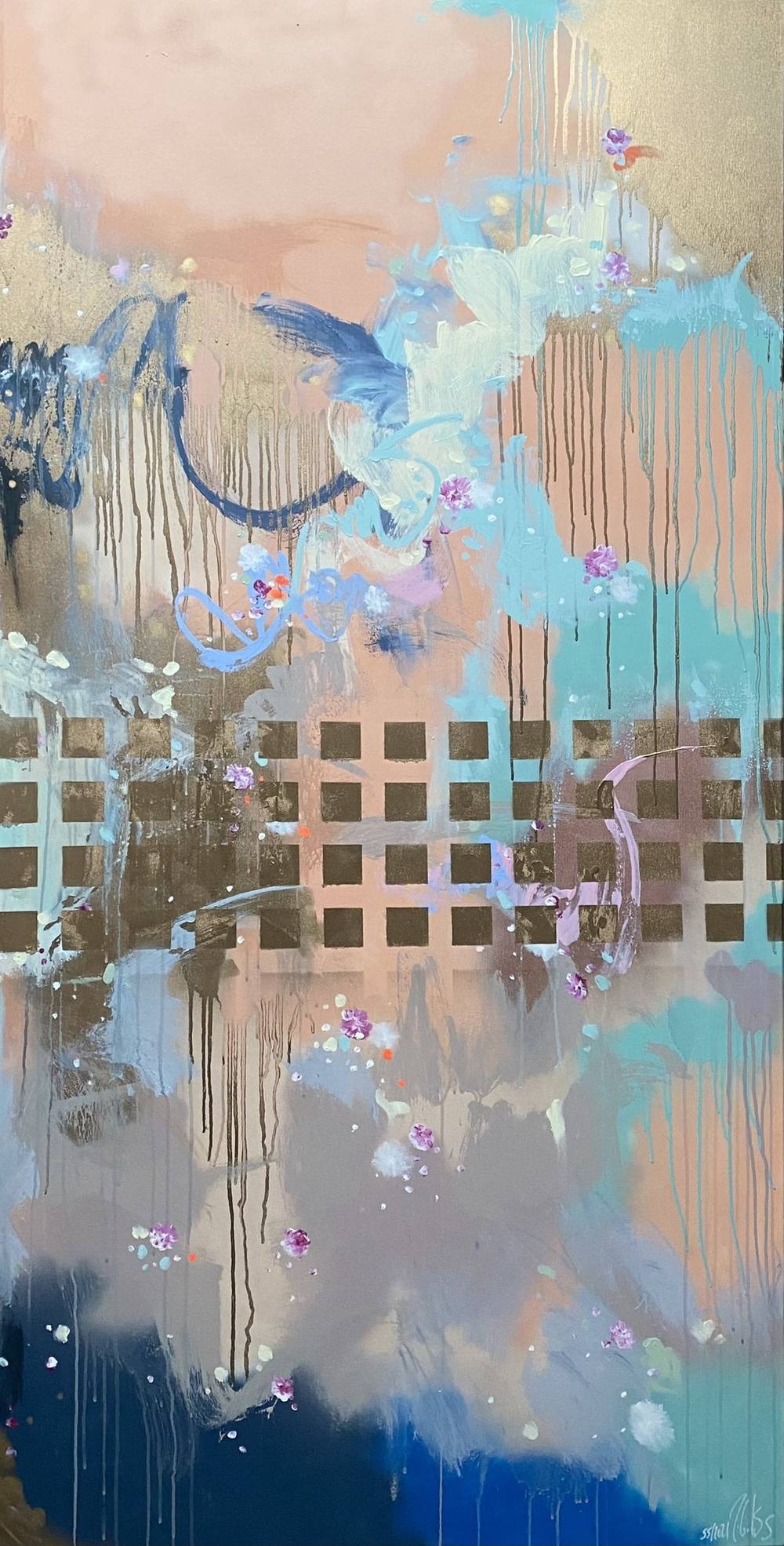
Juliane Golbs uses genuine 24-carat gold leaf and fine gold creams. She works the gold into the painting layer by layer, instead of using it as a frame or background. Between the layers of gold lie highly pigmented acrylics, pastel, chalk and lacquers. She applies many of the layers with her fingers.
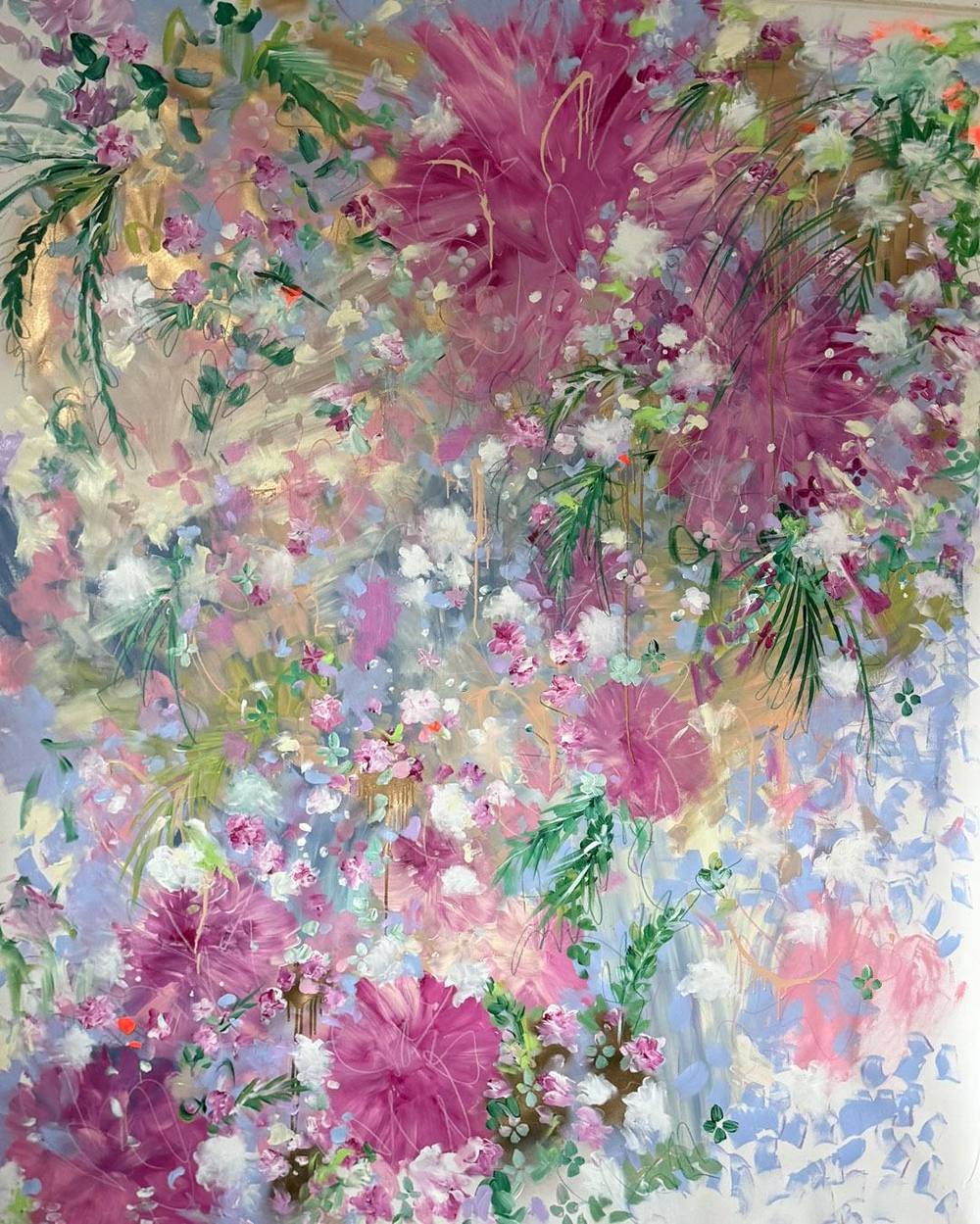
The result is a picture with depth. Because the gold lies between the layers of paint, the light seems to come from within the picture itself. Where Klimt used gold as surface and the medieval painters as ground, here it becomes part of the gesture. It sits in a blossom, in a line, beneath a veil of colour.
This can be read in the technical details of her paintings. They list combinations such as “acrylic, gold leaf on canvas”, “acrylic, gold lacquer on black canvas” or “acrylic, gold lacquers and gold leaf on canvas”. Each material has its task: gold leaf for the light that changes with the day, gold lacquer for lines and structures, black canvas for a ground against which the gold glows especially deeply.
Why a gold painting changes with the day
A painting with gold leaf is never the same twice. In cool morning light the gold appears almost silvery and restrained. At midday it shines brightly. In the evening, under warm artificial light or a low sun, it begins to glow.
Physically, this is because gold does not scatter light like a pigment but mirrors it. What you see therefore depends on the angle: on the position of the light source and on your own. Walk past a gold painting and you see it change. It is the same experience churchgoers had in front of an altarpiece six hundred years ago.
This is exactly the behaviour explored by the Golden Things series. It captures the fleeting beauty of the “golden hour” and makes it permanently available. Such a work looks different in the morning than in the evening.
Gold leaf art at home: notes for collectors
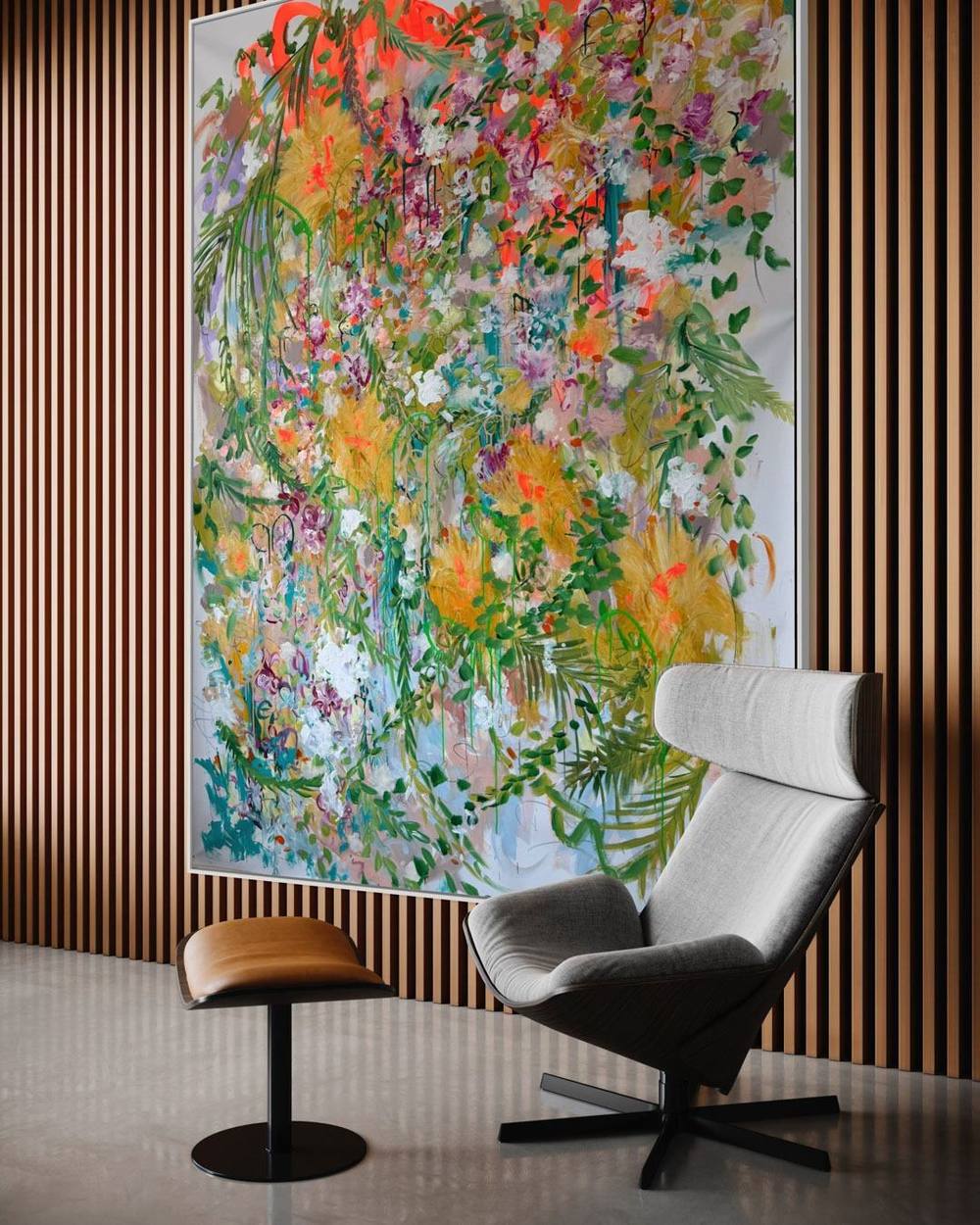
A work with gold leaf unfolds most beautifully if a few things are borne in mind:
- Choose the light deliberately. Daylight from the side and warm, directed artificial light bring the gold to life. Hours of direct midday sun should be avoided.
- Consider the viewing angle. Because gold mirrors, a work on a wall you walk past often looks livelier than in a spot you only see head-on.
- Do not clean it. Gold leaf is sensitive to friction and moisture. Remove dust only with a very soft, dry brush.
- Test the location first. How a work will look in your own space can be checked with a trial hanging arranged through Juliane Golbs's studio, for a small fee that is credited when you buy.
- Pay attention to the material. With an original it should be clear whether genuine gold leaf, gold lacquer or imitation leaf was used. Juliane Golbs's studio names the materials openly.
More guidance on acquiring an original is offered by Buying abstract art.
Gold as an attitude
For Juliane Golbs, gold is also an attitude. She relies on a material that does not fade. A painting with genuine gold leaf will glow in twenty years just as it did on the first day.
In this she stands in a long line: from the mosaics of Ravenna and the workshops Cennini wrote for to Klimt's Vienna. What is new is the tone. Her gold is neither solemn nor remote. It is warm, mobile and part of a picture that tells of life.
How the material is used in the studio is described on the Studio page. More about the artist can be found in the portrait of Juliane Golbs.
Works from this article
Frequently asked questions
What is gold leaf?
Gold leaf is gold beaten into extremely thin sheets. A leaf is only about one ten-thousandth of a millimetre thick and is laid onto a prepared ground with a brush or gilder's cushion.
How do you care for a painting with gold leaf?
Ideally, not actively at all: do not touch it with damp cloths or cleaning agents, protect it from direct sun and high humidity, and remove dust only with a very soft, dry brush.
Does 24-carat gold leaf tarnish?
Pure gold does not oxidise. That is why 24-carat gold leaf keeps its lustre permanently, unlike imitation leaf (Dutch metal) or gold of lower fineness.
What is the difference between water gilding and oil gilding?
In water gilding the gold leaf is laid on a bole ground and can then be burnished to a high gloss; this is how the gold grounds of panel painting were made. In oil gilding the gold adheres to a gold size (mordant). It is more robust but remains more matt.
Sources
8 sources
- Wikipedia: Goldgrund
- Wikipedia: Blattgold
- Belvedere Wien: Gustav Klimt, Der Kuss (Liebespaar), Sammlung Online
- Cennino Cennini: Il libro dell’arte, Kap. CXXXI–CXXXVIII (engl. Übers. D. V. Thompson)
- Neue Galerie New York: Gustav Klimt, Bildnis Adele Bloch-Bauer I (1907)
- Wikipedia: Portrait of Adele Bloch-Bauer I
- Wikipedia: Vergoldung
- Columbia University: Ogata Kōrin, Irises (Nezu Museum)