Elbchaussee Hamburg: country houses, parks and art on the Elbe
Eight kilometres of country houses, parks and museums above the river. How the Elbchaussee became Hamburg’s cultural axis and where art is made along it today.

At first sight the Elbchaussee is simply a road. According to hamburg.de it is 8.6 kilometres long, running from Altona through Ottensen, Othmarschen and Nienstedten to Blankenese, for much of the way along the high ground above the river. Follow it and you pass neoclassical country houses, parks with centuries-old trees, two museums in the Jenischpark and a hotel on whose terrace Max Liebermann painted in 1902. The Elbchaussee in Hamburg is a cultural axis that has grown over more than two centuries, and it is still being added to.
Elbchaussee Hamburg: a road built for the view
The first country houses on the Elbchaussee went up in the 18th century. hamburg.de puts their builders’ motive plainly: wealthy merchants wanted to secure a view of the Elbe and a place in nature. Family names such as Jenisch, Sloman and Reemtsma are still associated with Othmarschen today. The houses began as summer residences, set between town and country, with gardens sloping down towards the water.
For a long time this stretch of land lay outside Hamburg. When Georg Friedrich Baur laid out his park, Blankenese still belonged to Denmark, as the Kunsthaus Baurs Park describes it. Othmarschen passed to Altona in 1890. Only in 1937, under the Greater Hamburg Act, did Othmarschen and Nienstedten become part of Hamburg. The road that now counts as a quintessentially Hanseatic address grew up in a landscape that for generations was not part of the city at all.
What the merchants built was modern for its day. The houses followed neoclassicism, the gardens often the English landscape garden, of the kind Caspar Voght laid out at Flottbek after an English model. Many of these private estates became public parks in the 20th century: the Hirschpark in 1927, the Jenischpark in 1939.
C. F. Hansen and the language of the column
One name comes up again and again along the Elbe: Christian Frederik Hansen. Hamburg Tourismus describes him as a Dane who was already a well-known architect and town planner in Copenhagen by around 1800. In Hamburg he was called the “restorer of good taste in architecture”. His buildings are marked by striking columns that form the centre of the façade. Eleven of his Hamburg buildings survive, while others were demolished or destroyed in the war.
Several of his country houses can be traced along the Elbchaussee. For the merchant Johann Caesar Godeffroy, Hansen designed the neoclassical house in what is now the Hirschpark, which hamburg.de dates to 1792. For the merchant and banker Johann Heinrich Baur he designed Landhaus Baur, later known as the Elbschlösschen. From 1883 it housed a brewery, and today it is part of a residence for older people.
Hansen’s influence reached beyond his own buildings. His nephew Ole Jörgen Schmidt, together with Johann Matthias Hansen, built Georg Friedrich Baur’s country house in Blankenese between 1826 and 1833, according to the Deutsche Stiftung Denkmalschutz. And when Senator Martin Johann Jenisch commissioned his architect in 1828, the first designs took their cue from the country houses Hansen had built along the Elbchaussee. His formal language lived on along the road, even where he did not build himself.
The Hirschpark and Baurs Park: gardens above the river
The Hirschpark is older than most of the houses on the Elbchaussee. According to Hamburg’s environment ministry, A. Oldehorst laid out the grounds as an estate from 1620. The lime avenue, originally four rows deep, dates from that time. In 1786 Johann Caesar Godeffroy bought the land at auction, then the largest estate in the area. His house by Hansen still stands and is now home to a ballet school. Set a little apart, a thatched cavalier’s house was built around 1800, today’s Witthüs.
The park owes its name to an enclosure for fallow deer, which is still there. In 1924 the municipality of Blankenese bought the estate, and in 1927 the city of Altona opened the park to the public, with Ferdinand Tutenberg reshaping it as a town park. From 1950 to 1959 the writer and organ builder Hans Henny Jahnn lived in the park, and a relief plaque remembers him. Today the park covers around 24.5 hectares, with viewpoints over the Elbe, a French flower garden and what are probably Hamburg’s oldest rhododendrons.
Further west, already in Blankenese, lies Baurs Park. The Altona merchant Georg Friedrich Baur created the landscape park, and his neoclassical house was built between 1826 and 1833. In 1923 the new owner, Leonhard Rudolf Müller, named it after his daughter Katharina, and it has been the Katharinenhof ever since. It later served as the Blankenese local authority office, and for around fifty years it was also a meeting place and library for the neighbourhood. The house is now being restored, which brings us to a later part of this story.
The Jenischpark and Jenisch Haus
The Jenischpark goes back to one of the most remarkable Hamburg figures of the period. From 1785 the merchant Caspar Voght bought five farms on the bank of the Elbe near Flottbek and joined them into a single large estate. His model was the English estate The Leasowes, a so-called “ornamented farm” in which agriculture and garden design were intertwined. In 1828 Martin Johann Jenisch bought the land from Voght.
Jenisch Haus was built between 1831 and 1834 on the highest point in the southern part of the former estate park, with a wide view of the Elbe. The plans are by Franz Gustav Forsmann and Karl Friedrich Schinkel, whose designs merged into an almost square ground plan. According to hamburg.de the house was set up as a museum in 1936, and it has belonged to the Altonaer Museum since 1955. Today the Stiftung Historische Museen Hamburg shows the White Hall, with a chandelier designed by Schinkel, a Biedermeier room and an exhibition on Caspar Voght, among others.
The city of Altona leased the park in 1927, bought it in 1939 and opened it to the public. The wet meadows of the Flottbek and other parts of the park are now nature reserves. The history of the house and its collections will be the subject of a separate article, to follow shortly.
The Ernst Barlach Haus in the Jenischpark
The same park holds a museum of quite another kind. Its story begins in 1934, when the Hamburg industrialist Hermann F. Reemtsma visited the sculptor Ernst Barlach in Güstrow. Barlach had been ostracised by the National Socialists, and Reemtsma gave him firm support. That same year he acquired the wooden sculpture Der Asket (The Ascetic) of 1925. By 1938 he already owned 20 sculptures and around 100 drawings.
In the late 1950s Reemtsma decided to place his collection in a foundation, which was established in 1960. He died in 1961, and the Ernst Barlach Haus in the Jenischpark opened the following year. According to the museum, the collection now comprises around 150 sculptural works, more than 450 drawings, almost all of the prints and nearly 30 wooden sculptures. Alongside it the museum stages temporary exhibitions on classical modernism and the present day.
So two attitudes stand side by side in the Jenischpark: a senator’s neoclassical country house and a museum that a collector dedicated to an ostracised artist. Since September 2017 the Eduard Bargheer Museum has joined them as the park’s third house.
Louis C. Jacob: Liebermann and the lime terrace
In Nienstedten stands the house that most clearly embodies the bond between the Elbchaussee and painting. The Louis C. Jacob began in 1791 as a wine tavern, and its garden with the lime terrace is said to have been laid out the same year. In 1902 Max Liebermann stayed for several weeks and painted the terrace. His picture “Die Terrasse des Restaurants Jacob in Nienstedten an der Elbe” now belongs to the Hamburger Kunsthalle. The building and its terrace have been listed since 1956.
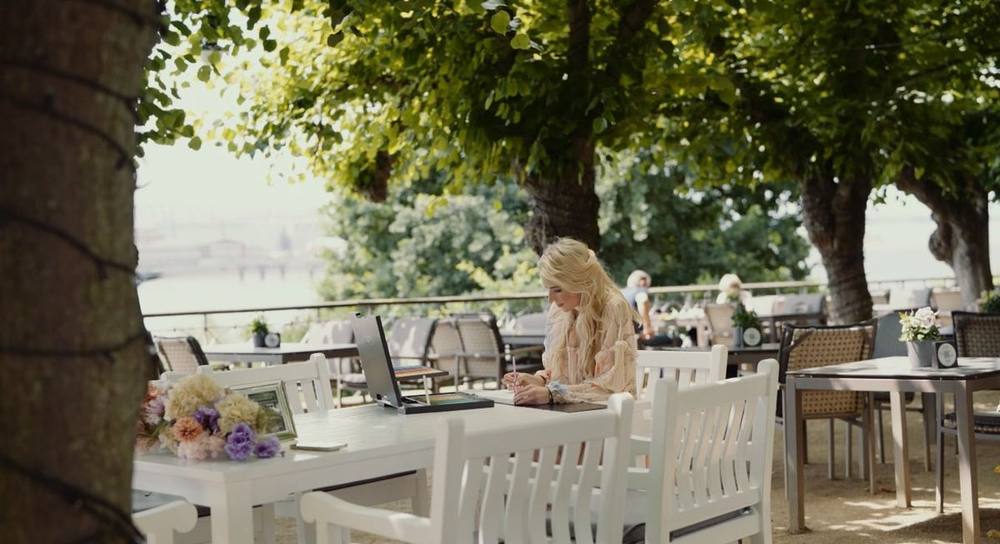
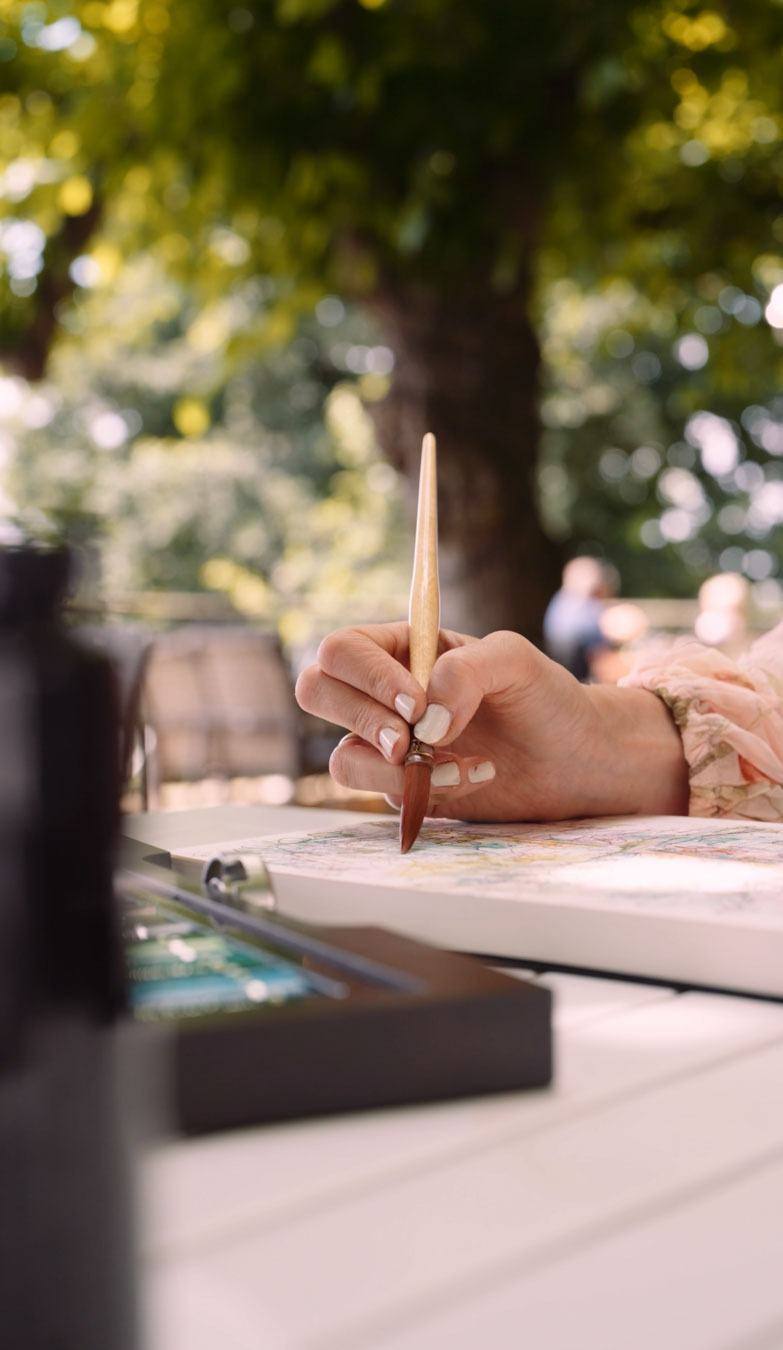
Since September 2025 the Hamburg painter Juliane Golbs has worked there as artist in residence. The hotel announced the long-term collaboration on 29 September 2025. Works by the artist are on show in the house, and exhibitions and painting classes for guests and art lovers are planned. At the Jacob, Juliane Golbs often works with a sketchbook and a watercolour box. She watches the guests, the staff, the lime trees and the river. What begins there later finds its way into larger works in the studio.
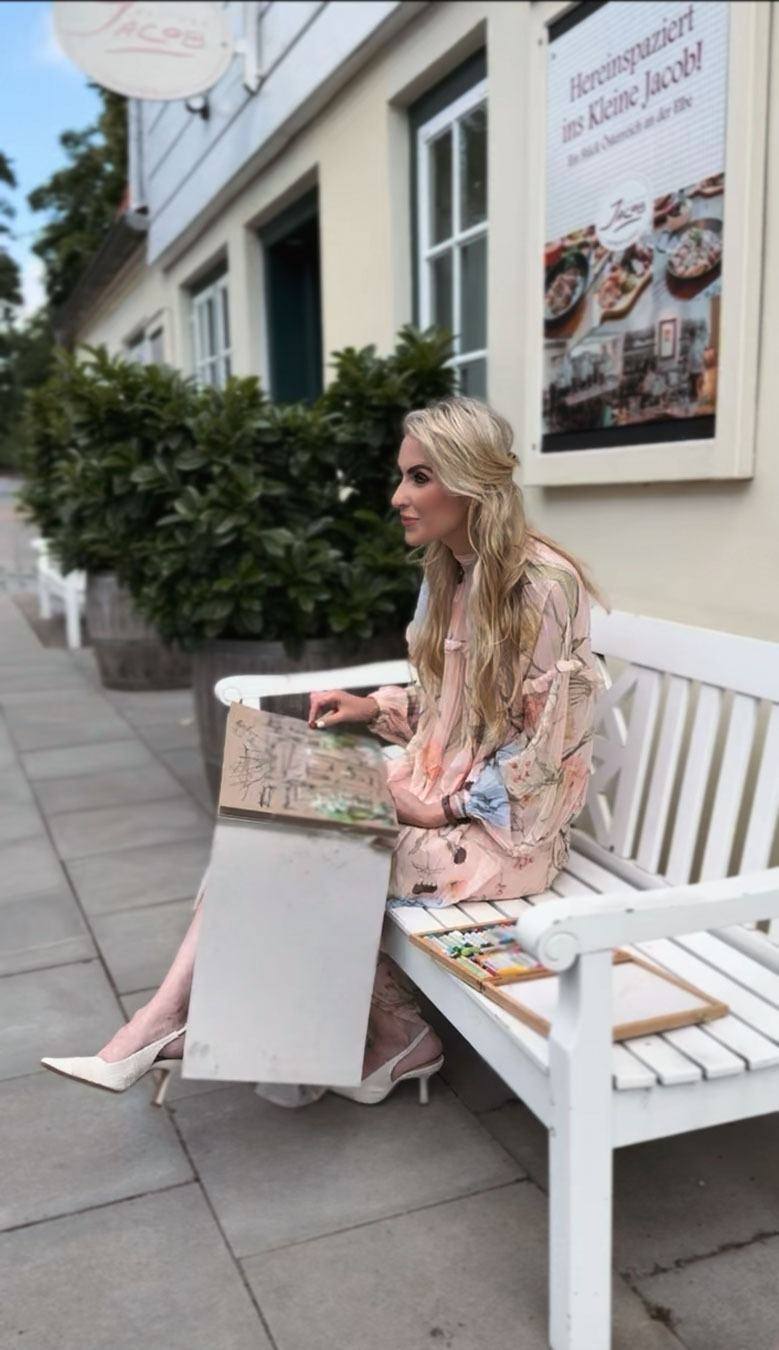
The full story of the house, from Daniel Louis Jacob to Liebermann and the residency, is told in the article Artist in residence at the Louis C. Jacob. One thought is enough here. Nowhere else on the Elbchaussee is painting so constantly present: in 1902 as a guest, since 2025 as daily practice.
Art on the Elbchaussee today
The Elbchaussee is not a museum quarter in the usual sense. Its art is spread across individual houses, parks and initiatives, many of them privately supported. The newest example is taking shape in Baurs Park. There the Katharinenhof is being restored to open in 2028 as the Kunsthaus Baurs Park, a non-profit, privately founded initiative for international contemporary art. The new owners grew up in Blankenese and want to build on the house’s role as a place for the neighbourhood.
Even before opening, the house has shown how it means to work. At the end of May 2026, works by Thomas Demand, Luigi Ghirri, Janice Kerbel and others were shown in its rooms for two evenings, just before the building work began. In September 2026, under the title “Tell me, grounds”, four new site-specific works were made in the park by Simone Karl, Julia Nordholz, elena victoria pastor and the duo The New Liquidity. With this the Kunsthaus took part in the first Hamburg Art Week. The exhibition’s questions were about the trees, the ground and the memory of a house that for now can only be experienced from outside.
Beside such projects stand the established places: the Ernst Barlach Haus with its temporary exhibitions, Jenisch Haus with changing shows on painting, graphic art, architecture and garden design, the Eduard Bargheer Museum, and the Louis C. Jacob with its residency. Together they form an axis along which you can walk, in a single day, from neoclassicism through modernism to the present. Further west, Blankenese adds its own emblems. The article on the Pfahlewer Blankenese tells the story of one of them.
Light, garden and water: works for the place
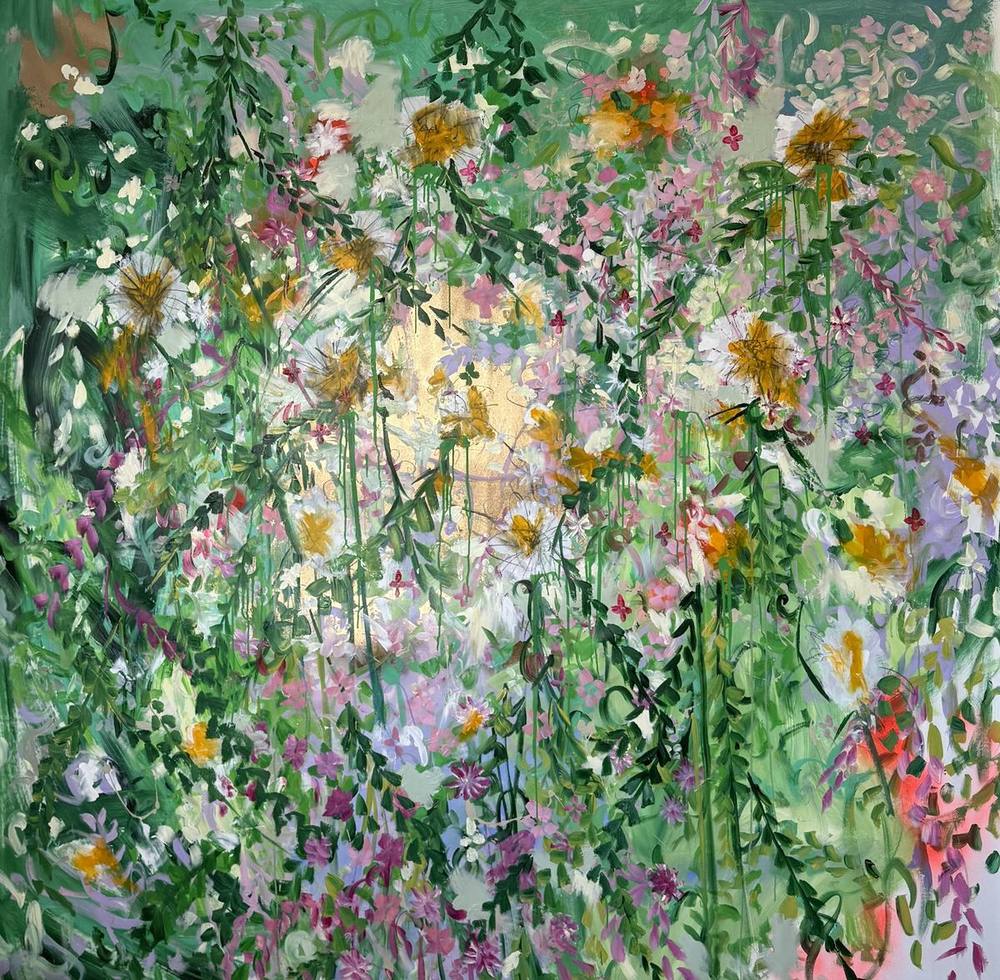
Coming from the Hirschpark or the Jenischpark, you look at painting differently. The parks of the Elbchaussee are built pictures: groups of trees, clearings and sightlines, laid out to guide the eye. The series Fifth Season #heaven can wait looks for a similar order within abundance. In 04 | 2025 tendrils and blossoms circle a golden centre, as if you were standing in the shade of a lime avenue with the light over the water at its end.
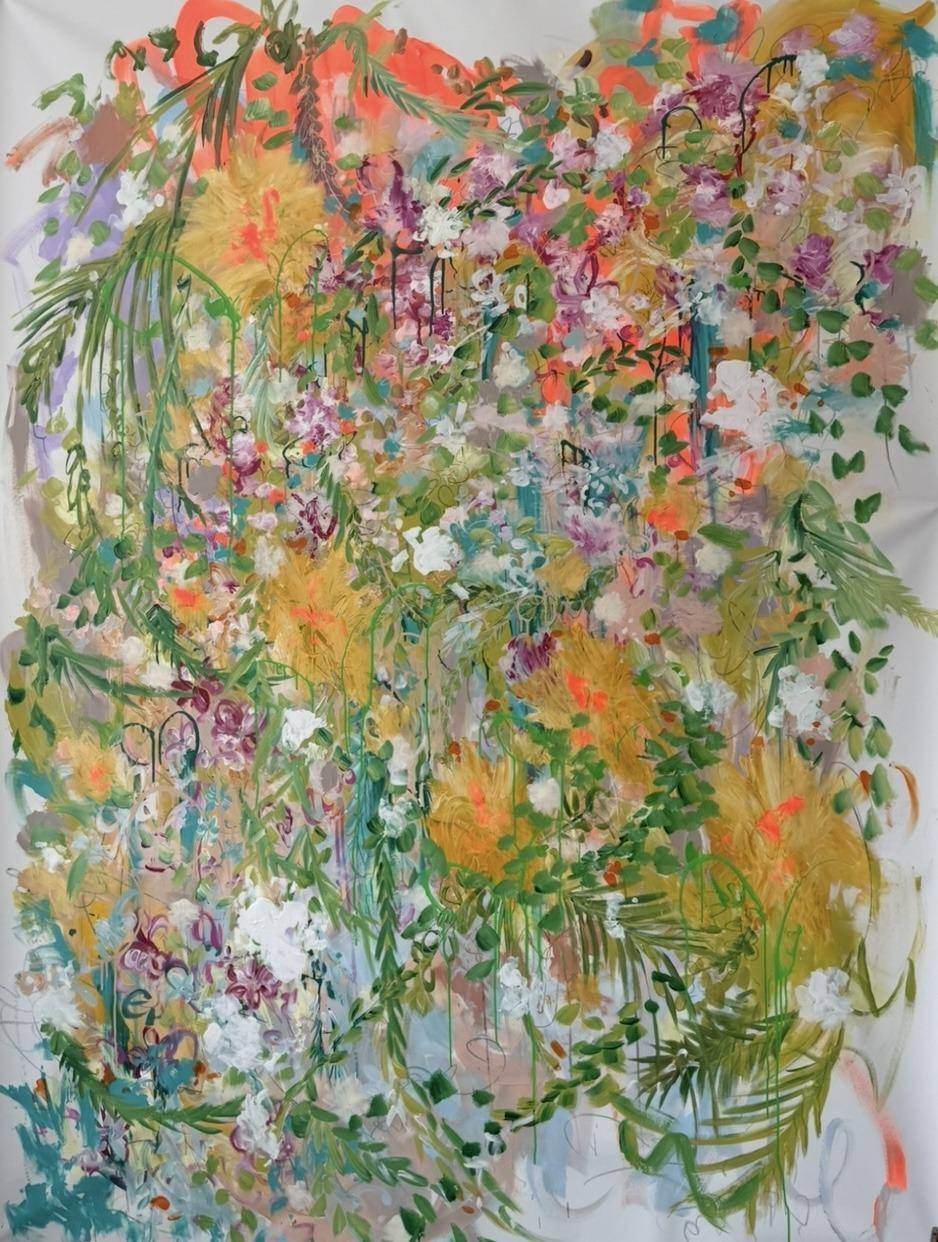
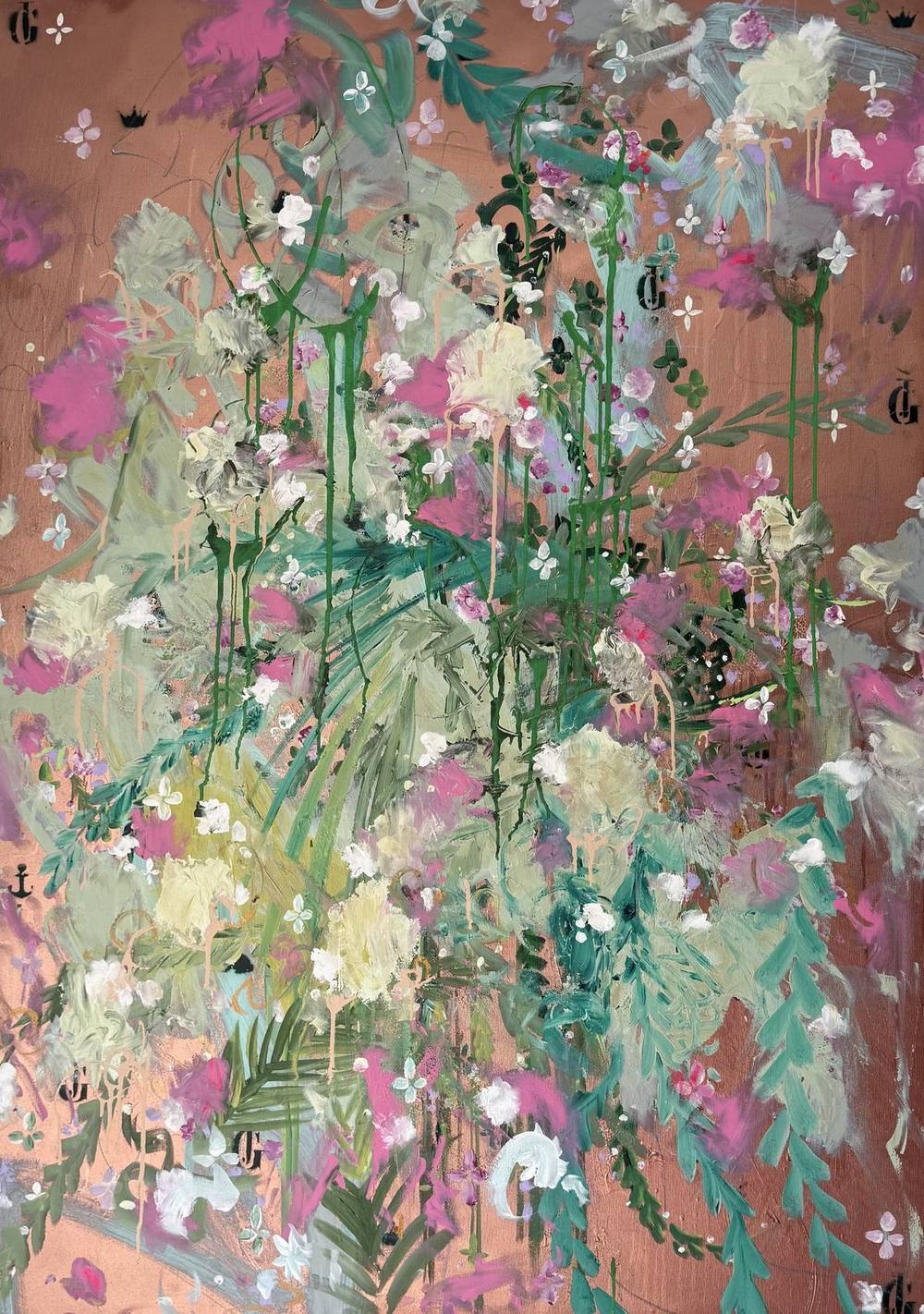
08 | 2025 shows a garden in a state of lavish dissolution, in acrylic and pencils on canvas. 06 | 2025, with bronze lacquer, deals with the moment between bloom and the first signs of decay, a theme every old park carries within it. The blue of the Elbe on a clear evening returns in 02 | 2025, where a cascade of pale blossoms falls through a deep blue field.
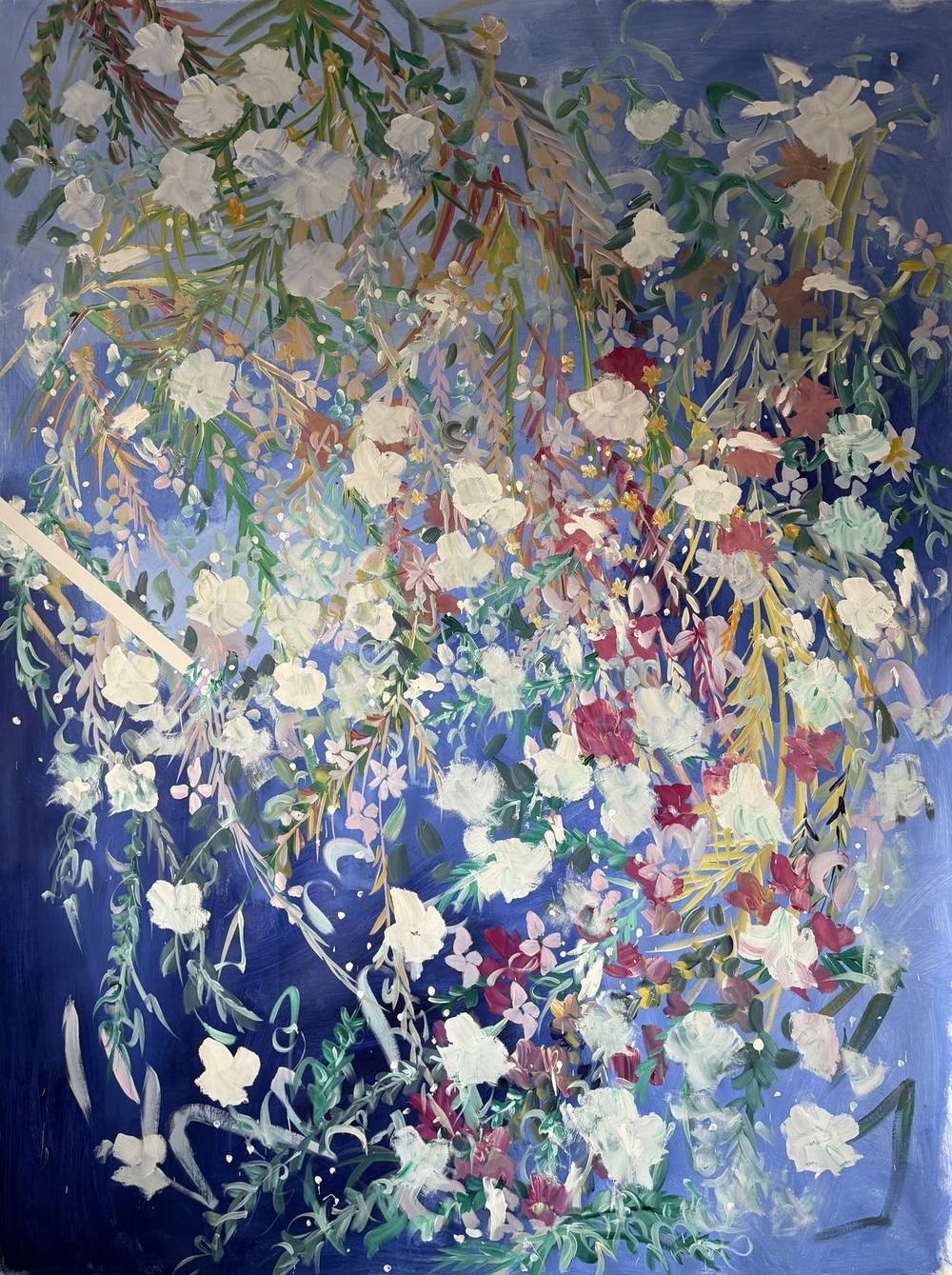
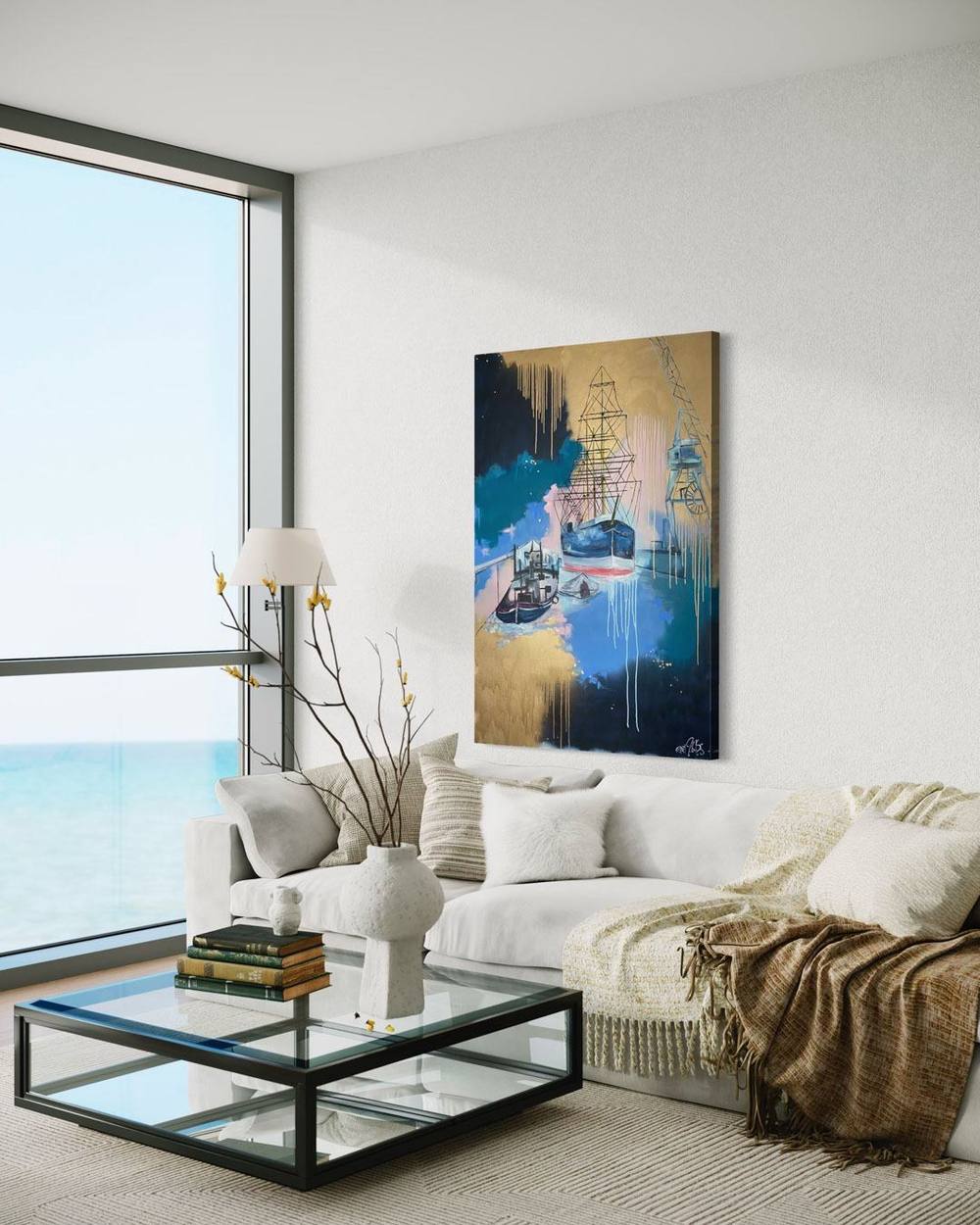
A smaller format with a maritime tone is 508 | 2024 from the Signature Collection, in blue, turquoise and gold. Gold plays a particular role on the Elbe, because the light is reflected off the water and changes with every hour. The works named here do not depict specific places on the Elbchaussee. What they share with it is the subject that occupied Liebermann on the lime terrace in 1902: the changing light over garden and river.
Exploring the Elbchaussee
A day on the Elbchaussee divides neatly into three parts. In the Jenischpark, Jenisch Haus, the Ernst Barlach Haus and the Eduard Bargheer Museum lie close together. In Nienstedten come the Louis C. Jacob with its lime terrace and, a little further on, the Hirschpark with its lime avenue and Godeffroy house. Baurs Park in Blankenese brings the day to a close. Opening hours and current exhibitions are given by the houses themselves.
To see the works of Juliane Golbs, visit the Louis C. Jacob, browse the catalogue of works or arrange a visit to the studio. More about her work in the city can be found in the article A female artist in Hamburg. To arrange a studio visit, please use the contact form.
Works from this article
Frequently asked questions
How long is the Elbchaussee?
According to hamburg.de, the Elbchaussee is 8.6 kilometres long. It runs from Altona through Ottensen, Othmarschen and Nienstedten to Blankenese, where Baurs Park lies at Elbchaussee 573.
Which museums are in the Jenischpark?
The Jenischpark is home to Jenisch Haus, a branch of the Altonaer Museum since 1955, and the Ernst Barlach Haus, which opened in 1962. In September 2017 the Eduard Bargheer Museum joined them as the park’s third museum.
What was C. F. Hansen’s role on the Elbchaussee?
The Danish architect Christian Frederik Hansen designed neoclassical country houses in the villages along the Elbe, among them Johann Caesar Godeffroy’s house in what is now the Hirschpark and Landhaus Baur, later known as the Elbschlösschen. The first designs for Jenisch Haus took his country houses as their model.
Where can I see Juliane Golbs on the Elbchaussee?
At the Hotel Louis C. Jacob in Nienstedten. Since September 2025 the Hamburg painter has been its artist in residence, and works by her are on show in the house. Dates for exhibitions and painting classes are announced by the hotel and the artist.
Sources
10 sources
- hamburg.de: Othmarschen district (Elbchaussee, Jenischpark, Ernst Barlach Haus)
- hamburg.de: Nienstedten district (Godeffroy country houses, Landhaus Baur)
- hamburg.de, Ministry for the Environment, Climate, Energy and Agriculture: Hirschpark
- hamburg.de: Jenischpark
- Stiftung Historische Museen Hamburg: Permanent exhibitions of Jenisch House
- Jenisch Haus, Historische Museen Hamburg, on Google Arts & Culture: The history of the Jenisch Haus
- Hamburg Tourismus: Hansen-Bauten. Danish architecture in Hamburg
- Ernst Barlach Haus: History of the collection
- Deutsche Stiftung Denkmalschutz, Open Monuments Day: former Landhaus Baur, Kunsthaus Baurs Park
- Kunsthaus Baurs Park: programme and history of the house