Artists in Hamburg: light, water and the painting of a port city
Hamburg is not a loud city of art. But it is a city of light – and this light has shaped artists for generations, from Liebermann to the present day.
When people speak of great cities of art, Paris, Venice or Berlin come to mind first. Hamburg is mentioned less often. Yet the city has something decisive for painting: a light that changes constantly over the Elbe and the Alster, and a citizenry that has been collecting, endowing and exhibiting art for two hundred years.
A city that shapes artists quietly
The art history of the Hanseatic city was not carried by a royal court but by merchants, collectors and societies. As early as 1817, Hamburg's friends of art met in the house of David Christopher Mettlerkamp; this became the Kunstverein in Hamburg, the second-oldest art society in Germany after Nuremberg's. Since 1993 it has been based on Klosterwall, in a converted market hall just a few steps from the Deichtorhallen.
The Hamburger Kunsthalle is one of the most important museums in the country, and the Deichtorhallen rank among Europe's major exhibition venues for contemporary art and photography. Then there are the galleries, studios and project spaces between Altona, Eppendorf and the harbour.
At least as formative as the institutions is Hanseatic reserve. In Hamburg, quality is rarely announced loudly; it is taken for granted. Any painter who wants to hold their own in Hamburg needs substance – the kind that still holds up at the second and third look.
The light of the Elbe: from Liebermann to today
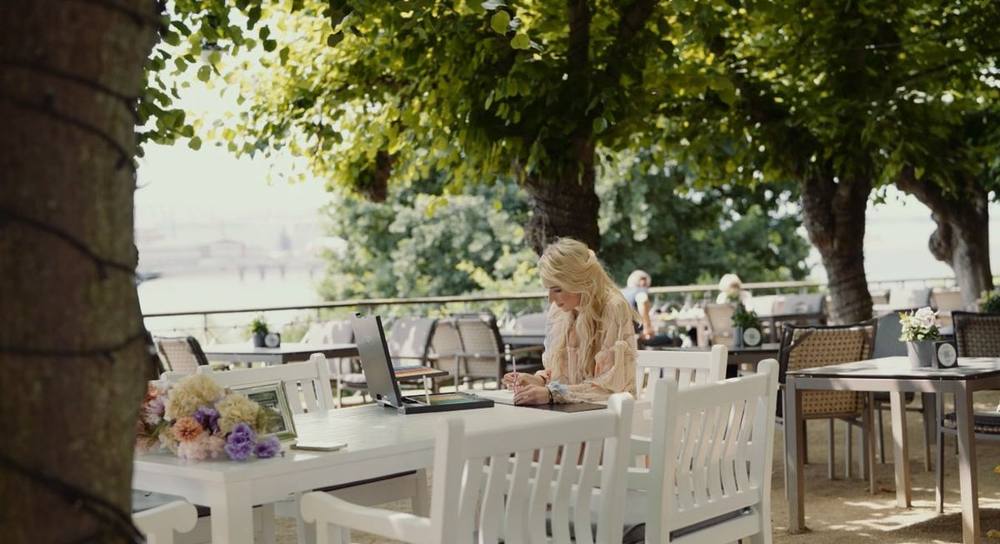
In 1902, on the Elbchaussee, Max Liebermann painted the lime-tree terrace of what was then the Restaurant Jacob: guests beneath lime trees, sunlight falling through the leaves. The painting “Die Terrasse des Restaurants Jacob in Nienstedten an der Elbe” (The Terrace of the Restaurant Jacob in Nienstedten on the Elbe) belongs to the collection of the Hamburger Kunsthalle and shows how strongly the light on the Elbe attracted Impressionist painting.
What interested Liebermann there was less the society than the flicker: light falling through leaves, lying on tablecloths and brushing faces. It is a light that never stays the same for a minute. On the Elbe, there is also the water, which reflects and scatters it. Whoever paints here always paints the weather too.
More than a hundred years later, an artist is once again working on the same terrace: since 2025 Juliane Golbs has been artist in residence at Hotel Louis C. Jacob. She deliberately takes up the legacy of the place and translates it into a contemporary language. The full story is told in Artist in residence at the Louis C. Jacob.
The Hamburg Secession: modernism with Hanseatic courage
One chapter of Hamburg's art history is often overlooked outside the city. On 14 December 1919 the first exhibition of the Hamburg Secession opened at the Hamburger Kunsthalle. The association was interdisciplinary: painters, sculptors, architects and writers belonged to it, some 55 members in all. Among them were Anita Rée, Alma del Banco, Gretchen Wohlwill, Dorothea Maetzel-Johannsen, Karl Ballmer, Rolf Nesch, Eduard Bargheer and Karl Kluth.
The Secession brought modernism to Hamburg, with festivities, exhibitions and an openness that reached beyond painting. It is remarkable how naturally women painters were represented in it.
Its end is a lesson in integrity. In March 1933 its last exhibition was closed on orders from Berlin. Shortly afterwards the members were told to expel their Jewish colleagues. They refused and dissolved the association themselves on 16 May 1933. For its centenary in 2019/20, the Hamburger Kunsthalle showed works by 40 members in dialogue with its collection of classical modernism.
This legacy can still be felt in Hamburg's painting today: the ambition to remain independent, to take colour seriously, and not to confuse beauty with mere pleasantness.
The Kunstmeile: six institutions on one walk
Anyone who wants to experience Hamburg's art in a single day will find it surprisingly close together. Between the main station and the Oberhafen, six institutions have joined to form the Kunstmeile (“art mile”): the Hamburger Kunsthalle, the Bucerius Kunst Forum, the Museum für Kunst und Gewerbe, the Kunsthaus Hamburg, the Kunstverein in Hamburg and the Deichtorhallen.
The Deichtorhallen alone offer some 10,000 square metres of exhibition space, divided between the hall for contemporary art, the House of Photography and the Falckenberg Collection. The listed halls stand by the water, looking towards the Speicherstadt and HafenCity. You leave an exhibition and find yourself back in the harbour light that has occupied so many painters.
Along this route, Hamburg's art history can be walked almost chronologically: Old Masters and Liebermann at the Kunsthalle, design and applied arts at the Museum für Kunst und Gewerbe, the contemporary at the Kunstverein, the Kunsthaus and the Deichtorhallen. What stands out is the calm. Even on busy weekends, Hamburg's art world feels more relaxed than that of other metropolises.
Contemporary painting in Hamburg
Today Hamburg's art scene speaks with many voices. There is street art and conceptual art, photography, installation and painting of every kind. Within this diversity, painting has kept a special place: as an art form that needs time and that lives with people in their rooms.
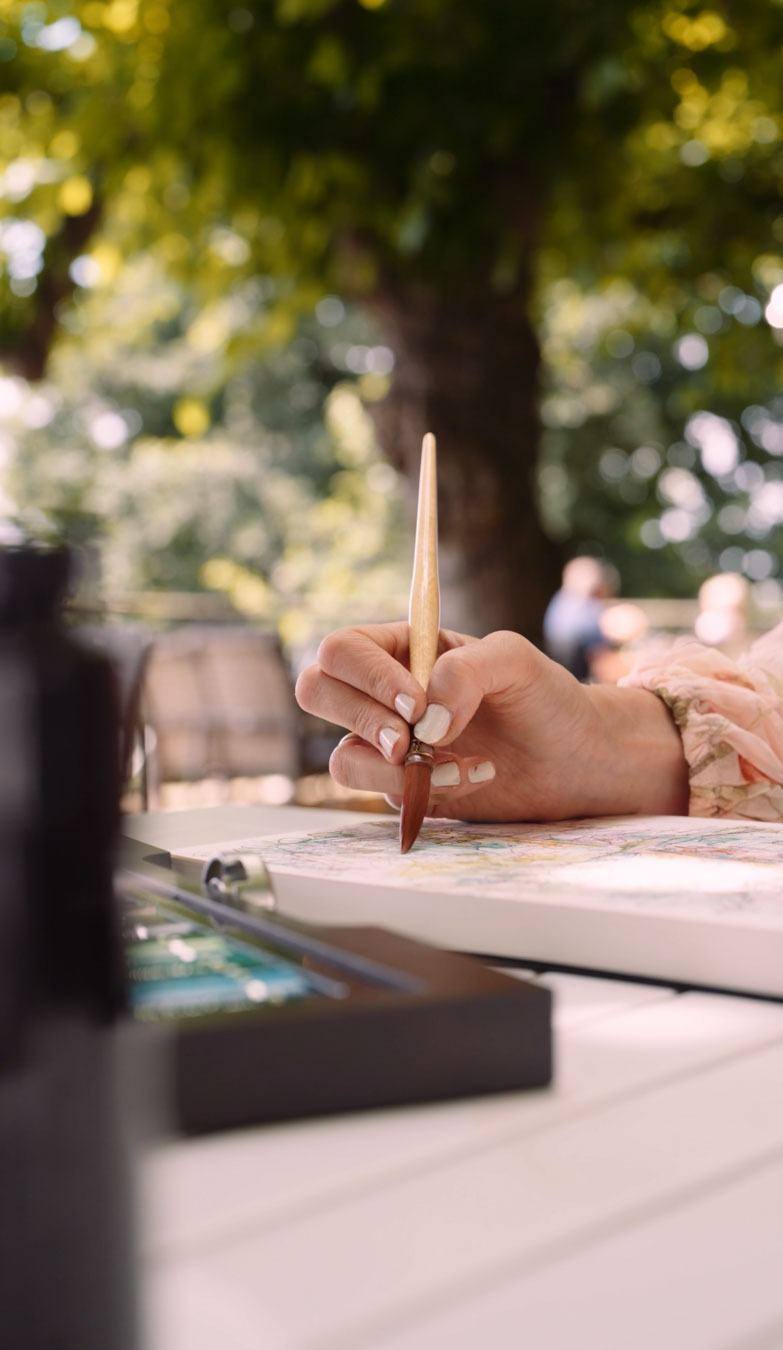
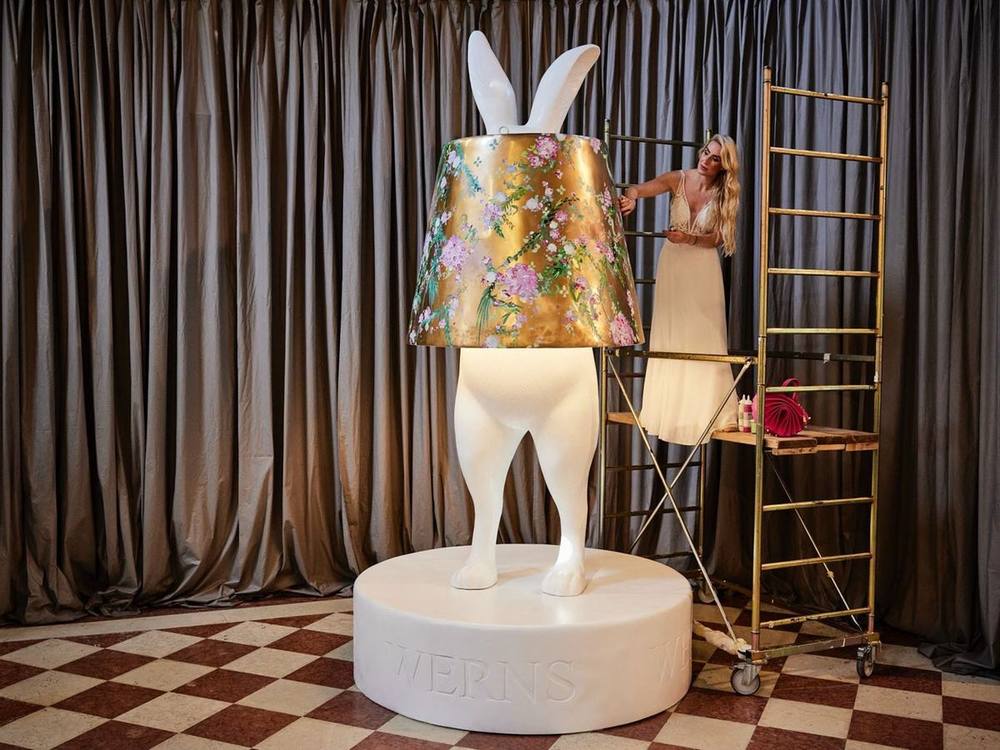
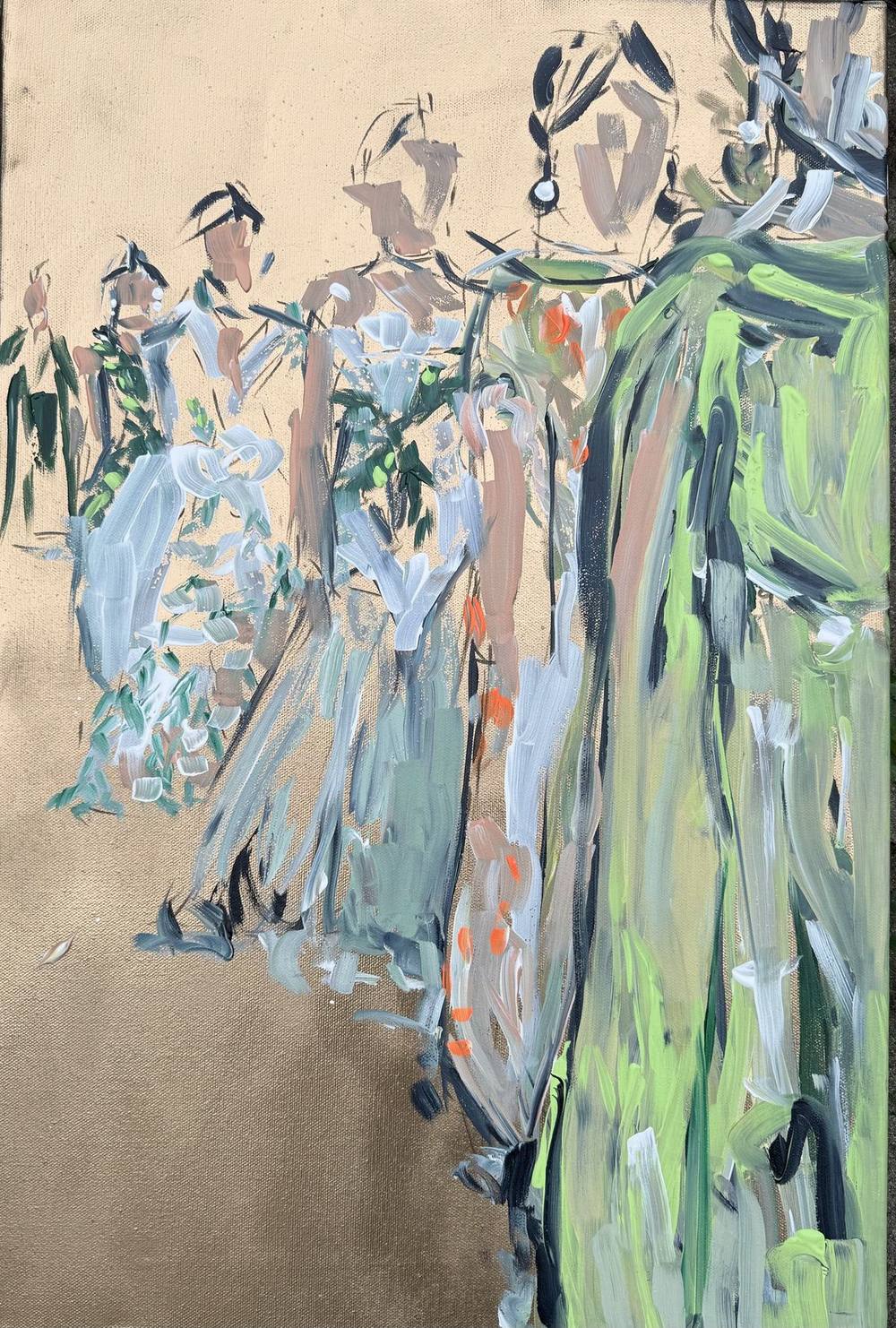
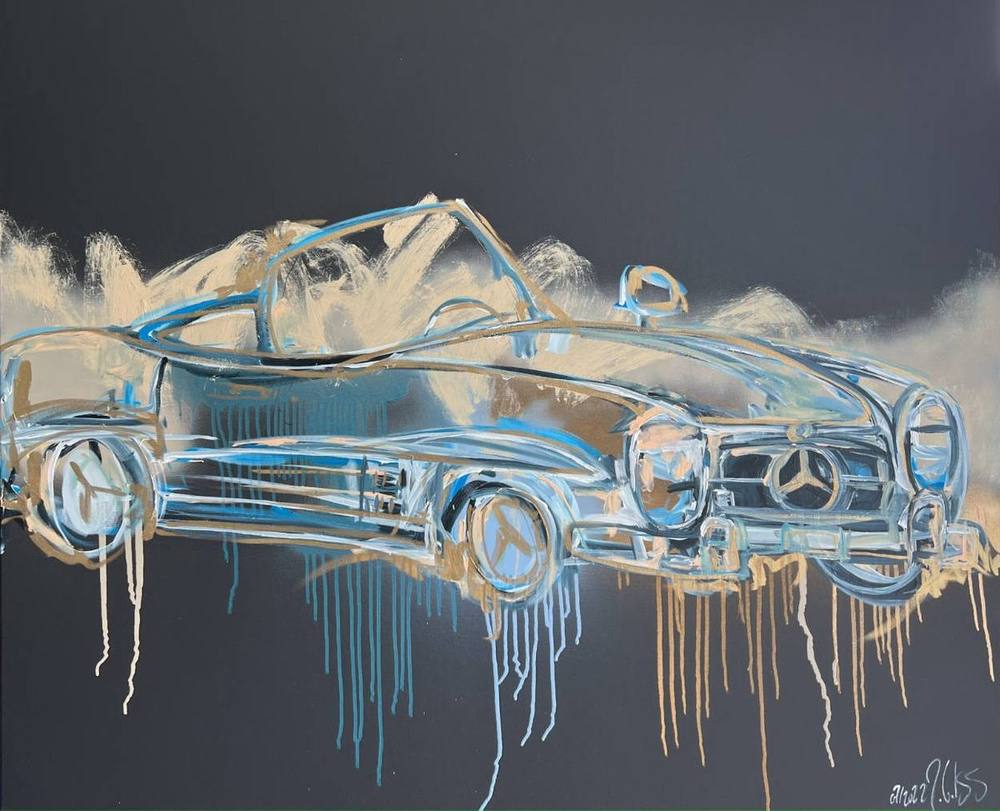
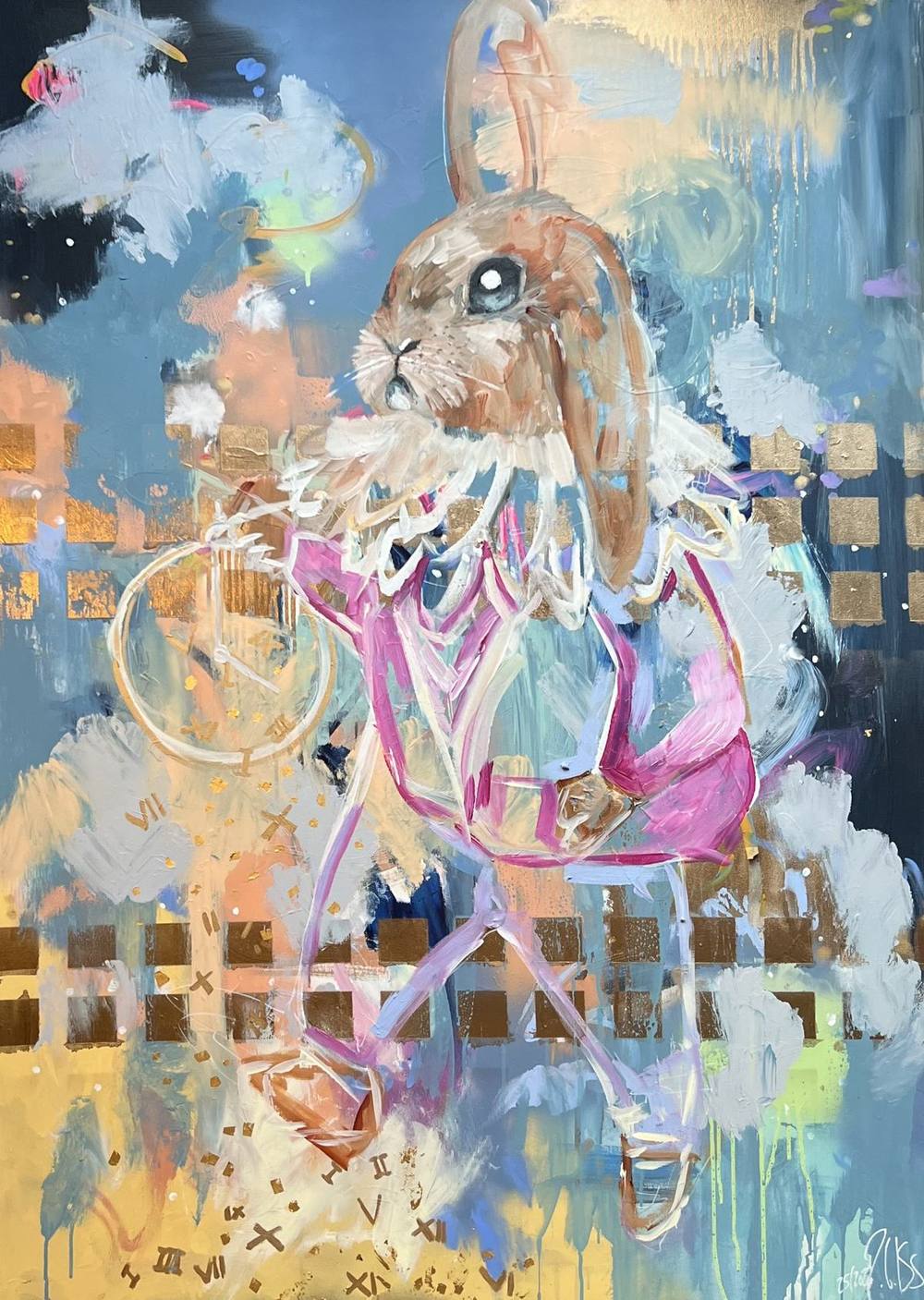
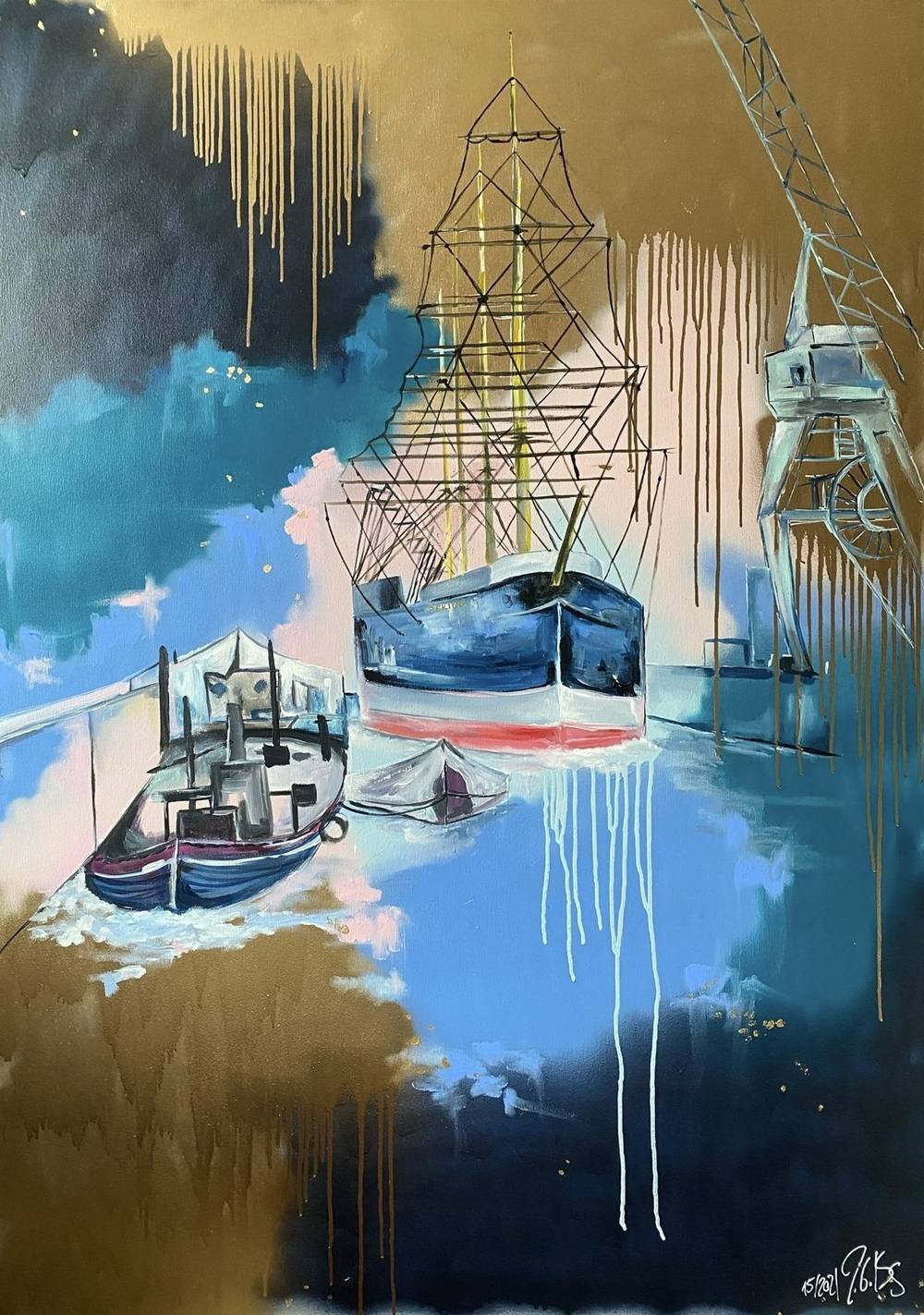
Juliane Golbs stands for a painting that consciously turns towards beauty. Born in Schwerin, she came to Hamburg at 18 and stayed – a Hamburger by choice in the best sense. Her works combine romantic motifs with an expressive line, pastel with strong colour and, above all, colour with gold. In her paintings 24-carat gold leaf becomes a carrier of light that breathes with the day. How this works is described in Gold leaf in painting.
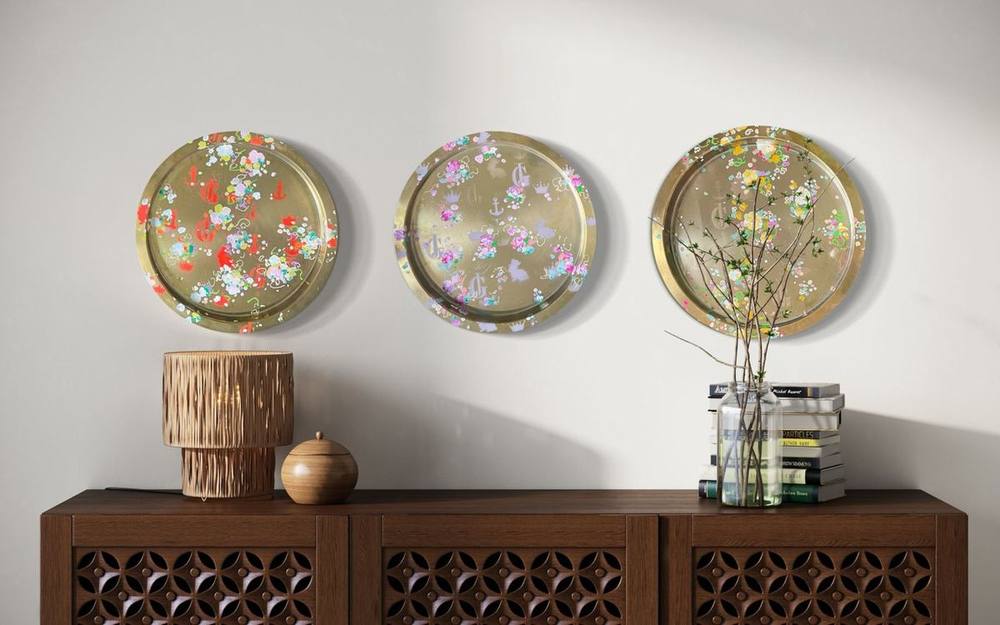
Hamburg itself appears in her work, sometimes very directly. The catalogue of works lists a painting from 2019 titled “Golden Elbphi”. The title refers to the Elbphilharmonie; the work has since been sold. More often the reference is indirect: the changing light, the closeness to water, a blue that recalls the sky over the Elbe.
What distinguishes Hamburg painting today
It would be too simple to speak of a Hamburg style. And yet there are common traits shared by many of the city's artists:
- A feeling for atmosphere. Water, clouds and changing light sharpen the eye for mood rather than motif.
- Openness to the world. As a port city, Hamburg has always been a place of exchange. Many artists work internationally and return here.
- Ties to business and society. Hamburg art often comes about in dialogue with the city's companies, foundations and institutions – a tradition that reaches back to the citizens who founded the Kunstverein in 1817.
This is easy to observe with Juliane Golbs: her works are made in her Hamburg studio but shown in Venice, Berlin and Deauville. In December 2021 she exhibited at Barlach Halle K; in 2026 she could be seen at the Elbjazz festival. Her commitment to the Hamburg-based NCL Foundation links art with responsibility.
Painting that lives with the room
You meet a painting in a museum for minutes. You meet a painting at home for years: in the morning in passing, in the evening under artificial light, in winter and in summer. Hamburg apartments with their high period ceilings, stucco and large windows offer a grateful frame for this. Large-format painting can breathe here.
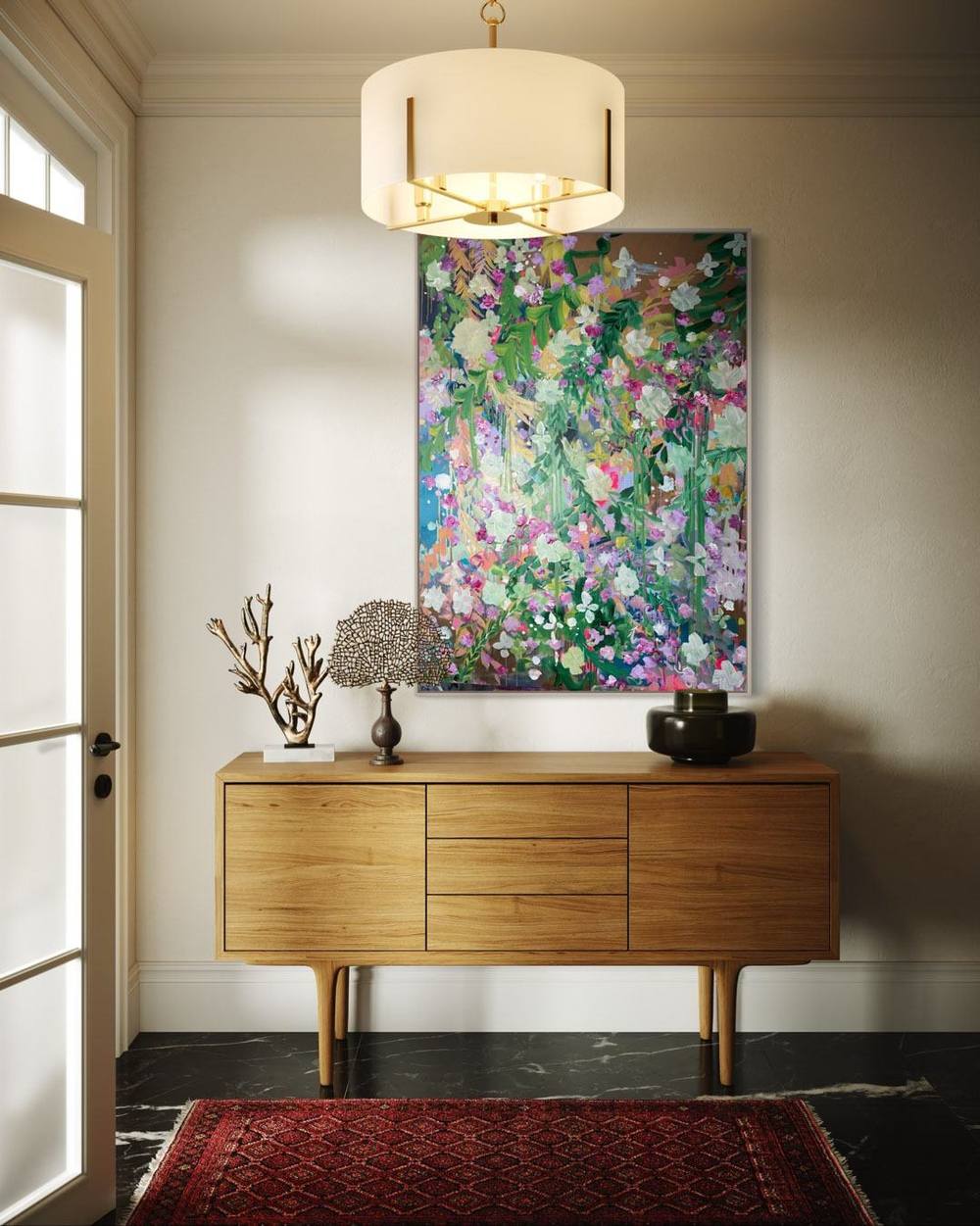
Floral, colour-intense works in particular change a room more than one expects. A hallway becomes a place where you stop. A dining room gains a centre. If you are unsure how a work will look in your own light, you can arrange a trial hanging through Juliane Golbs's studio, for a small fee that is credited when you buy. More in the guide Buying abstract art in Hamburg.
Discovering artists in Hamburg
There are many ways to get to know artists in Hamburg:
- Museums and exhibition venues. The Kunsthalle for the great arc from the Old Masters via Liebermann and the Secession to the present; the Deichtorhallen for the contemporary.
- Art societies and project spaces. For over two hundred years, the Kunstverein on Klosterwall has shown what art is currently debating.
- Galleries. In the city centre and in the districts, often with specialisms worth getting to know.
- The studio. The most personal way. There you see finished works and understand at the same time how they are made.
Juliane Golbs's studio opens by appointment. Conversations there are about material, light and the question of which work suits which room. The Studio page gives an impression of the place. If you are interested in the artist herself, read the portrait of Juliane Golbs or the article A female artist in Hamburg.
Works from this article
Frequently asked questions
What role did the Hamburg Secession play?
The Hamburg Secession (Hamburgische Sezession) was an association of artists whose first exhibition opened at the Hamburger Kunsthalle on 14 December 1919. It shaped modernism in the city until 16 May 1933, when it dissolved itself under pressure from the National Socialists rather than expel its Jewish members.
Where can I see contemporary painting in Hamburg?
At the Hamburger Kunsthalle, the Deichtorhallen, the Kunstverein in Hamburg on Klosterwall, in galleries and open studios. Juliane Golbs's studio opens by appointment.
Sources
6 sources
- hogapage: Hotel Louis C. Jacob feiert 235. Geburtstag
- Tageskarte: Louis C. Jacob startet langfristige Kunst-Kooperation mit Juliane Golbs (29.09.2025)
- Hamburger Kunsthalle: 100 Jahre Hamburgische Sezession (Ausstellung 2019/20)
- Wikipedia: Hamburgische Sezession
- Wikipedia: Kunstverein in Hamburg
- Kunstmeile Hamburg: Deichtorhallen Hamburg