Art That Carries Responsibility: Juliane Golbs and the NCL Foundation
Childhood dementia is rare and little known. One artist decided that her paintings should also bring light into this darkness.
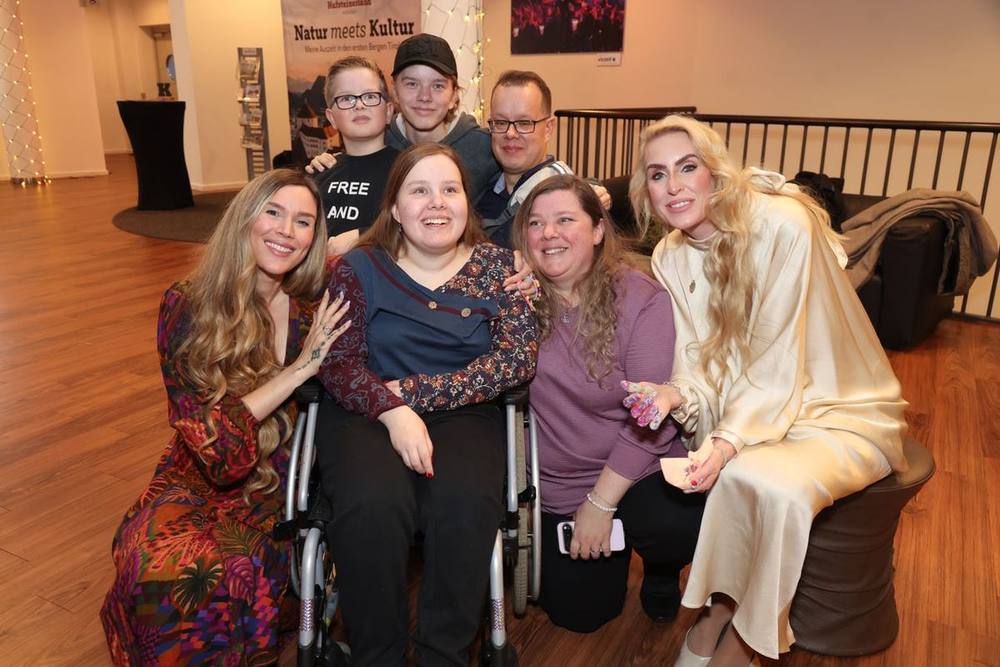
Since 2018 the Hamburg artist Juliane Golbs has been an ambassador of the NCL Foundation (NCL-Stiftung), which funds research into a rare and severe childhood disease. For her, this commitment is part of her artistic work. It is not an extra to be dealt with after hours but part of the question of what pictures are for.
This article explains what lies behind the term childhood dementia, who supports the foundation, what an artist can do for research and how collectors can take part.
What childhood dementia means
NCL, neuronal ceroid lipofuscinosis, is an umbrella term for a group of rare inherited metabolic disorders. Because of a fault in a single gene, the body can no longer break down certain substances. They accumulate in the nerve cells, which gradually die. Because memory and thinking are lost in the process, the condition is called childhood dementia.
According to the NCL Foundation, 13 forms are known today, each caused by a different gene. In Germany three occur most often:
- CLN1, the infantile form, with first signs between six and twelve months of age,
- CLN2, the late-infantile form, beginning between the ages of two and four,
- CLN3, the juvenile form, which usually begins at primary-school age.
The course of the juvenile form
In juvenile NCL the first sign is often failing eyesight. Within a few years the children go blind. From around the age of eight dementia sets in; later, speech and mobility are lost and epileptic seizures follow. In the end those affected need round-the-clock care. Most die between the ages of 20 and 30.
All childhood and adolescent forms are inherited in an autosomal recessive pattern. Both parents carry the change without being ill themselves. Families often learn of it only when their child is diagnosed.
Rare, but not insignificant
In Germany around 700 children and young people are affected, and an estimated 70,000 people worldwide. For a single disease that is few. Therein lies the problem: rare diseases are commercially unattractive for pharmaceutical research, many doctors never see a single case in their careers, and valuable years often pass before the correct diagnosis.
To this day NCL is considered incurable. There is a first glimmer of hope for the CLN2 form: an enzyme replacement therapy was approved for it in 2017, and the University Medical Center Hamburg-Eppendorf works with it. For the other forms, research remains the only hope.
The NCL Foundation in Hamburg
The NCL Foundation was founded in 2002 by Dr Frank Husemann after his son Tim, then six years old, was diagnosed with NCL. The founding was at the same time the national charity project of the service club Round Table Germany. Husemann leads the foundation on a voluntary basis and in 2015 received the Federal Cross of Merit for his commitment.
The foundation is based on Holstenwall in Hamburg and works in three areas:
- Funding research. With doctoral scholarships and the NCL Research Prize for postdocs, it is by its own account the largest single funder of scholarships in this field. An annual congress brings together researchers from around the world.
- Informing doctors. A certified online course on diagnosing juvenile NCL aims to help recognise the disease earlier.
- Raising awareness. The programme “NCL macht Schule” brings the subject into nurseries and schools; for this the foundation received the Hertie Prize in 2017.
The foundation’s patron is the actor Jan Josef Liefers. In addition, ambassadors from culture, sport and business carry the subject into their own worlds. Juliane Golbs is one of them.
Why rare diseases need advocates
With common diseases, the numbers alone ensure that research happens. With rare diseases this pressure is missing. There are few patients for studies, few specialised centres and little public knowledge. Foundations like the NCL Foundation fill this gap. They fund young researchers who might otherwise turn to a more lucrative field and hold together an international network in which results are shared.
In this model, every kind of attention is capital. A donation makes a scholarship possible. A conversation in a doctor’s surgery can shorten a diagnosis by years. A newspaper article brings new supporters. Art can work on all three paths: as proceeds, as an occasion for conversation and as an image that stays in the memory.
That is what distinguishes such a commitment from a one-off gesture. Whoever remains an ambassador for years becomes associated with the cause. In Juliane Golbs’s case it is now more than eight years.
An ambassador by conviction
Juliane Golbs donates works, time and reach. As an ambassador she brings the disease into spaces where it would otherwise hardly appear: galleries and hotels, festivals and collaborations with brands.
This works on two levels. Directly, proceeds from sales, auctions and exhibitions flow into research. Indirectly, something arises that is almost as important for a rare disease: attention. Someone who hears of NCL for the first time at an opening may talk about it. And the more people know the word, the sooner it may come up in a doctor’s surgery.
The portrait of her studio sums this up in one sentence: luxury is responsibility. It is not meant as a label. It expresses the conviction that beauty only carries weight when it is connected with something that reaches beyond it.
Joint works with remarkable people
Some of the artist’s most moving works were not created alone. They grew out of encounters with people who open their own stage to the foundation.
“A Miracle We Believe In” with Joss Stone
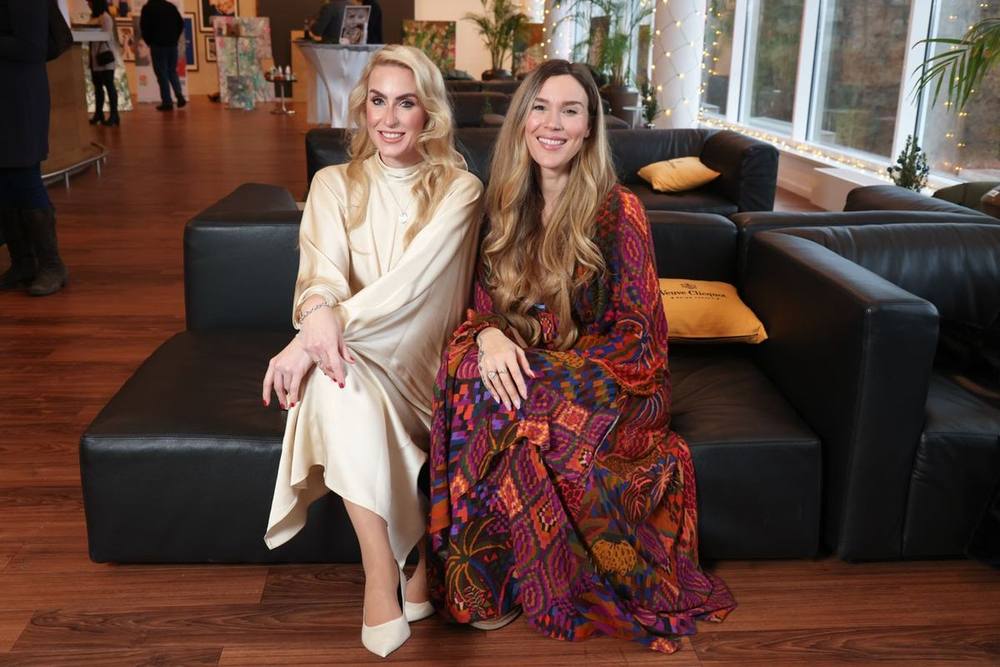
Together with the British soul singer and Grammy winner Joss Stone, Juliane Golbs created the work “A Miracle We Believe In”. It was made in Hamburg in support of childhood dementia research. The title names what it is about: the hope that research will one day make possible what still seems impossible today.
A joint work asks a painter to share control of her own picture. The second hand draws different lines, chooses different colours, follows a different rhythm. For Juliane Golbs this is nothing foreign. In her series Heaven can’t wait she has taken traces of her daughter into the pictures. Painting together is, in her work, an expression of closeness.
“Goldlinie” with Leonie Beck
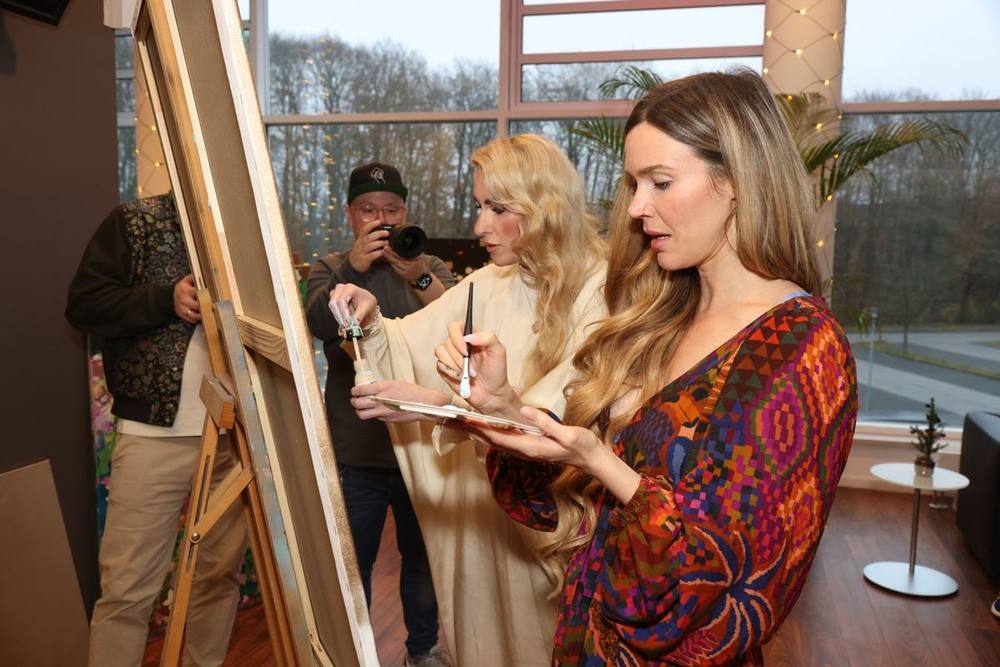
The second joint work is called “Goldlinie” (Gold Line). Juliane Golbs created it with the open-water swimmer Leonie Beck, world and European champion over the long distances. Her sport demands endurance over hours, discipline and the ability to hold a course in open water. These are qualities that research into a rare disease needs as well.
Elbjazz 2026: painting to music
At the Elbjazz Festival 2026, Juliane Golbs and Joss Stone shared the stage once more. In the Grand Hall of the Elbphilharmonie the artist painted live to the singer’s music. The resulting work from the Golden Things series was auctioned in support of the foundation.
Live painting is a discipline of its own. The picture comes into being within the length of a concert, in front of an audience, with no chance to start again the next morning. What emerges carries the evening within it: the music, the room, the mood in the hall. For an auction that is a rare value, because the work is both picture and memory.
These encounters show how art can connect people from very different worlds: music, sport and painting, united for a common cause. On the home page they are gathered under “Encounters”, and the collaborations are described in detail under Dialogues.
Exhibitions whose proceeds help
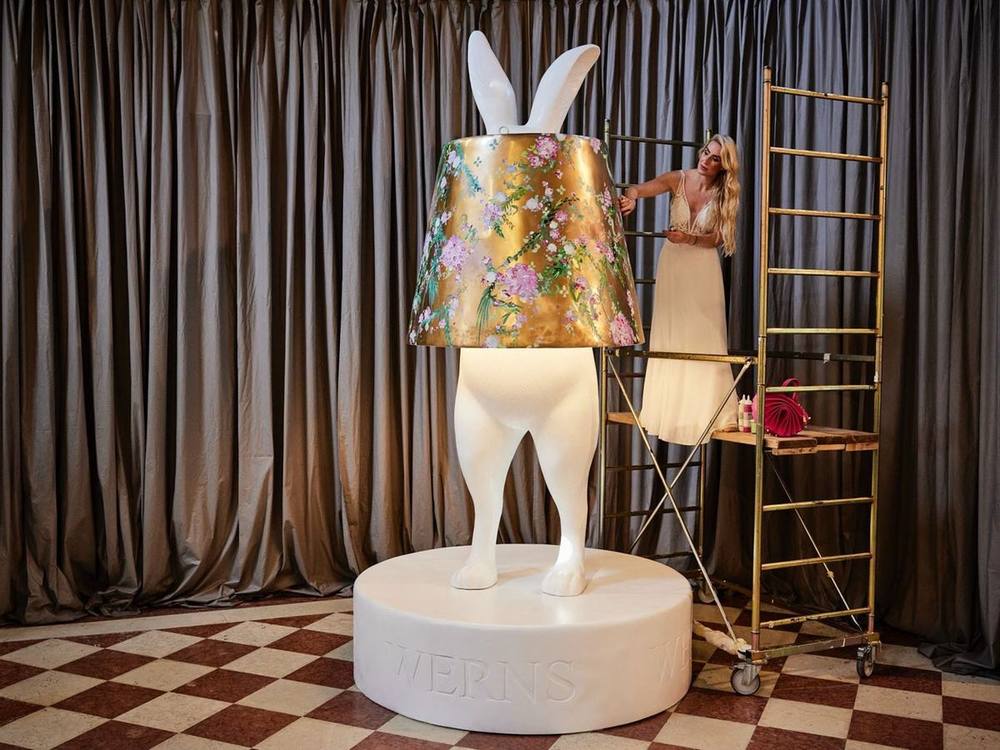
In 2025 Juliane Golbs showed an anniversary exhibition at the AEZ in Hamburg. All proceeds went to the NCL Foundation. The limited editions from Venice, a hand-painted hare lamp and a couture handbag, were also auctioned for a good cause.
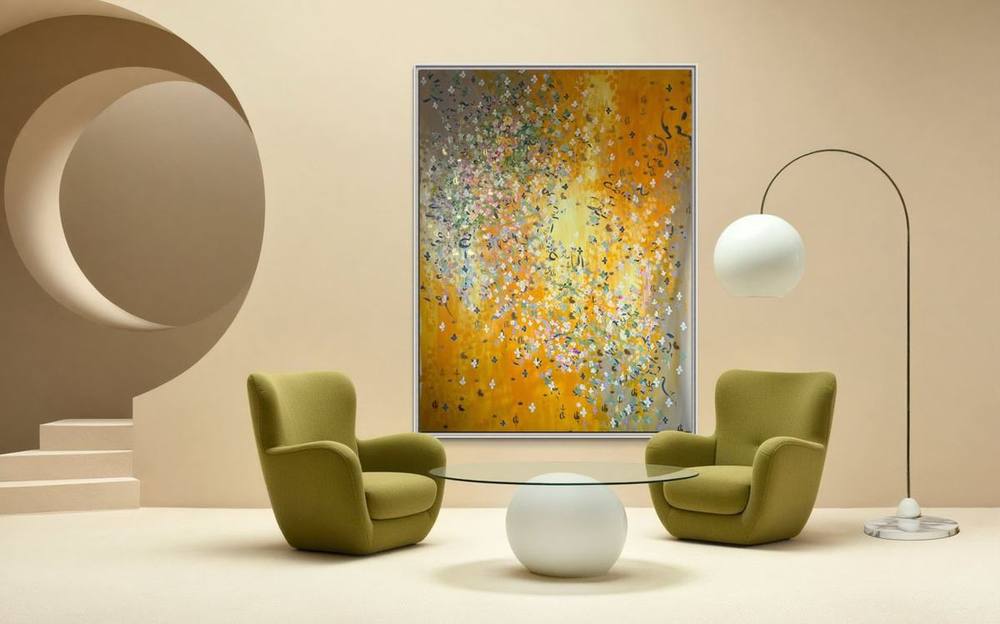
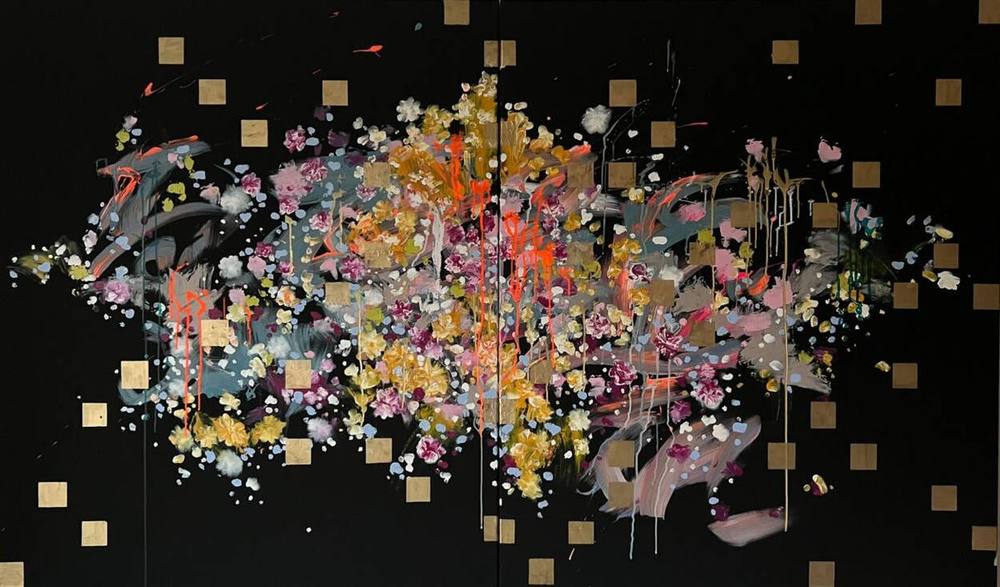
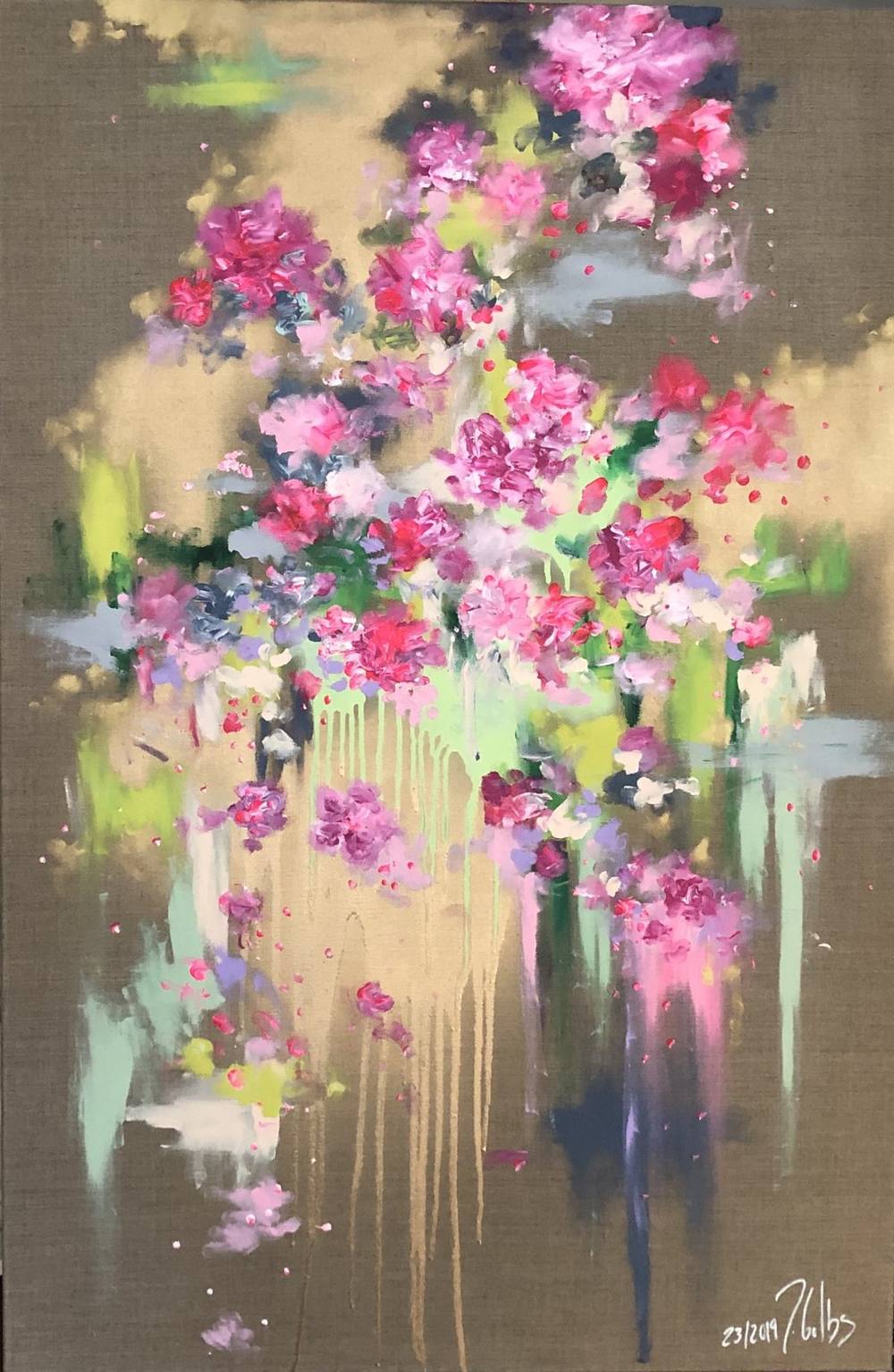
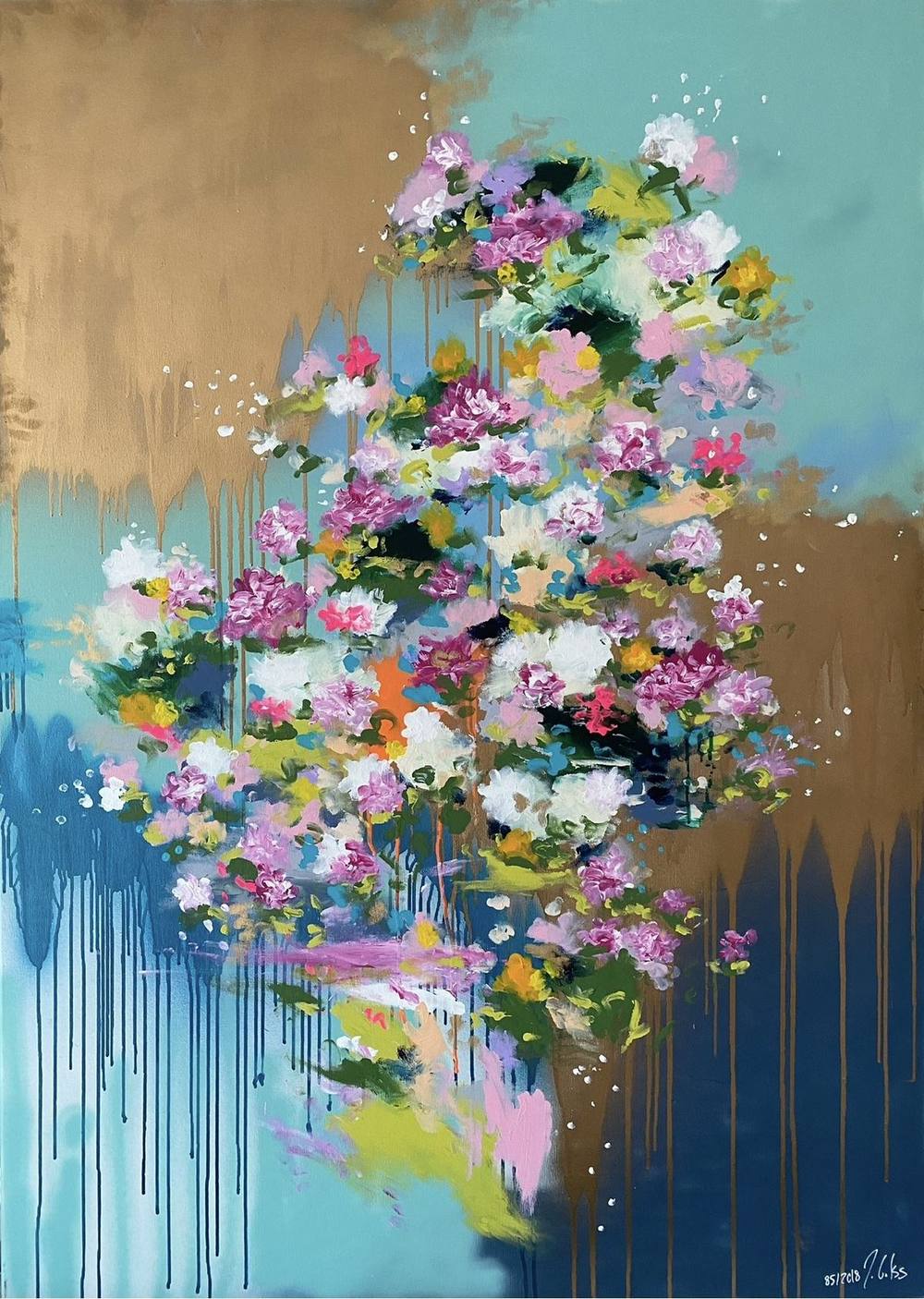
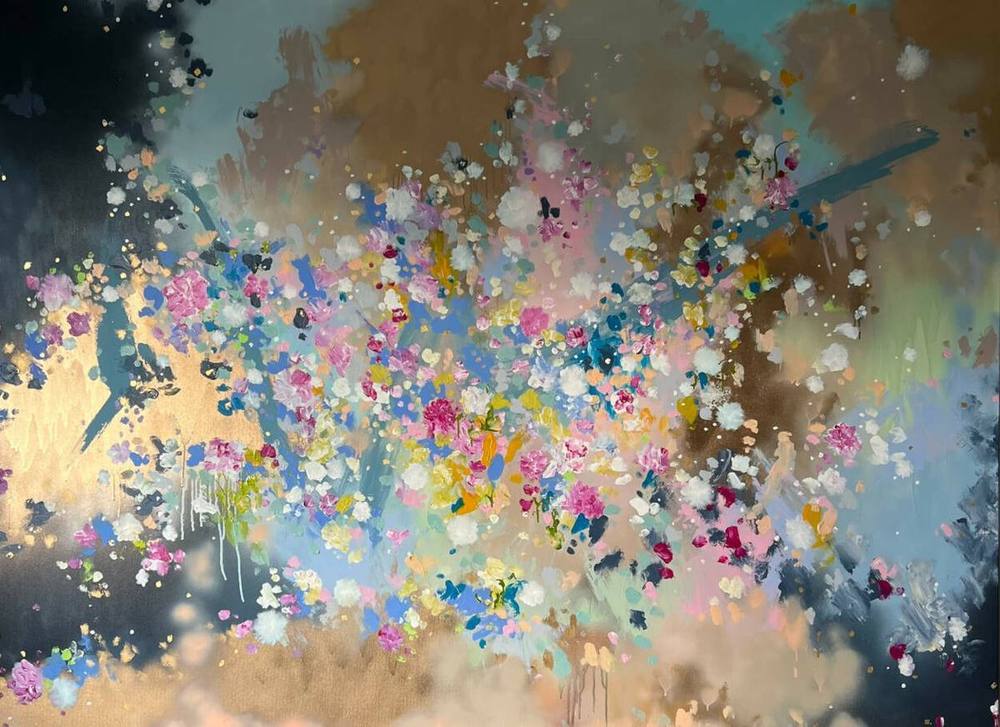
And in the Everlasting Blossoms series, floral abstractions that never wilt, the commitment is built in: part of every sale goes to the foundation. Whoever acquires a work from this series shares in that responsibility. In this context the title can be read twice. Flowers that never fade are an old image of painting against transience. Here they also stand for children whose time is limited, and for the wish that this might change.
Why her art paints confidence
Anyone who knows the story behind the series Fifth Season and Heaven can’t wait understands why this subject is so close to the artist. Both series arose from fear for the life of her own daughter. Her pictures speak of the preciousness of shared time, of the light that remains and of the decision to stay turned towards life.
One might expect art in the service of a grave illness to turn dark. Juliane Golbs’s pictures do not. They glow in pink, turquoise and gold. This is not looking away. It is a stance: whoever knows how fragile time is does not paint fear, but what is worth fighting for.
What collectors can do
There are several ways to support the foundation’s work through art:
- Acquire a work from Everlasting Blossoms. Part of the proceeds goes to the foundation automatically. An overview of all works can be found under Works.
- Bid at benefit auctions. Works from live-painting evenings and limited editions are regularly auctioned in support of the foundation.
- Initiate a benefit project. Companies, hotels and brands who would like to create an edition, an exhibition or an evening for the foundation together with Juliane Golbs can reach her via the contact form.
- Donate directly. Information on the disease, ways to donate and the research projects is available on the NCL Foundation’s own website.
If you are considering a commission, a benefit element can be included there too. The studio is always glad to talk about it.
Works from this article
Frequently asked questions
What is NCL?
NCL stands for neuronal ceroid lipofuscinosis, a group of rare inherited metabolic disorders that lead to blindness, dementia and the loss of motor skills in children. It is also known as childhood dementia.
How many children in Germany are affected by NCL?
According to the NCL Foundation, around 700 children and young people in Germany are affected, and roughly 70,000 people worldwide. All forms are still considered incurable.
Since when has Juliane Golbs supported the NCL Foundation?
Juliane Golbs has been an ambassador of the Hamburg-based NCL Foundation since 2018.
How does buying a work support the foundation?
For the Everlasting Blossoms series, part of the proceeds goes to the NCL Foundation. In addition there are benefit works, auctions and exhibitions whose proceeds support research.