Mark Rothko: colour field painting, the Seagram murals and the Rothko Chapel
Mark Rothko painted floating rectangles on coloured grounds and hoped they would move people to tears. His path to colour field painting, the Seagram murals, the Rothko Chapel and what a large field of colour does in a room.
Mark Rothko is one of those painters whose pictures are recognised at once and yet are hard to describe. Two or three soft-edged rectangles float on a coloured ground, and little else seems to happen. Rothko himself thought this calm deceptive. He wanted to express basic human emotions, naming tragedy, ecstasy and doom among them. This article follows his path to colour field painting, the Seagram murals in London and the Rothko Chapel in Houston. It closes with the question of what a large field of colour does in a room, including in the paintings of Juliane Golbs.
Mark Rothko: origins and early years in New York
Mark Rothko was born Markus Rothkowitz in 1903, in a region that was then part of Russia and is now Latvia. According to the Rothko Chapel’s fact sheet, his family emigrated to the United States in 1913 and settled in Portland, Oregon, where he attended public high school. In 1921 he entered Yale University, leaving two years later. He then moved to New York.
He came to painting, the chapel says, more or less by chance. While waiting for a friend he walked into an art class. Later he enrolled in Max Weber’s course at the Art Students League. The Museum of Modern Art also names 1925, when he studied at the Parsons School of Design under Arshile Gorky.
From Surrealism to the colour field
Rothko’s early pictures are figurative. The chapel describes them as social realist, with the influence of Surrealism arriving later. MoMA notes that Gorky and Rothko shared an interest in European Surrealism. In his paintings of the early 1940s biomorphic forms appear, organic shapes without a clear model. One example is Slow Swirl at the Edge of the Sea of 1944, now at the Museum of Modern Art, measuring 191.4 × 215.2 centimetres.
These forms gradually gave way to the floating zones of colour over coloured grounds for which Rothko is known. MoMA dates the first development of this composition to 1947. The Rothko Chapel speaks of the late 1940s, when he found his own style: blurred-edged rectangles of a single hue set in a field of solid colour. According to MoMA, he spent the rest of his career exploring what this scheme could do, layering rectangles of ever new sizes and colours.
Colour field painting: what defines Rothko’s pictures
The term colour field painting was used by the critic Clement Greenberg in 1955, MoMA records, and it stuck. It describes painting with a great deal of open space and an expressive use of colour. William S. Rubin, formerly chief curator of painting and sculpture at the Museum of Modern Art, wrote that Rothko’s coloured rectangles seemed to dematerialise into pure light. How colour field painting fits into the wider history of abstraction, from Barnett Newman to Helen Frankenthaler, is told in the article on abstract paintings.
Rothko himself resisted a purely formal reading. MoMA quotes him as saying he was interested only in expressing basic human emotions. The fact that many people broke down and cried in front of his pictures showed that he could communicate those emotions. Anyone moved only by their colour relationships, he said, had missed the point.
The simplicity of his pictures was hard won. Tate quotes a remark by Rothko: this kind of design might look simple, but it usually took him many hours to get the proportions and colours just right. Everything had to lock together. He was, he supposed, pretty much a plumber at heart.
Paintings by Mark Rothko: his best-known works
Mark Rothko’s best-known paintings hang mainly in three institutions. The Museum of Modern Art in New York owns, among others, No. 10 of 1950, an upright canvas of 229.6 × 145.1 centimetres given to the museum by the architect Philip Johnson. There is also No. 5/No. 22, dated 1949 on the reverse, a gift of the artist measuring 297 × 272 centimetres. No. 37/No. 19 (Slate Blue and Brown on Plum) dates from 1958.
The largest public collection of Rothko’s work, by its own account, belongs to the National Gallery of Art in Washington. It rests on a gift from the Mark Rothko Foundation in 1986 of some 1,000 works on canvas and paper. The display Bodies in Space shows early paintings of bodies in interiors and themes from Greek mythology alongside his signature horizontal rectangles against monochrome backgrounds. Rothko, the museum writes, wanted to reach the heights of exaltation as well as the depths of despair.
Among his most famous works are two ensembles made for particular rooms: the Seagram murals and the paintings of the Rothko Chapel.
The Seagram murals at Tate Modern
In 1958 Rothko was commissioned to produce a series of works for a restaurant in the Seagram Building in New York. Tate describes how he built a scaffold in his studio to match the dimensions of the site, so that he could paint at scale. His paintings, he said, were involved with the scale of human feelings, the human drama, as much of it as he could express.
The pictures became much darker than anything he had painted before. In place of the bright, intense colours of earlier canvases, maroon, dark red and black now set the tone. Rothko called them more sombre than anything he had tried. According to Tate, he drew on the atmosphere of a library designed by Michelangelo. He recalled the feeling of being trapped in a room where all the doors and windows had been bricked up.
In 1960, after more than two years of work and with a studio full of finished paintings, Rothko withdrew from the commission. The exclusive setting of the restaurant seemed to him the wrong place for his work. He later gave nine canvases from the series to Tate. They now hang in a room of their own in the Natalie Bell Building at Tate Modern. For Black on Maroon of 1959, Tate lists the medium as oil paint, acrylic paint and glue tempera on canvas. What this mixture reveals about the early history of acrylic paint is covered in the article on acrylic on canvas.
The Rothko Chapel in Houston
In 1964 John and Dominique de Menil, collectors and philanthropists in Houston, commissioned Mark Rothko to create a place for meditation and prayer. According to the chapel’s fact sheet, they gave him the chance to shape an entire environment for his work. He completed the paintings in 1967. Eighteen were made for the space in all: fourteen hang in the chapel as Rothko designated, while four alternates are stored at the Menil Collection.
The scale is immense. The two paintings on the north wall each measure 180 × 297 inches, roughly 4.57 × 7.54 metres. Rothko applied the paint with housepainter’s brushes four to six inches wide. He laboriously mixed dry pigments with rabbit skin glue, egg and oil emulsion and polymer until colour and surface were as he wanted them. During the day only natural light enters the room, as Rothko specified.
The chapel opened in February 1971. Philip Johnson was the original architect, and the building was completed by Howard Barnstone and Eugene Aubry. Rothko never saw it. He went on painting for three years after finishing the chapel works. In 1968, MoMA notes, he survived an aneurysm, after which he reduced the size of his canvases and moved from oil to acrylic. In 1970, at the age of 66, he took his own life.
Rothko never explained why he chose such dark tones. The chapel does point out that the paintings are not all black. The eye needs time to adjust to the light before differences emerge. It is, the chapel says, less about seeing than about feeling. How black works in painting more broadly is the subject of the article on black in art.
Presence in the room: why Rothko sought closeness
With Rothko the painting can hardly be separated from the room. For the Seagram murals he rebuilt the restaurant’s dimensions in his studio. In Houston he shaped the surroundings as well. The Rothko Chapel describes the paintings and the space as inseparable, and no other works of art are shown there. A large field of colour behaves differently from a picture seen at a distance. It fills the field of vision and changes with the light and with the length of one’s looking.
For collectors this holds a practical lesson. A painting with a calm, large surface needs a wall that gives it room. Light that is allowed to change through the day matters just as much. The picture is at its strongest when one can stand close to it. Advice on format and hanging can be found in the article on large paintings for the living room.
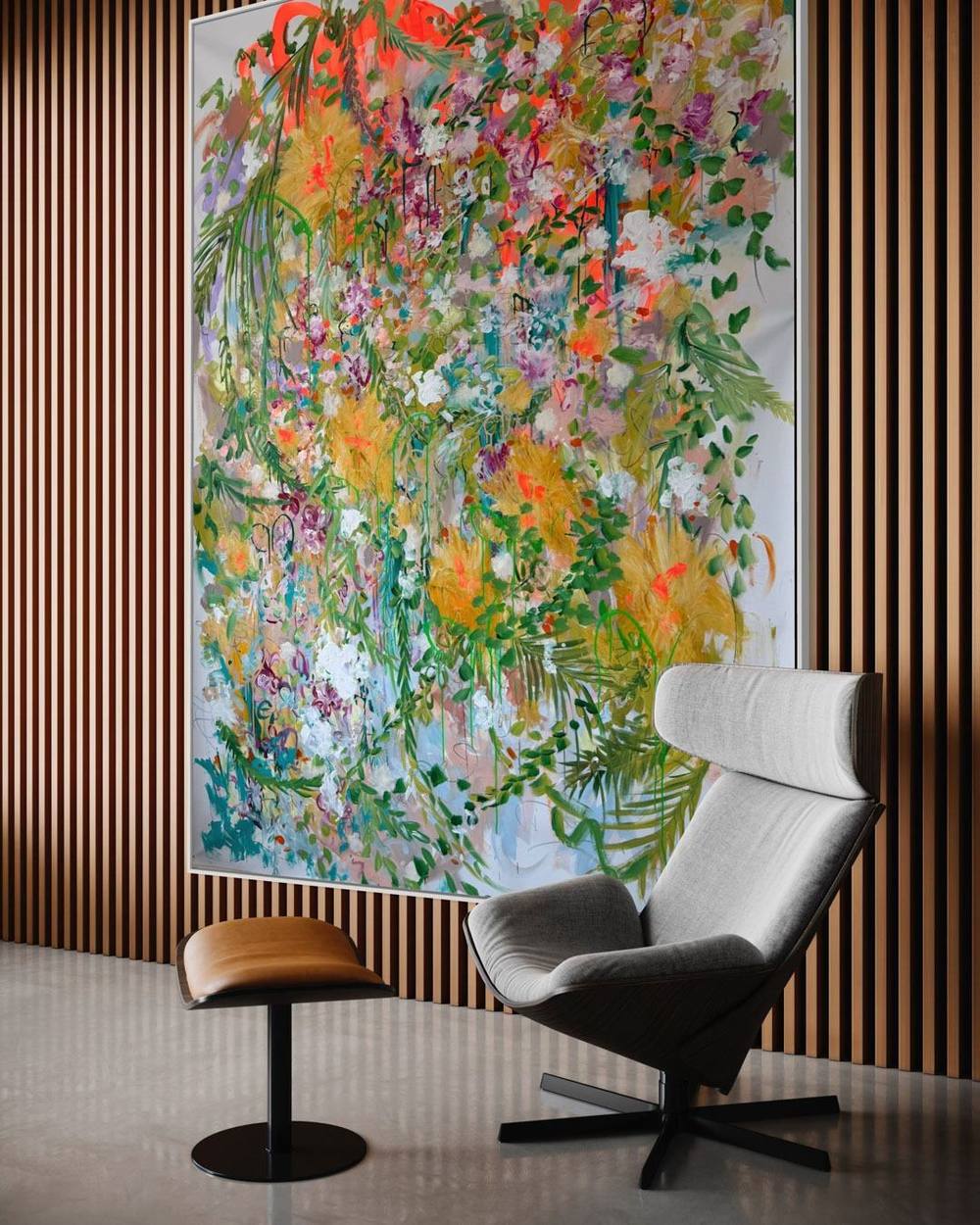
Fields of colour in the work of Juliane Golbs
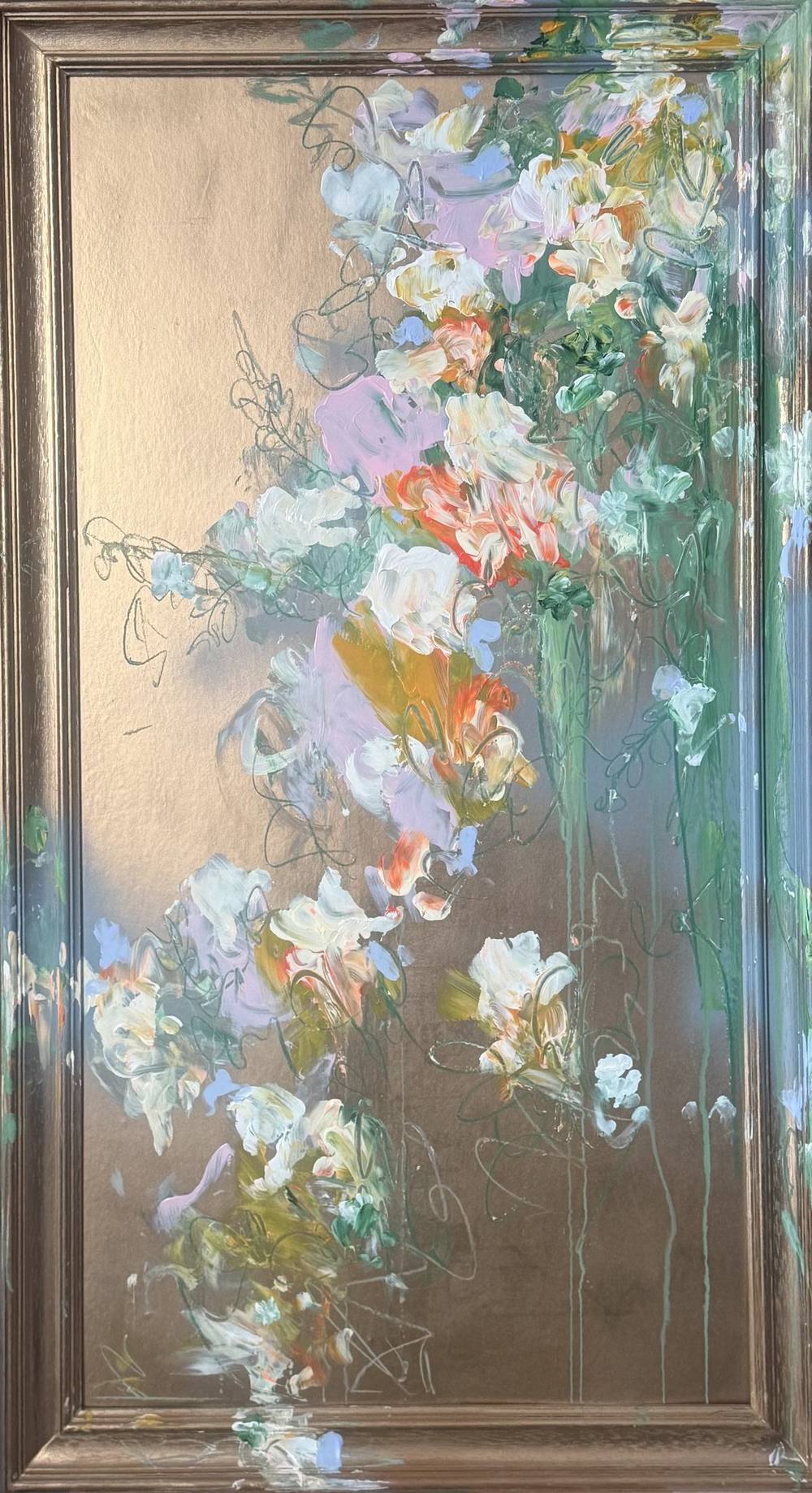
The Hamburg painter Juliane Golbs does not paint colour field pictures in Rothko’s sense. Her work is floral and gestural, often combined with gold. Yet the field of colour plays a load-bearing role. The article about the artist describes how every painting begins with the ground: the first fields of colour set the temperature of the picture, a warm apricot, a deep blue, a muted rose. Later they often remain visible only at the edges, but they carry the mood.
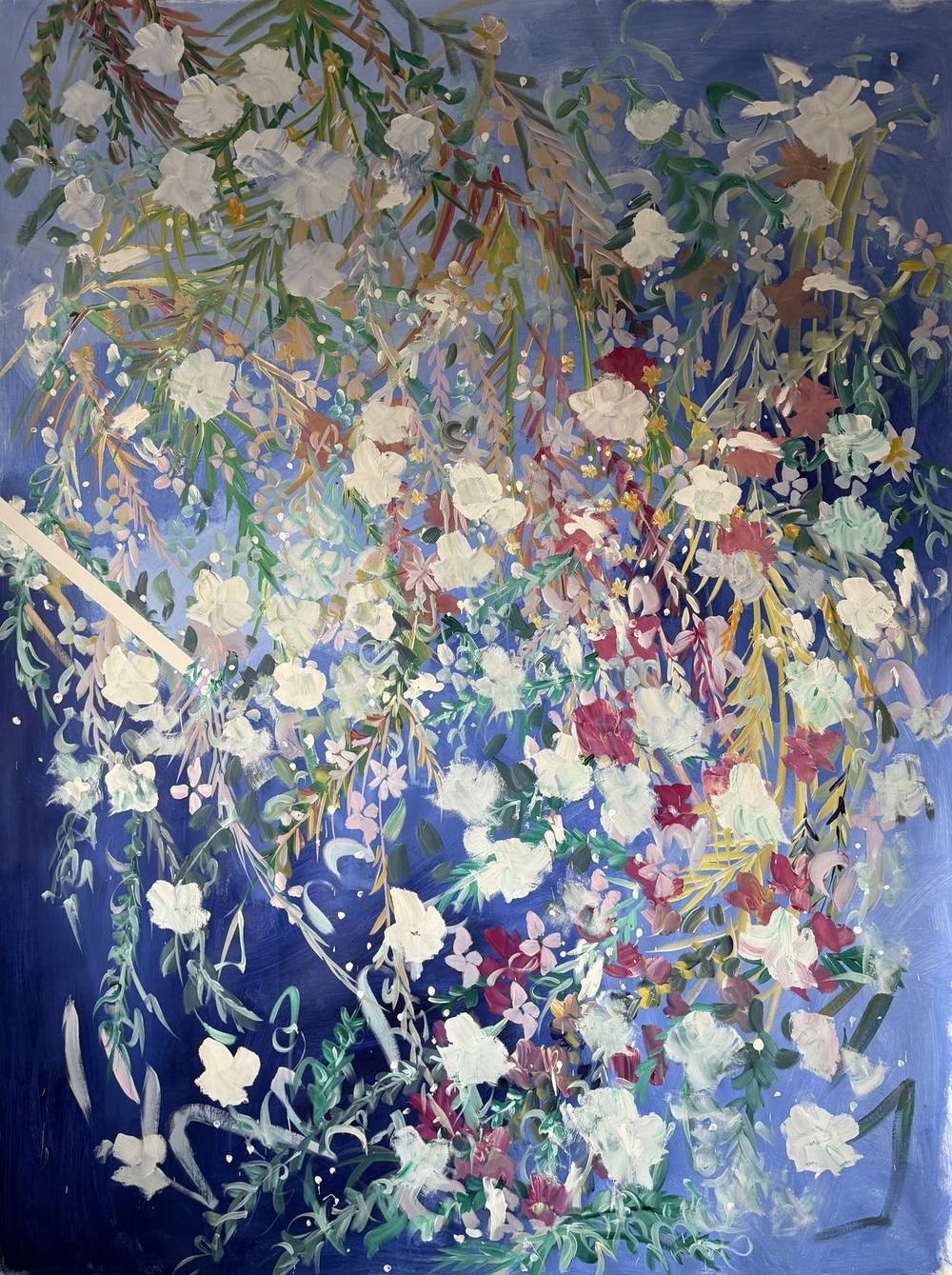
This is especially clear in 02 | 2025 from the series Fifth Season #heaven can wait. A deep ultramarine that darkens to midnight blue towards the edges forms the ground for a cascade of grasses and pale blossoms. The text on the work calls it the quietest side of the series. At 150 × 200 centimetres the canvas is large enough for the blue surface to become an atmosphere of its own in the room.
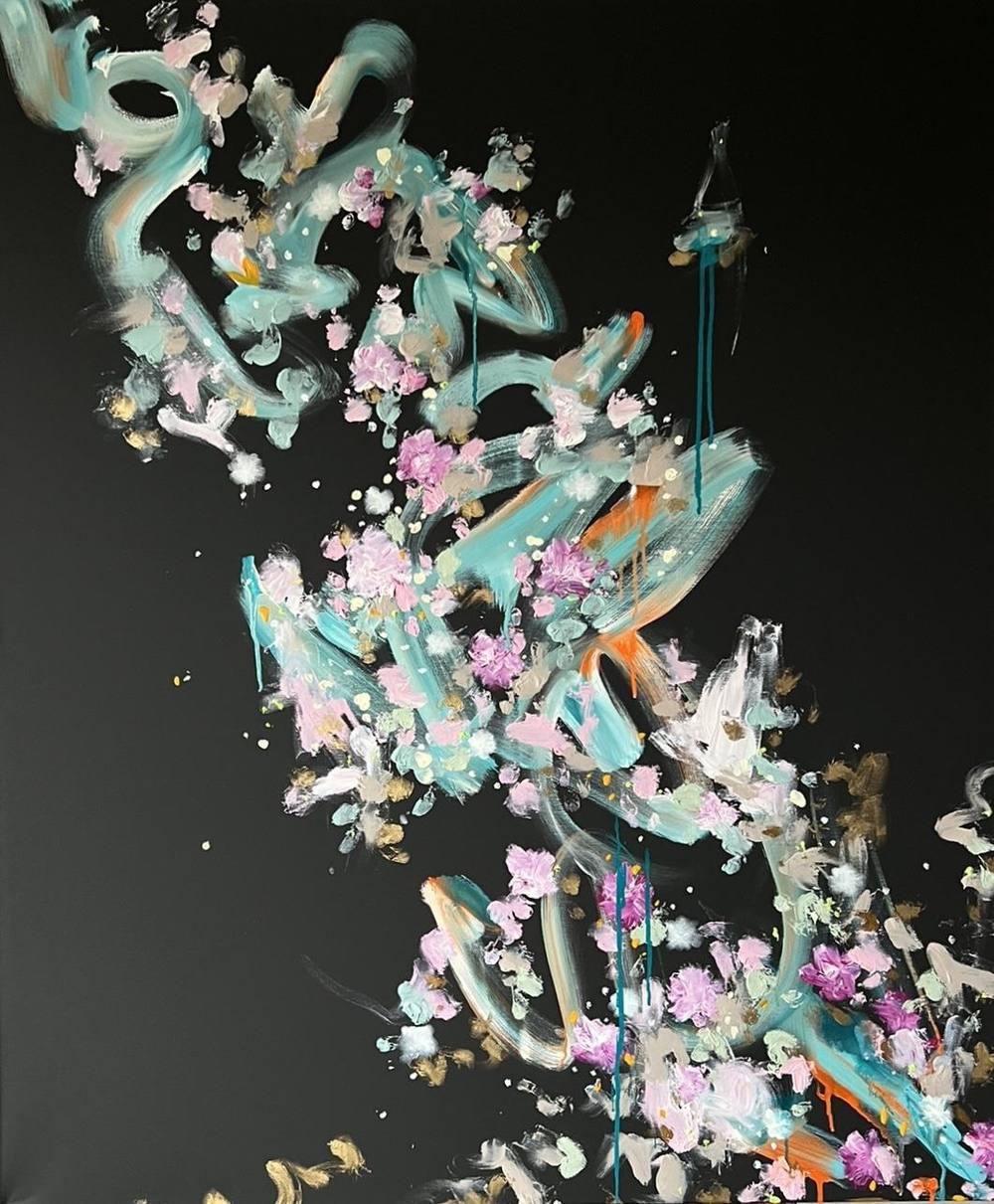
In 27 | 2022 from the Signature Collection the surface is black. From it rises a single broad brushstroke in turquoise and mint, along which dabs of rose, lilac and white come into bloom. The text on the work recommends a bright, calm setting in which the black reads as spatial depth. In Rothko the dark leads inwards; here it serves as a stage for a gesture.
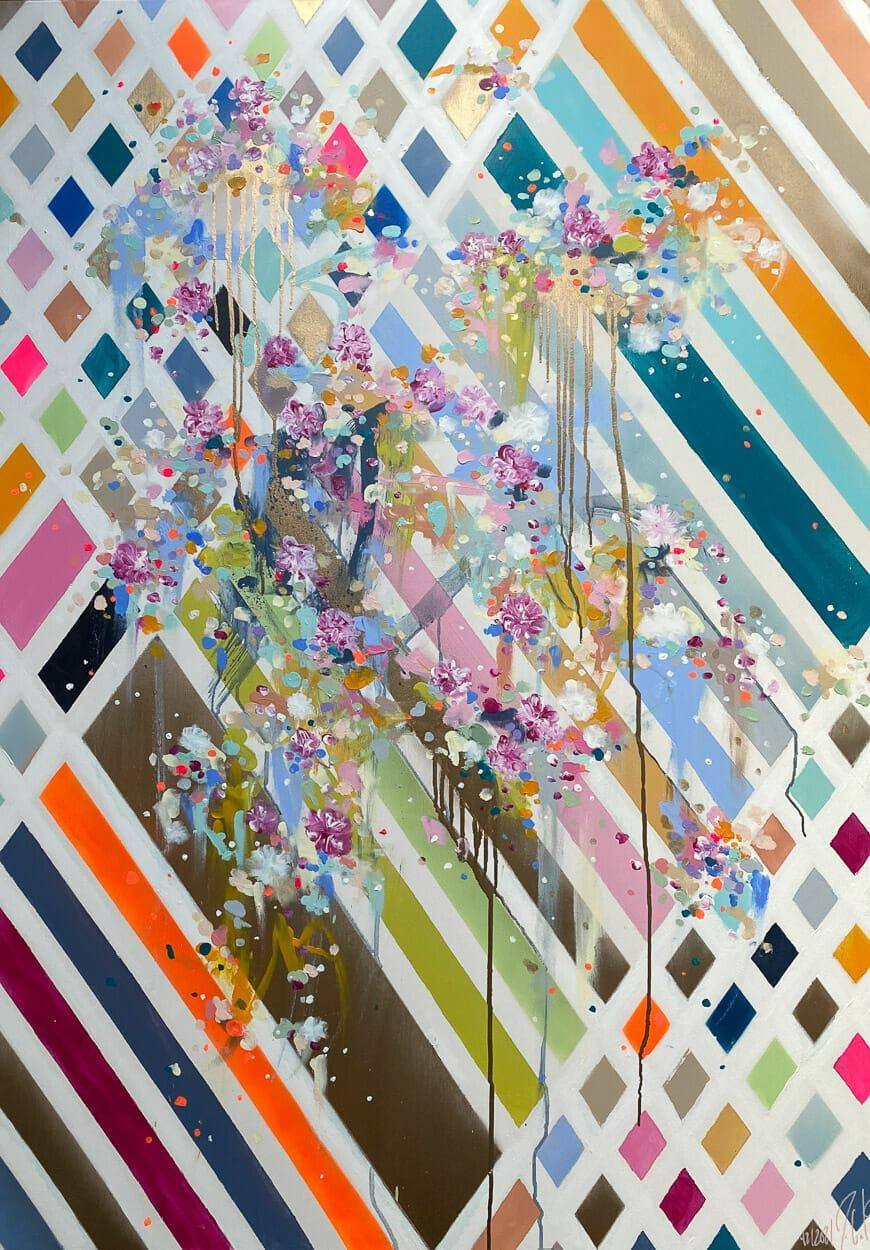
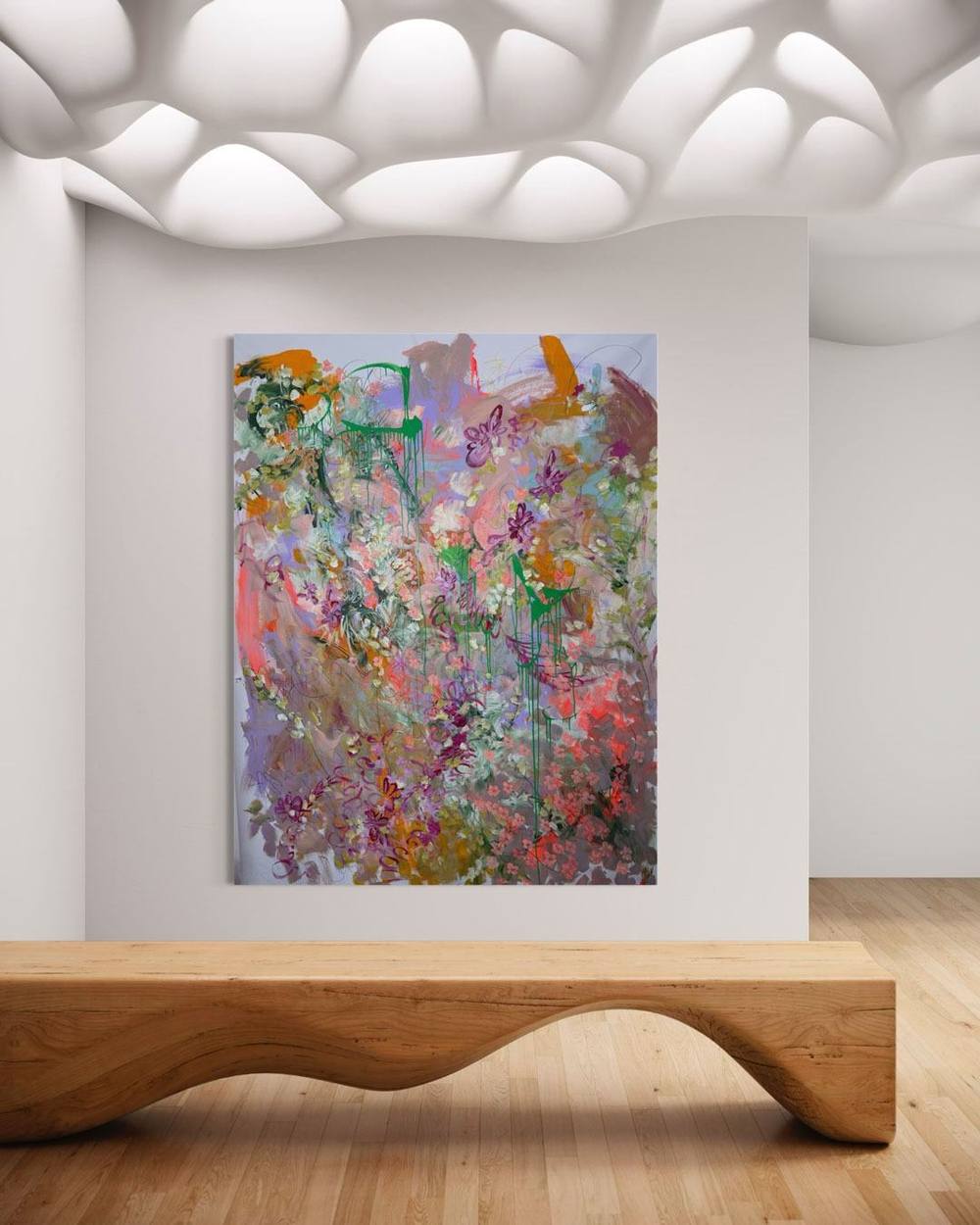
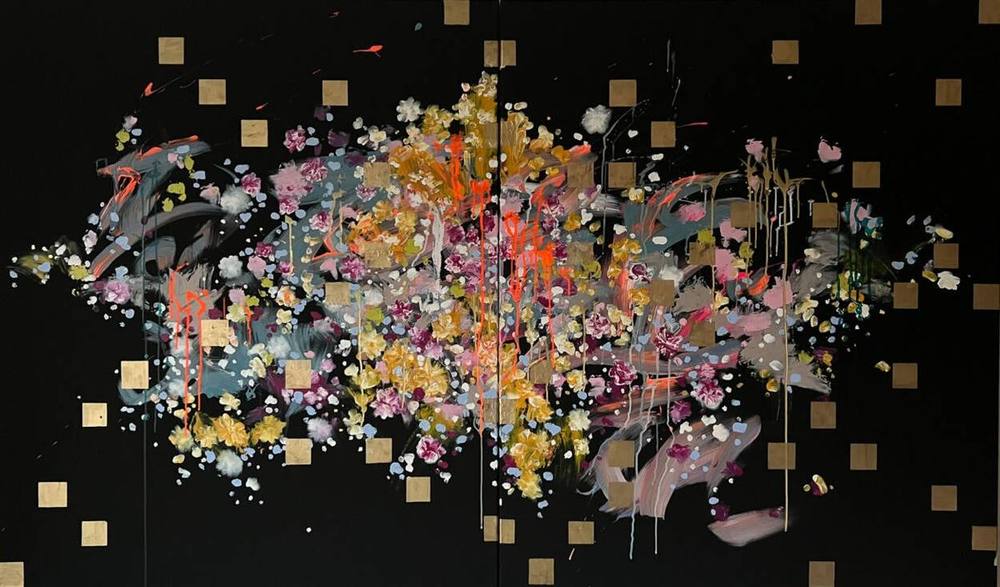
A different approach to the colour field appears in 42 | 2021. A lattice of white diagonals divides the ground into diamonds and bands of petrol, orange, neon pink, midnight blue, olive and bronze. According to the text on the work, the order recalls textile patterns or the colour field studies of modernism. Over it falls a cascade of small blossoms, with golden drips linking the two layers. The large square 04 | 2025, 200 × 200 centimetres, has no main motif and no hierarchy according to its text. It is compared to the all-over painting of post-war America, turned towards the floral. In a room it needs a calm, wide wall.
What Mark Rothko teaches above all is to give a picture time and space. His fields of colour open up only to those who stay. All available works by Juliane Golbs can be found in the catalogue of works, and the art advisor helps with choosing by colour and format. For questions about individual works, a message via the contact page is all it takes.
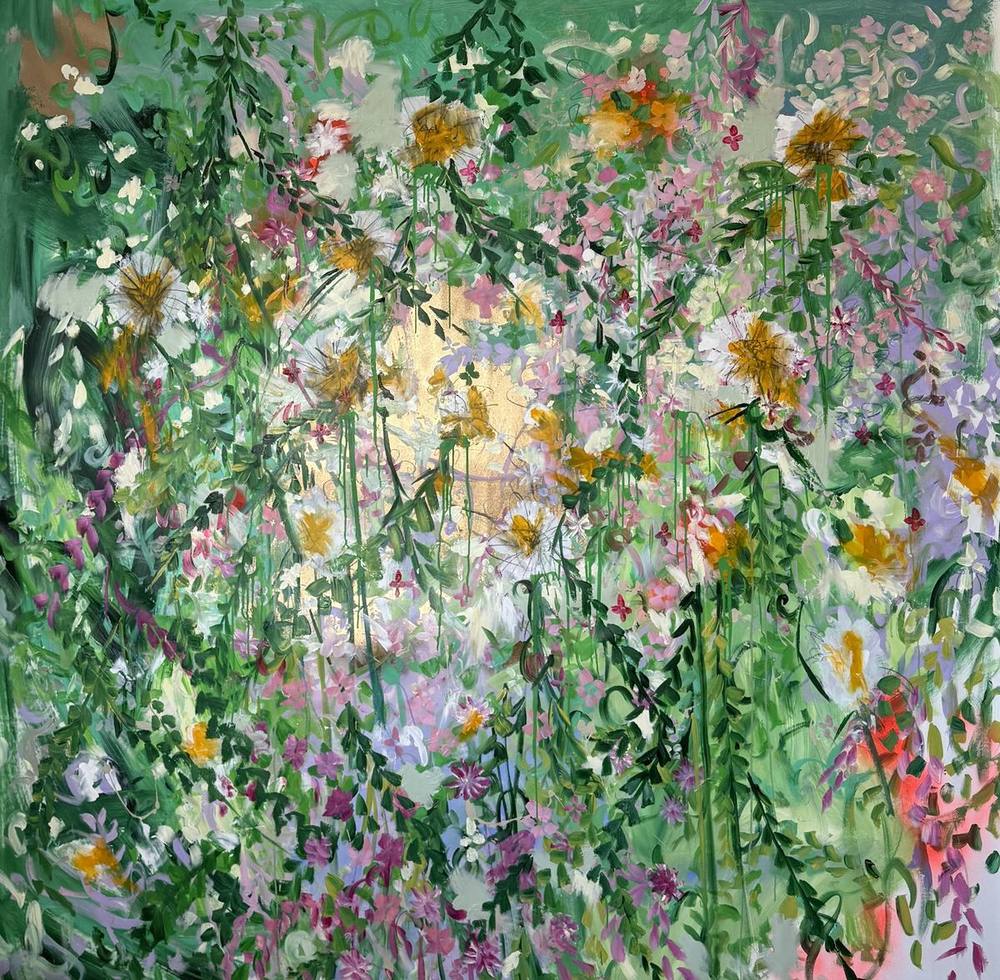
Works from this article
Frequently asked questions
Who was Mark Rothko?
Mark Rothko was born Markus Rothkowitz in 1903 in what is now Latvia, then part of Russia. In 1913 his family emigrated to the United States and settled in Portland, Oregon. Rothko is one of the Abstract Expressionist painters of New York. He died in 1970.
What is colour field painting?
According to the Museum of Modern Art, the term was used by the critic Clement Greenberg in 1955. It describes painting with a great deal of open space and an expressive use of colour. MoMA dates Rothko’s first floating zones of colour over coloured grounds to 1947.
What are the Seagram murals?
In 1958 Rothko was commissioned to paint a series of works for a restaurant in the Seagram Building in New York. After more than two years of work he withdrew in 1960, feeling the exclusive restaurant was the wrong setting. He later gave nine canvases from the series to Tate in London.
How many paintings hang in the Rothko Chapel?
Fourteen. John and Dominique de Menil commissioned Rothko in 1964 and he completed the paintings in 1967. According to the chapel there are 18 paintings in all: fourteen hang in the chapel and four alternates are stored at the Menil Collection. The chapel in Houston opened in February 1971.
Where can I see paintings by Mark Rothko?
Tate Modern in London shows the Seagram murals in a room of their own. The Museum of Modern Art in New York and the National Gallery of Art in Washington hold large collections, the National Gallery by its own account the largest public one. The Rothko Chapel stands in Houston. It is worth checking each institution’s current information before a visit.