The hare in art: from Dürer’s Young Hare to Venice
A watercolour from 1502, a hare on the moon, a dead hare in a Düsseldorf gallery. How a shy animal became one of the most enduring figures in the history of art.
Few animals are so shy, yet few have been painted, drawn and cast so often. The hare in art runs from a small watercolour made in Nuremberg to ink paintings from Osaka and bronzes on Park Avenue in New York. It has been a study from nature, a sign of faith, an artist’s silent interlocutor and, most recently, the emblem of a festival in Venice. What follows is a walk through five centuries that ends in a church in Cannaregio.
Dürer’s Young Hare: a sheet from 1502
It begins with a sheet of around 25 × 22.5 centimetres. Albrecht Dürer painted his Young Hare (in German, Feldhase) in 1502 in watercolour and bodycolour, heightening it with white. Traces of an underdrawing can still be made out at the right ear. The hare sits in three-quarter profile, not poised for flight but, as the Albertina curator Christof Metzger puts it, relaxed and nibbling. Metzger describes Dürer as concentrating everything on the sharpest observation and the most precise rendering of detail.
Step close and you find a detail that reproductions easily lose. Reflected in the hare’s eyes are the windows of Dürer’s workshop. The animal sits in a room that is never shown. Even in Dürer’s lifetime the sheet was widely copied and admired as a marvel of observation. By around 1600 at least 25 fake hares were circulating in the cabinets of curiosities of Europe.
Dürer also knew the hare as a pictorial sign. In the woodcut The Holy Family with Three Hares, which the Metropolitan Museum dates to around 1497/98, three of the animals sit at the Virgin’s feet. A few years later he isolated the animal entirely and made it the sole subject of a picture.
Why the Young Hare is so rarely seen
The Albertina in Vienna has owned the Young Hare since 1796, when Duke Albert of Saxe-Teschen acquired it through an exchange of works with Emperor Franz II. Its provenance can be traced without a gap back to Dürer’s workshop. For the museum it remains the heart of the collection.
That is precisely why so few people see the original. Paper is extremely sensitive to light and temperature. The Albertina counts the hours the sheet has been exposed to light. Only then does it decide when the work can be shown again. According to the German news agency epd it had been exhibited only nine times in around 150 years, first in 1871 and most recently in 2019/20 in a major Dürer exhibition that drew 422,000 visitors. In the summer of 2026 the Albertina brought it out for a tenth time for its anniversary exhibition “Collecting for the Future”. The rest of the time the hare rests in darkness and visitors meet a copy.
For collectors this is an instructive story. A work on paper survives through restraint. Paintings on canvas or panel are more robust, yet there too light and climate decide how long colour and gold will last.
The hare in art: a symbol of life and peace
The symbolism of the hare in art is richer than the Easter bunny suggests. Bettina Schmitt of the Dommuseum in Frankfurt points out that the animal plays no part in the Easter liturgy. In Christian art, however, it appears in many places and with a variety of meanings. It can stand for sensual pleasure, but also for the triumph of life over death, the very heart of the Easter message.
Schmitt names a further association: the hare, she says, is always linked with the idea of peace. The Viennese action artist Hermann Nitsch saw in it above all the animal of flight, the creature that instinctively escapes death. The motif still moves between these poles. The hare is vulnerable and watchful, it vanishes in an instant and reappears just as quickly.
The moon hare in Japanese painting
East Asia tells the story of the hare quite differently. In Japanese folklore a hare lives on the moon, where it pounds the ingredients for mochi, a traditional rice cake, with mortar and pestle. The New Orleans Museum of Art holds a hanging scroll of 1867 by the Osaka animal painter Mori Ippo (1798 to 1871), ink and light colour on silk, showing the hare at work. The museum describes it as an auspicious image associated with the celebration of a new year.
As early as the Heian period, mochi was regarded in Japan as a food closely associated with the divine. The moon hare is therefore no longer a timid wild animal but a figure of blessing that works in the light. It shares a quiet optimism with the European image of the hare as a sign of life.
Beuys: How to Explain Pictures to a Dead Hare
On 26 November 1965 the hare took the leading role in performance art. At Galerie Schmela in Düsseldorf, Joseph Beuys covered his head with honey and gold leaf, took a dead hare in his arms and walked with it through the exhibition, whispering to the animal about the pictures on the walls. The action was titled How to Explain Pictures to a Dead Hare. The Getty Research Institute regards it as the culmination of Beuys’s influential teachings on the extended definition of art.
For a painter who works with gold leaf herself, one detail stands out: here the gold lay on the artist’s skin, not on a panel. Beuys returned to the hare later. During documenta 7 in 1982 he melted down a replica of the crown of Ivan the Terrible and cast a golden hare from it. To him the crown was an outdated symbol of autocratic rule. The peace hare is now in the Staatsgalerie Stuttgart. A sign of power had become a sign of peace.
Barry Flanagan and the leaping hare
A few years before the crown was melted, a British sculptor had found his lifelong motif. Barry Flanagan, born in 1941 in Prestatyn, North Wales, saw a hare running across the Sussex Downs and in 1979 conceived his first Leaping Hare. From the early 1980s he exhibited his bronze hares, often in mid-leap, often on a monumental scale. His Large Leaping Hare of 1982 stood at documenta 7 in Kassel, and in the same year Flanagan represented Britain at the Venice Biennale.
In 1995 and 1996 his hares stood on Park Avenue in New York, and in 1996 in Grant Park in Chicago. Flanagan died in 2009. His hares show how much a single animal can carry: movement, humour, an almost human gesture. For him the hare is neither a study nor a symbol in the narrow sense. It is a character you recognise.
Venice 2025: the hare beneath the golden shade
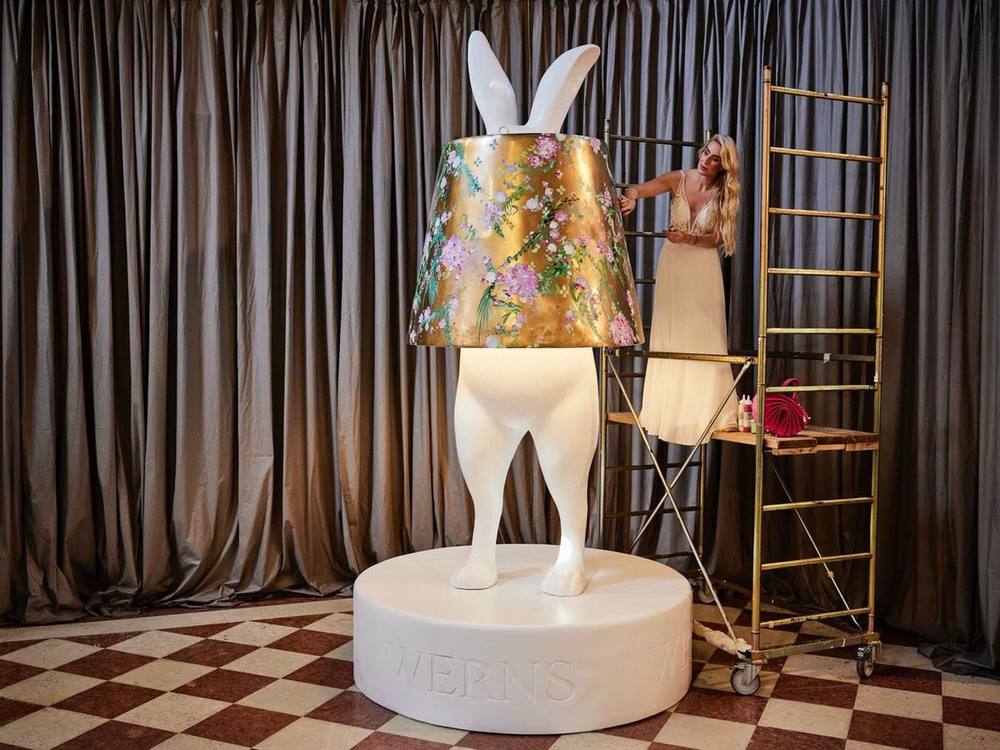
In Venice the circle closes. At the Venice Design Week 2025, held from 11 to 19 October under the title “Tempora”, the design label WERNS showed a monumental hare sculpture in the church of San Leonardo in the Cannaregio district. It is based on the label’s “Hiding Rabbit Lamp”: a hare whose head disappears beneath a lampshade. For Venice this became a figure around 3.5 metres tall on a round plinth.
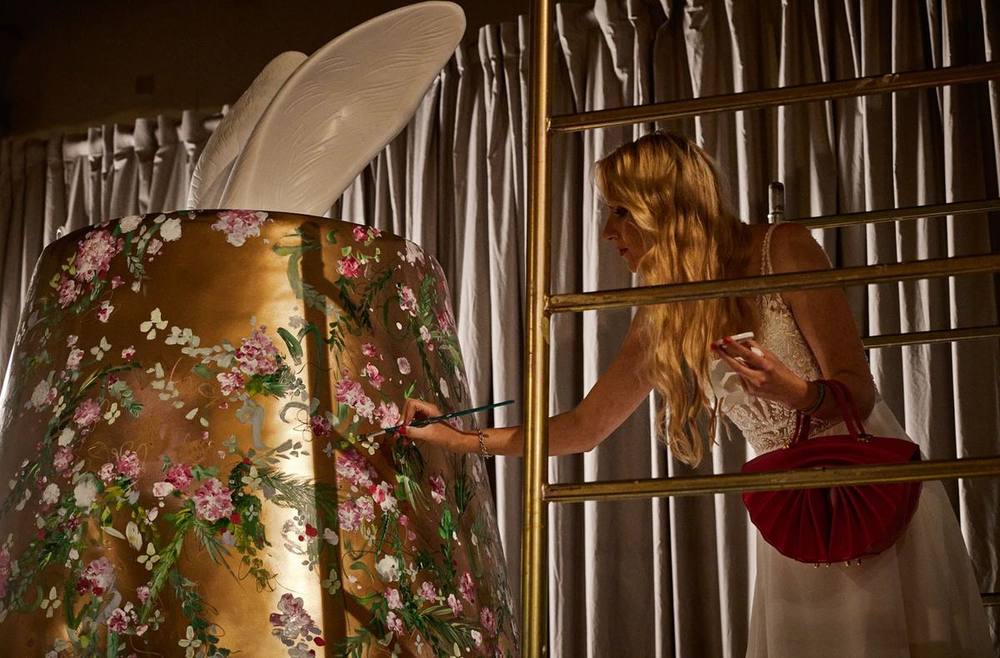
On the opening evening, 11 October 2025, Juliane Golbs painted the white sculpture in front of an audience. She worked with brushes, spray paint, her bare fingers and fine detail, accompanied by music. The shade received a gold ground with blossoms in rose, violet and green. The motifs played on echoes of “Alice in Wonderland”, of the rabbit that lures a girl into another world. The organisers chose the installation as the emblem and leitmotif of the festival. The full story of that evening is told in the article on the Venice Design Week 2025.
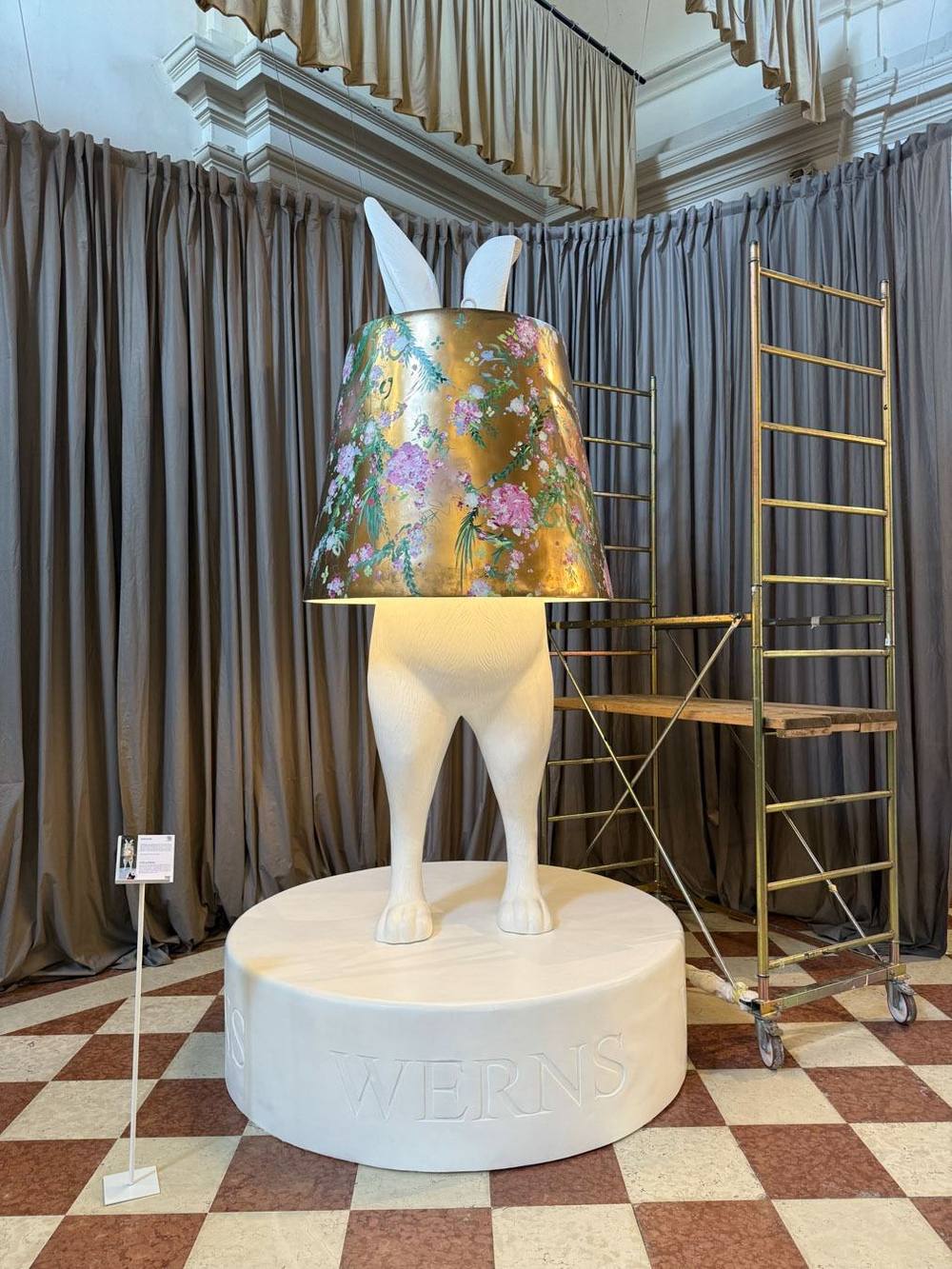
In art-historical terms the sculpture is a counter-image to Dürer. His hare is all gaze, its eyes reflecting the workshop, whereas the hare in San Leonardo hides its head and draws attention precisely by doing so. It shares its public scale with Flanagan and the closeness of hare and gold with Beuys.
The hare in the work of Juliane Golbs
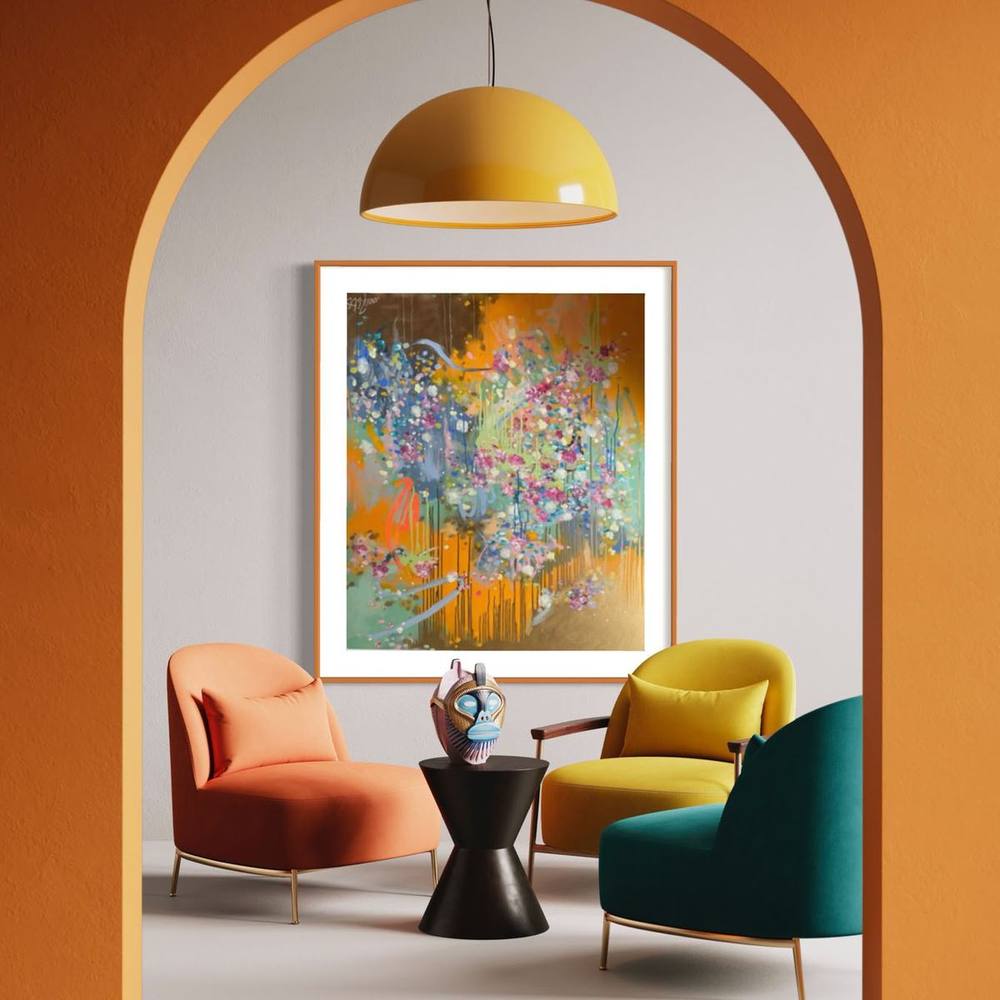
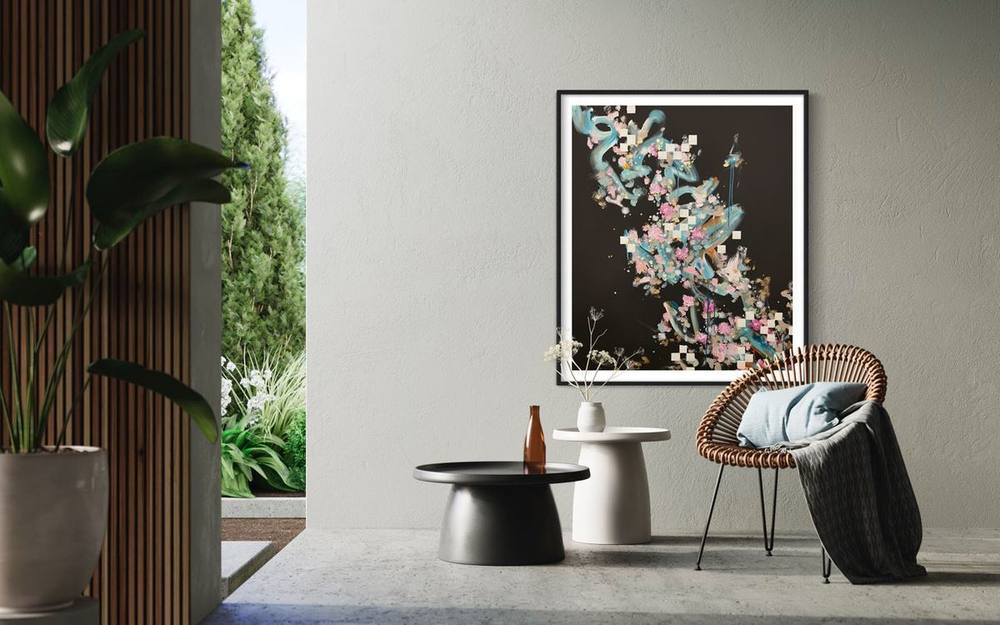
It is no coincidence that this artist painted the hare in Venice. In her work it has long belonged to a fixed repertoire of signs, alongside the JG monogram, the crown and the anchor. Here the hare stands for alertness, curiosity and quickness of mind. In the Signature Collection these signs come together as a personal emblem. The round painting 508 | 2024, 80 centimetres in diameter, sets them in golden rows over a restless blue, with crown and hare given equal weight.
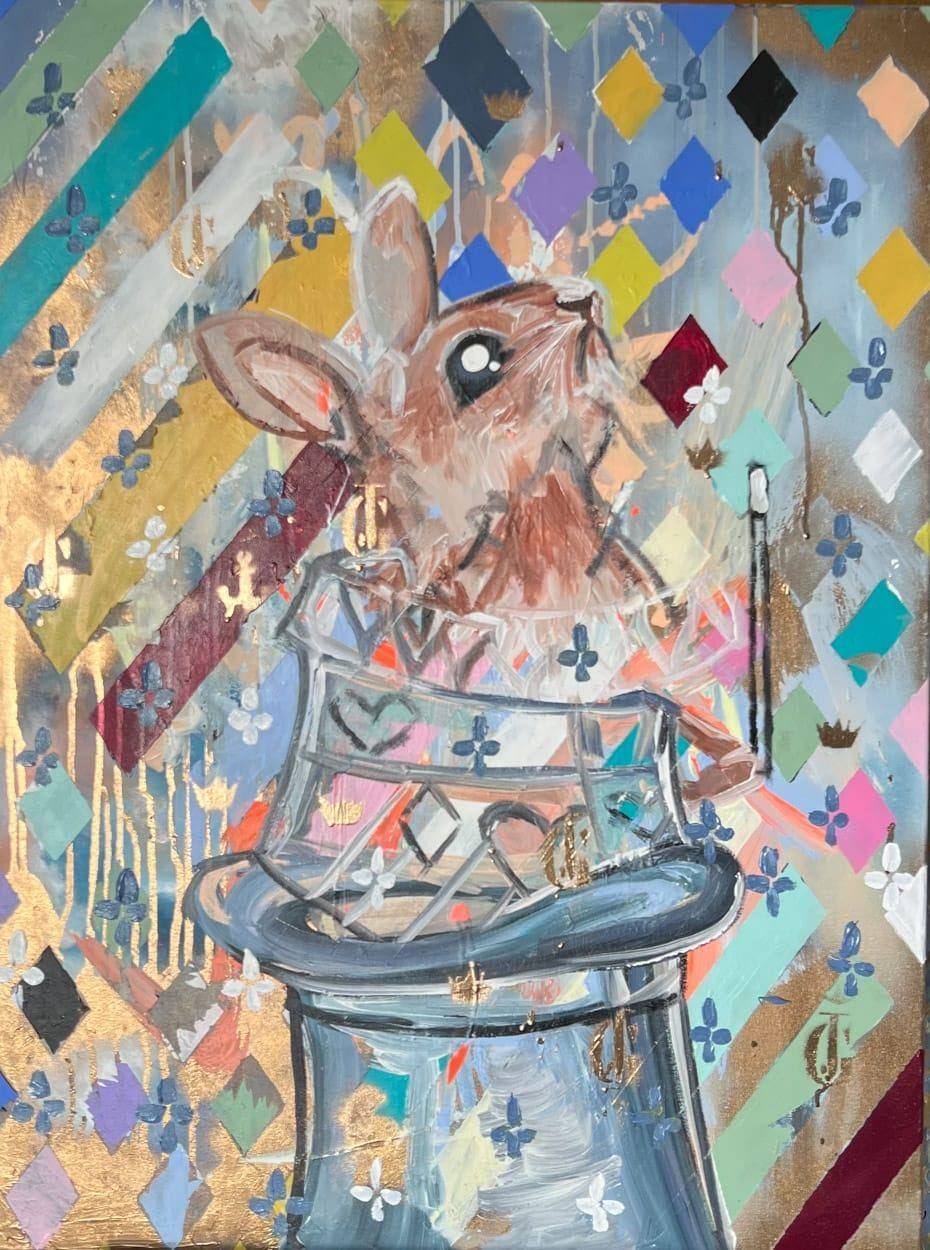
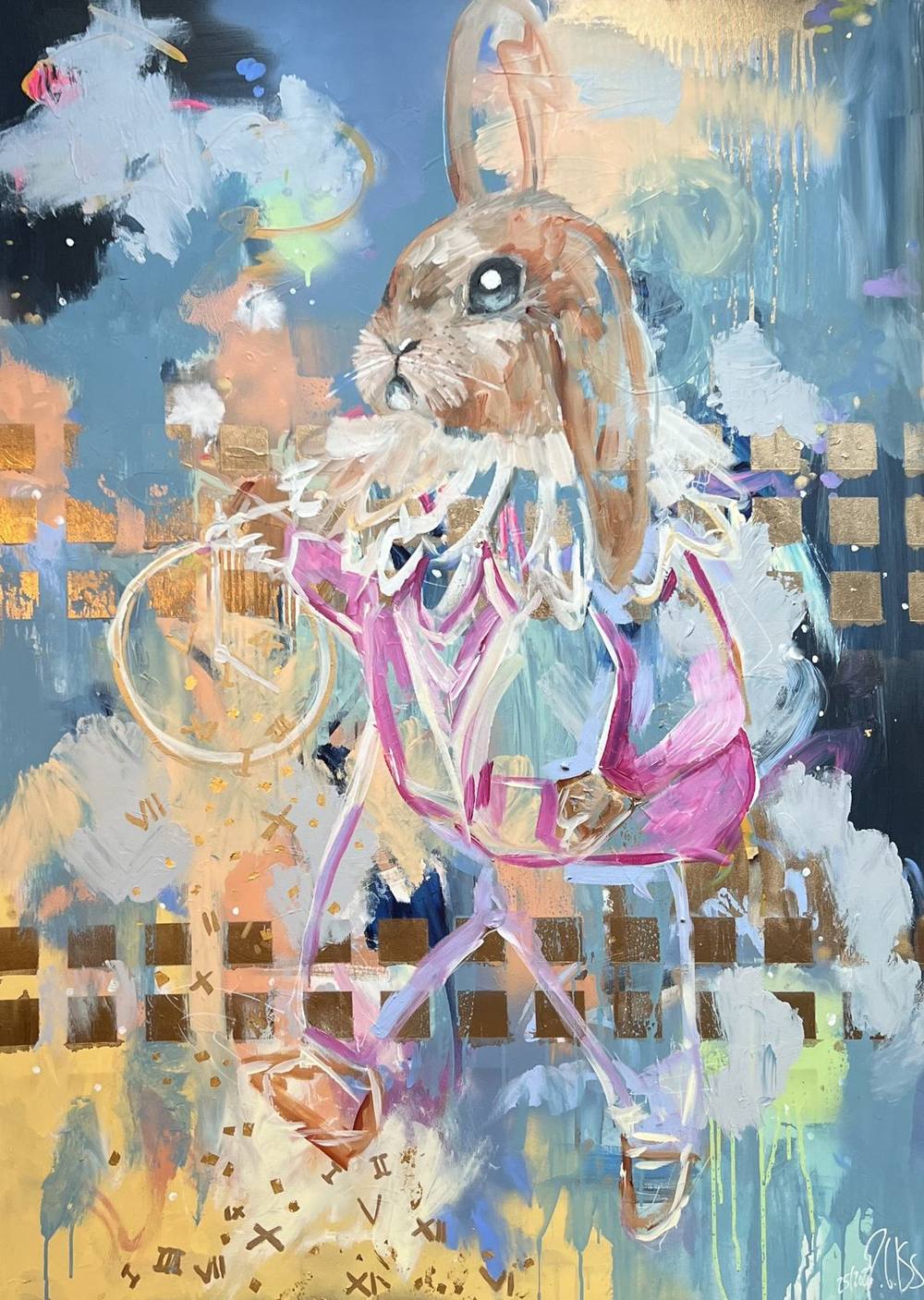
In some works the hare steps out of the pattern and becomes the protagonist. In 519 | 2024 from the Fifth Season series it rises from a top hat, gazing upwards, a magic wand beside it. Painted in acrylic on canvas at 60 × 80 centimetres, the picture marks the playful pole of the series. In 25 | 2022 from Golden Things a hare in a ruff and a pink costume stands in half profile, surrounded by clouds, a ring and Roman numerals as if from a dissolving clock face. Gold lacquer divides the surface into bands of square fields.
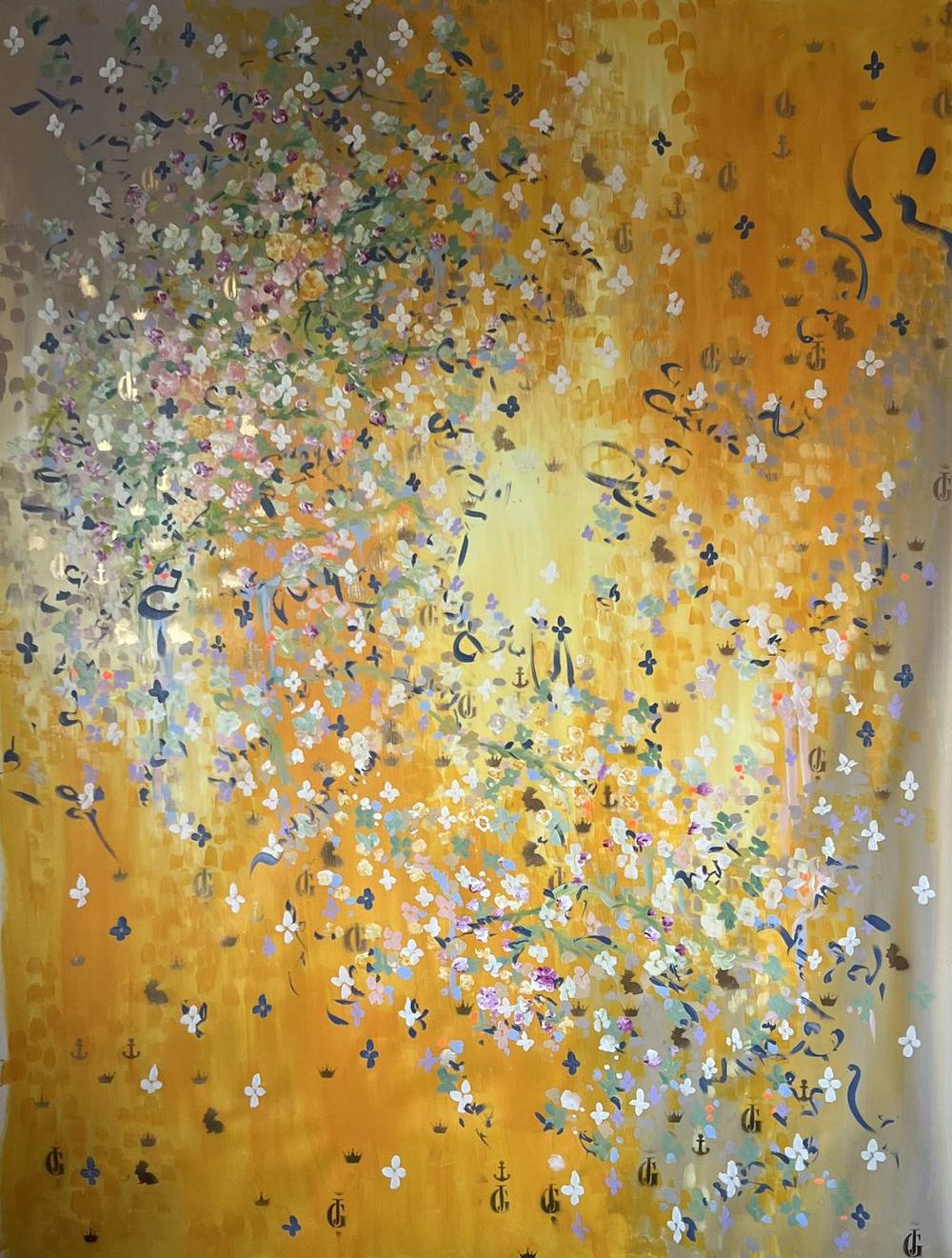
More often the hare hides. In the large format 516 | 2024, 150 × 200 centimetres, small hares in midnight blue and grey emerge from a swarm of blossoms on a golden yellow ground. In 501 | 2024 they shimmer in gold lacquer between magenta, rose and turquoise. In 13 | 2020 from the Monogram series they are sprayed as lilac stencils onto a gold ground, before which a bouquet erupts. They reveal themselves only at second glance, much like the windows in the eye of Dürer’s hare.
Five hundred years after the Young Hare the motif is far from exhausted. It has simply changed form: from closely observed animal to sign, and from sign to figure. If you would like to look for the hares in Juliane Golbs’s work yourself, you will find them in the catalogue of works. For questions about individual paintings, the artist can be reached through the contact form.
Works from this article

Frequently asked questions
Where is Dürer’s Young Hare?
In the Albertina in Vienna. The sheet of 1502 is executed in watercolour and bodycolour, heightened with white. It measures around 25 × 22.5 centimetres. The Albertina has owned it since 1796.
Why is the Young Hare so rarely shown in the original?
Paper is extremely sensitive to light and temperature. The Albertina counts the hours the sheet has been exposed to light and only then decides when it can be shown again. In around 150 years it has been exhibited only about ten times.
What does the hare mean in Christian art?
It appears there with a variety of meanings. It can stand for sensual pleasure, but also for the triumph of life over death and thus for the heart of the Easter message. In the Easter liturgy itself it plays no part.
What happened in Joseph Beuys’s action with the dead hare?
On 26 November 1965, at Galerie Schmela in Düsseldorf, Beuys covered his head with honey and gold leaf and carried a dead hare through the exhibition, whispering to it about the pictures.
What role does the hare play in the work of Juliane Golbs?
Alongside the crown, the anchor and the JG monogram, it belongs to her personal repertoire of signs and stands for alertness and quickness of mind. In works such as 519 | 2024 and 25 | 2022 it becomes the main figure.
Sources
8 sources
- Google Arts & Culture / Albertina: Albrecht Dürer, Feldhase (1502)
- ORF: Feldhase von Albrecht Dürer, 1502
- Sonntagsblatt (epd): Dürers Feldhase erst wieder 2028 im Original zu sehen
- evangelisch.de: Osterbote und Symboltier – der Hase in der Kunst
- The Metropolitan Museum of Art: Albrecht Dürer, The Holy Family with Three Hares
- New Orleans Museum of Art: Mori Ippo, Rabbit Pounding the Elixir of Life Under the Moon
- Getty: Welcome to Alfred Schmela’s Art Gallery
- Barry Flanagan Estate: Barry Flanagan 1941–2009