Giving a painting – what matters when art is a gift
Giving a painting is a gesture of trust. How to find a work that suits the person, which formats work well and how to hand it over.
Giving a painting is different from giving a book or a bottle of wine. It stays. It hangs on a wall for years, is seen every day and recalls the person who gave it. Art as a gift is therefore a gesture of trust: it says that you know the other person well enough to entrust them with something so personal. This article shows how to find a work that fits and how to make the handover a success.
When a painting is the right gift
An original suits occasions that carry weight themselves: a wedding, an anniversary, a milestone birthday, moving into a new home, the end of a chapter of life. In a professional setting, too, a work can be a strong sign – for the opening of new premises, say, or as thanks for a long collaboration.
A painting is less suitable as a spontaneous surprise for someone whose rooms you do not know. Here, preparation pays off, as described below.
Read the person, not only their taste
No one has to guess another person's taste in art. It is enough to pay attention.
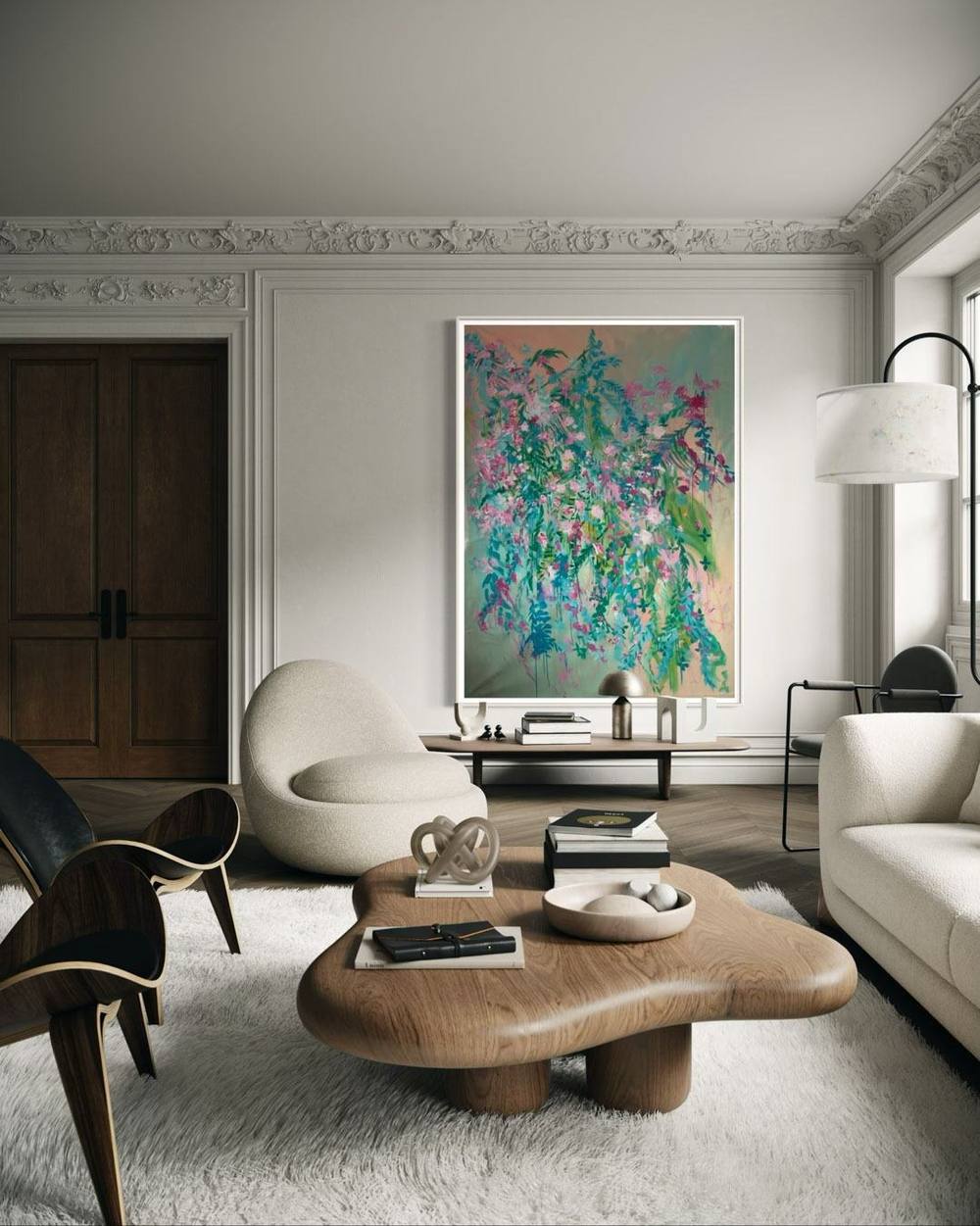
The colours of the home. Do warm wood tones, linen and brass prevail – or cool white, grey and glass? A work in rosé, apricot and gold looks natural in warm rooms, one in blue and petrol in bright, cool ones.
Places and memories. Many people have a place they keep returning to in their minds: the sea, a garden, a city. A work that takes up this mood touches more than any motif. The works of Juliane Golbs feature, for instance, the Elbphilharmonie, Paris or lush fields of blossom; pictures such as Golden Elbphi or 43 | 2021 tell of Hamburg.
The stage of life. Someone just starting a family may be delighted by a work full of life and movement; someone slowing down perhaps by a quiet, contemplative piece.
If you are unsure, you can go through the art advisor together with the person, or try discover your taste – as a foretaste of the actual gift.
The right format
Small and medium formats are the safest choice. A work up to about 60 centimetres per side fits almost anywhere: above a chest of drawers, in a hallway, beside a door, leaning on a sideboard. Works such as 08 | 2026 or 07 | 2026 at 30 × 40 centimetres, or 10 | 2025 at 40 × 60 centimetres, show how much strength lies in small formats too.
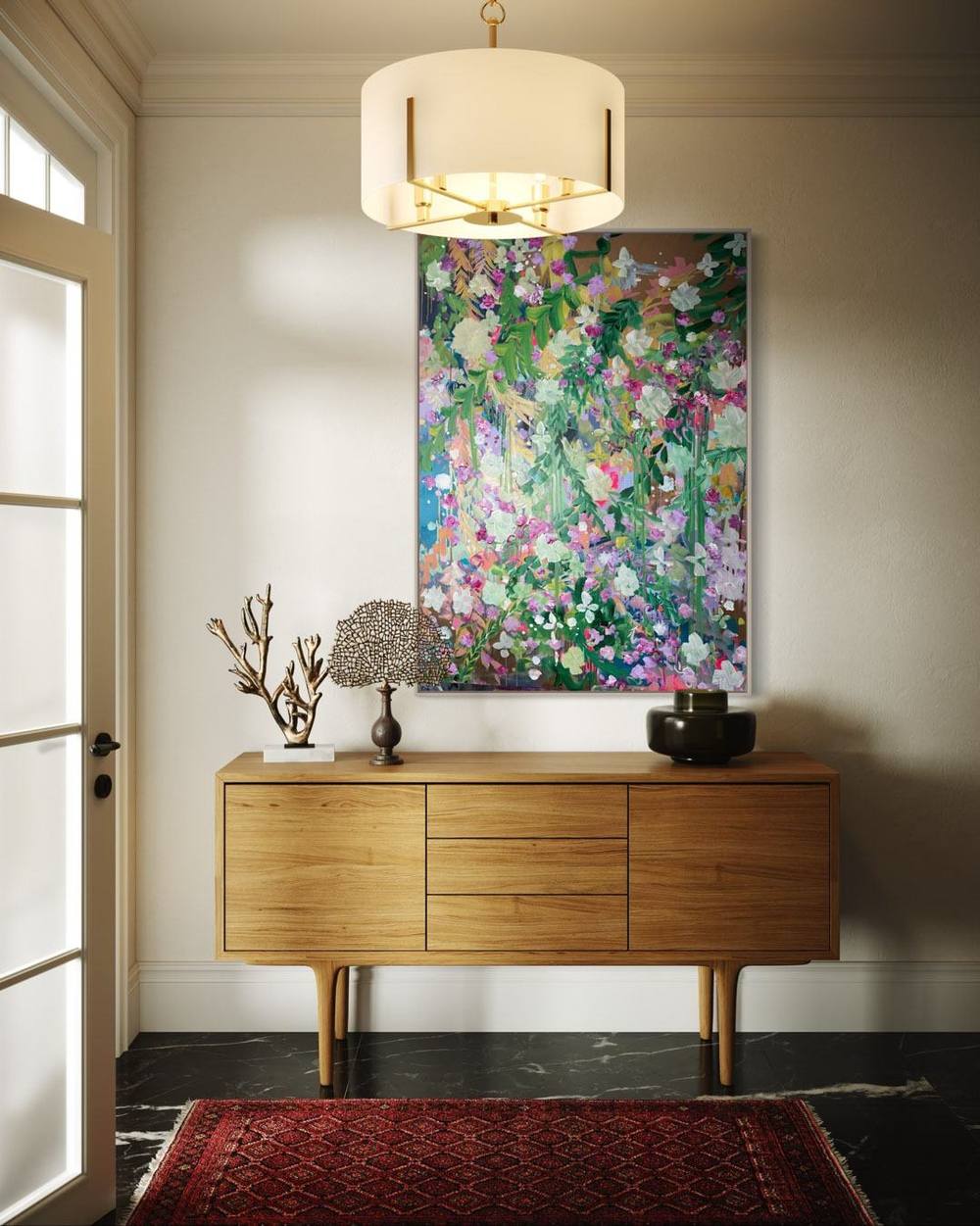
Large formats are a statement. They are suitable when you know the wall the gift is meant for – a shared home, for instance, or rooms you helped to furnish. A rule of thumb for the wall above a sofa is about two thirds of the sofa's width. More on this in the article on living room art.
Which series suits which occasion
Each of Juliane Golbs' series has its own atmosphere, and some suit particular occasions especially well.
Fifth Season is about lived time and the light of the present. The series grew out of concern for the life of the artist's daughter and understands lightness as a decision to stay turned towards life. A work from it is a gift for people who have come through something or are beginning a new chapter.
Heaven can't wait continues this series, more drawn and more layered. The pictures are full of movement and suit people who celebrate life – for a birth, a wedding, an anniversary.
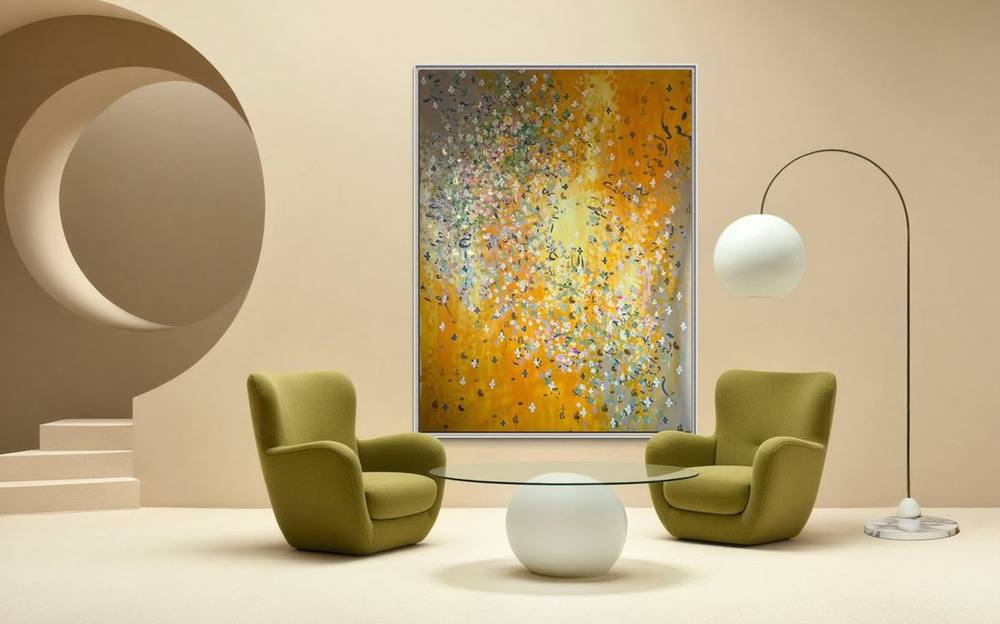
Golden Things makes gold its subject, the light of the golden hour. This series also includes motifs such as the Elbphilharmonie – a gift with a connection to Hamburg.
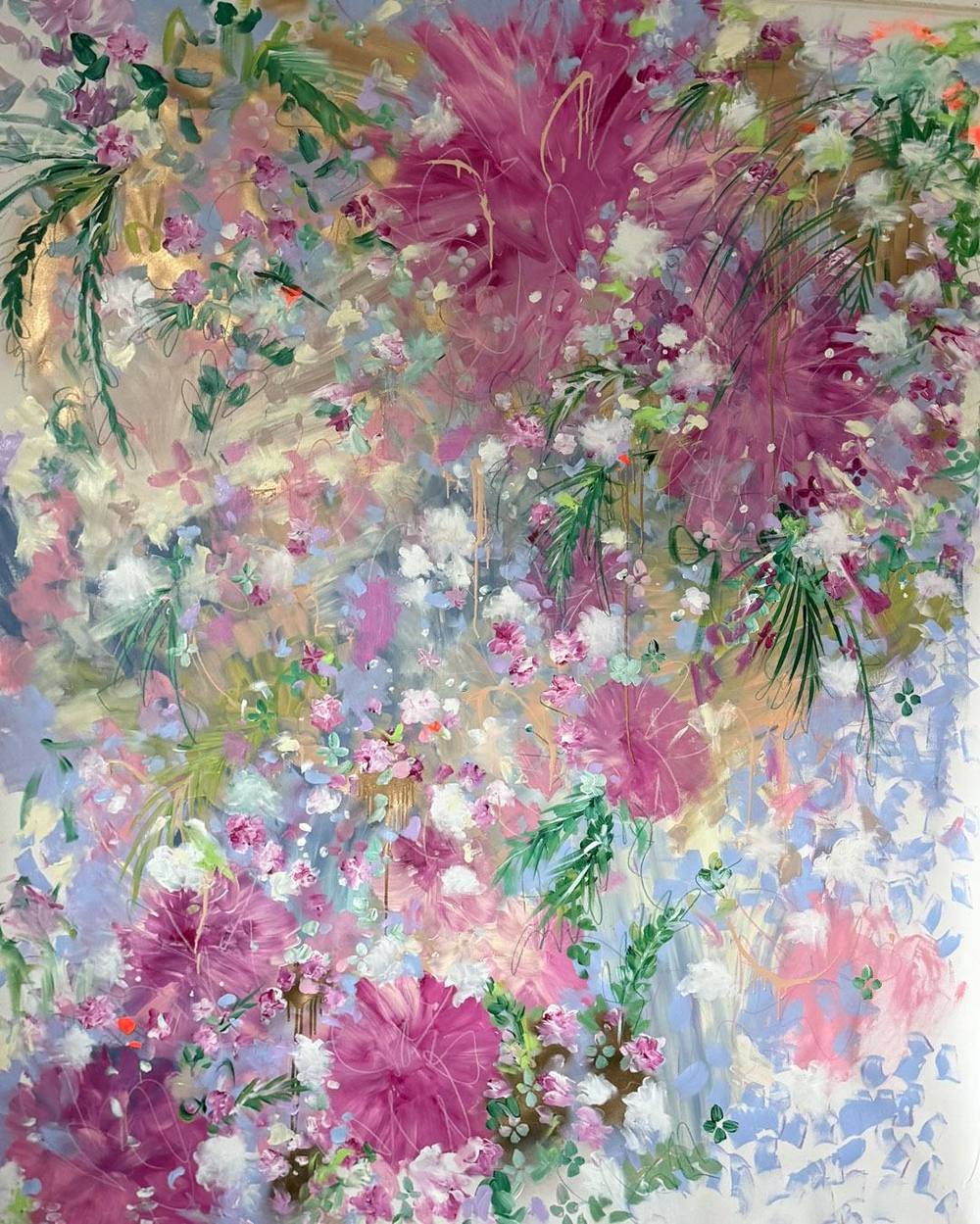
Everlasting Blossoms is floral abstraction, a "preserved spring". Part of the proceeds supports the NCL Foundation in its fight against childhood dementia; whoever gives a work from this series gives that support as well.
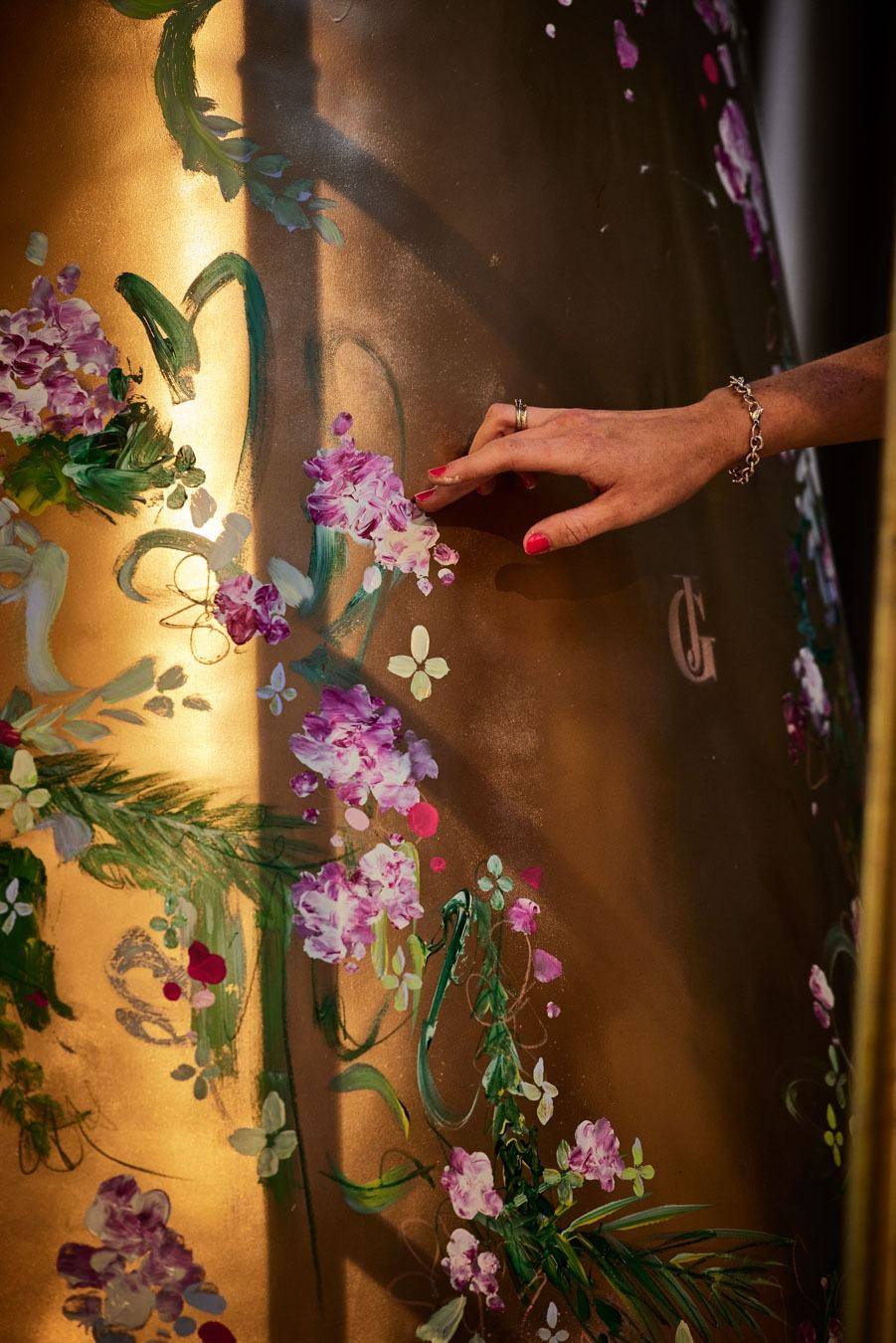
The Signature Collection and the Monogram series work with signs and monograms. They are the natural starting point for a personal gift with initials or symbols of a family.
Original, commission or choosing together
There are three ways to give a painting.
An existing original. You choose a work from the catalogue of works. This is the most direct way and suits situations in which you know the recipient's taste well.
A commission. A work created especially can take up dates, places, colours or symbols of a family. The Signature Collection shows how Juliane Golbs translates monograms and symbols such as the crown, the hare and the anchor into painting. A commission needs time; if you want to give it on a fixed date, start early. The process is described in the article on commissioning art.
Choosing together. Sometimes the most beautiful gift is the invitation to choose together – for example on a studio visit in Hamburg by appointment. Whoever then finds the work themselves will always connect it with that day.
Special occasions
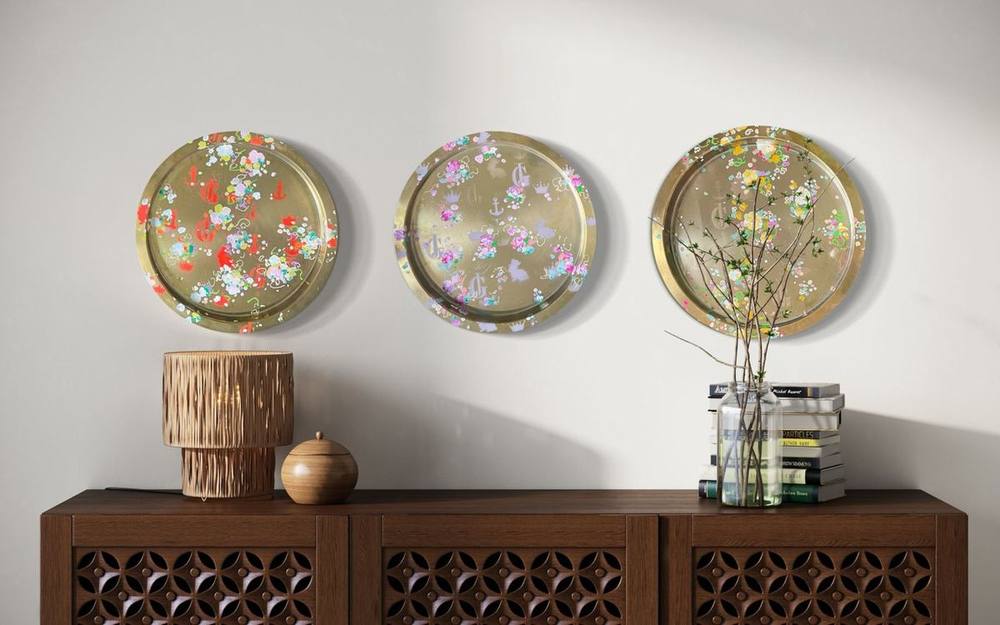
For a wedding. A work for a couple stands for something shared that grows. Pairs of works or multi-part pieces take up this idea: two pictures that belong together and yet each stand on their own. If you wish, you can combine the gift with a studio visit for the couple.
For a new home. A new home still has empty walls, and often it is not yet clear how it will be furnished. A medium format that works in different places can make sense here. Or you give the option of hanging a work on trial, for a small fee that is credited on purchase.
In a professional setting. For the opening of new premises, a company anniversary or the farewell of a defining colleague, an original is a sign that lasts beyond the day. Tax questions about gifts within a company should be clarified with a tax adviser beforehand.
Common mistakes
Thinking too small. A picture that looks lost on a large wall diminishes the gift. Better a medium format for a specific place than a tiny one for everywhere.
Giving your own taste. A work you love yourself is not automatically right for the other person. The colours and rooms of the recipient are the better measure.
Underestimating the handover. An original handed over in a box without a word loses part of its meaning. The story belongs to the gift.
The handover
An original deserves a handover worthy of it. A few pointers:
Packaging. Protect the corners and the surface, transport the picture upright, never flat with weight on top. With works in gold leaf or lacquer, nothing should rest directly on the surface.
The story behind it. A short card explaining why you chose this very work turns the picture into a gift. Every work page carries a curated description you can quote from.
Help with hanging. Offering to help hang it is part of the gift: picture centre at about 145 to 155 centimetres, no direct sunlight.
Gift tax: what to know in Germany
A valuable painting is legally a gift. In Germany, gifts are tax-free up to personal allowances. Under section 16 of the Inheritance and Gift Tax Act these include 500,000 euros for spouses, 400,000 euros for children, 200,000 euros for grandchildren and 20,000 euros for persons in tax classes II and III, such as siblings or friends. For most gifts, tax therefore plays no role. With larger values, or several gifts within ten years, tax advice is worthwhile; this article does not replace it. Other countries have their own rules.
A gift that stays
To give a painting is to give someone a way of seeing – the world, a colour, a memory. When it succeeds, the picture becomes part of the home and yet always remains a gift. For choosing, the catalogue of works with all available originals and the art advisor are at hand. For a commission or a studio visit, a message via the contact form is all it takes.
Frequently asked questions
Which size is right for a painting as a gift?
Small and medium formats up to about 60 centimetres per side fit almost anywhere – above a chest of drawers, in a hallway or leaning on a sideboard. Large formats are suitable when you know the wall of the person receiving it.
Can I give a painting without knowing the person's taste exactly?
Yes, with some preparation. The colours of their home, favourite places and travels offer clues. In addition, a work by Juliane Golbs can be hung on trial for a small fee that is credited on purchase.
Is gift tax due when giving a painting in Germany?
Gifts are tax-free up to personal allowances, for example 500,000 euros for spouses, 400,000 euros for children and 20,000 euros for persons in tax classes II and III (section 16 of the German Inheritance and Gift Tax Act). For individual cases, seek tax advice.
Can I give a commissioned painting?
Yes. A commission can take up dates, places or symbols of a family. It needs time; if you want to give it on a fixed date, speak to the studio early.