How much does a painting cost? How prices for originals are set
The price of an original follows no fixed table, yet it is not arbitrary either. What goes into it, from format to VAT, and why the studio gives prices on request.
“How much does a painting cost” is one of those questions that sounds simple, yet there is no table in which to look up the answer. The price of an original is made of many things: the format, the materials, the hours of work, what an artist has shown and sold so far, and the place where a picture changes hands. Knowing these building blocks makes art prices easier to read and tells you which questions to ask before you buy.
How much does a painting cost: the short answer
An original painting costs what the artist or her gallery asks for it and what a buyer is prepared to pay. That sounds dry, but it describes the market precisely. Unlike a piece of furniture, a painting's price cannot be derived from materials and production costs alone. The work itself, the artist's career and demand weigh more heavily.
Anyone searching for the prices of Juliane Golbs's paintings will therefore find no price list on this website. The studio gives prices on request, for each work individually and together with dimensions, technique and availability. The final section explains why, and how to get a quick sense of the range all the same. First, it is worth looking at the factors that shape the price of an original painting for most artists.
Size and format
Format is the most visible factor. A large painting needs more material and more time. It needs a sturdy stretcher, more elaborate transport and a wall strong enough to carry it. With many artists, the price therefore rises with size, though rarely in proportion to the surface area.
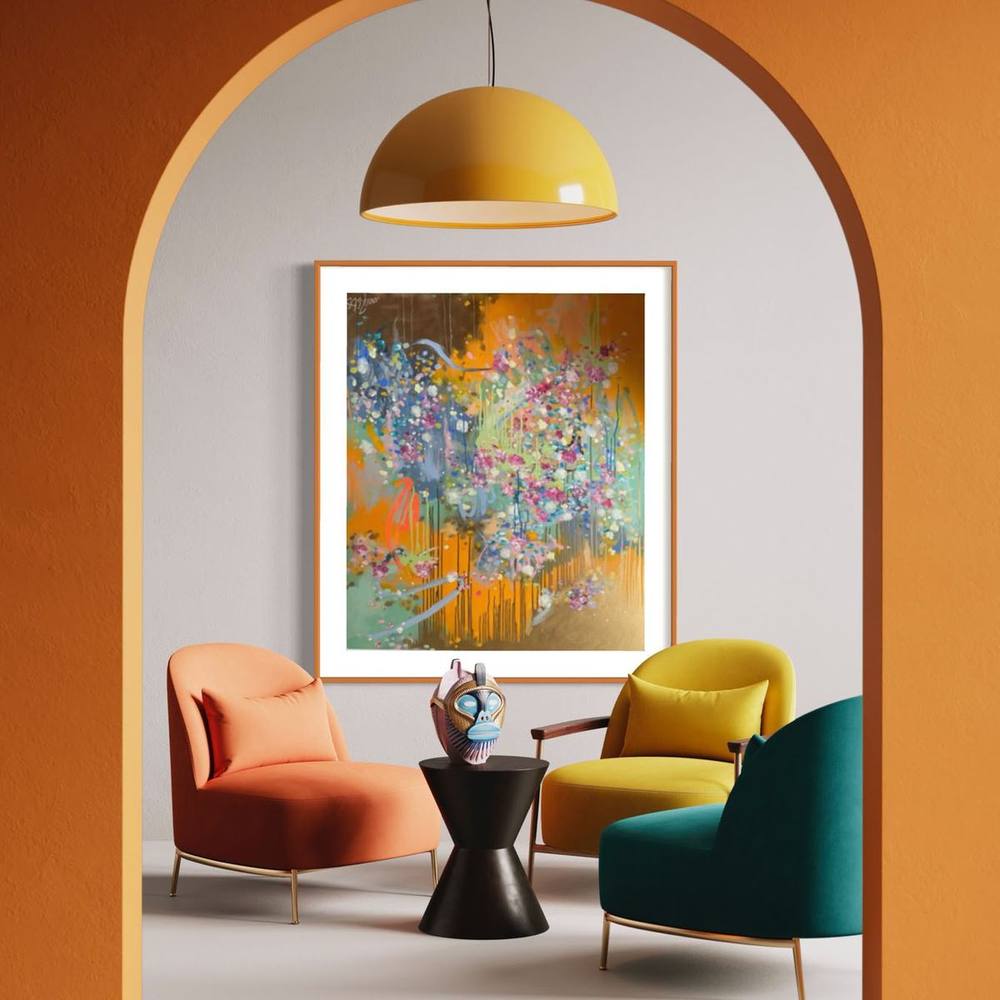
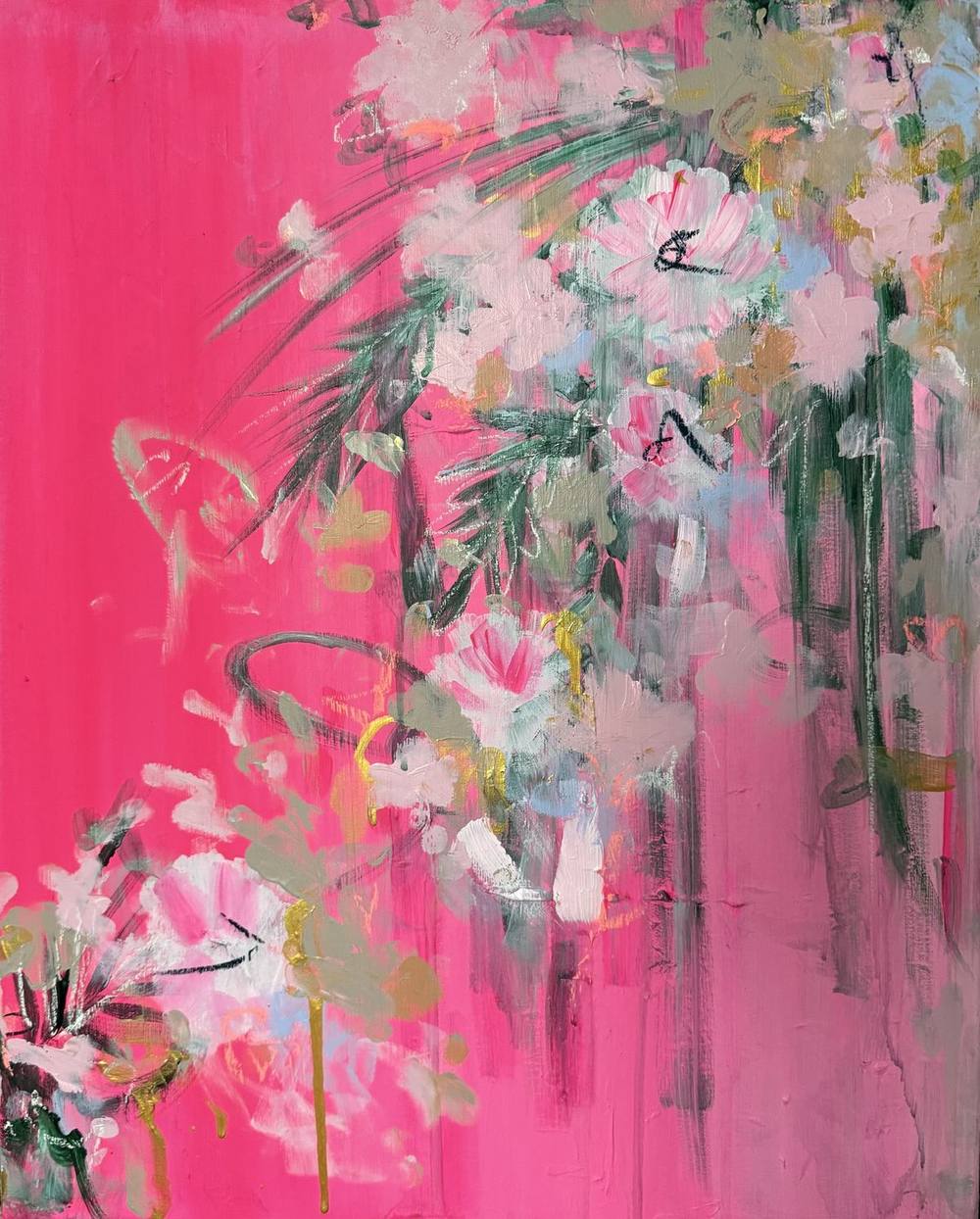
The series Fifth Season #heaven can wait shows how wide the span can be within a single body of work. The small painting 07 | 2026 measures 30 × 40 centimetres, as does 08 | 2026. The square 04 | 2026 measures 200 × 200 centimetres, a surface more than thirty times as large. Both formats speak the same language of acrylic, chalk or pencil, with runs of paint and drawn traces. Yet they demand very different amounts of work, material and space. Works in several parts are another case again: 01 | 2023 from the Signature Collection joins three black canvases into a frieze three metres wide. Here the composition across several supports counts as much as the size.
Technique and materials: why gold leaf matters
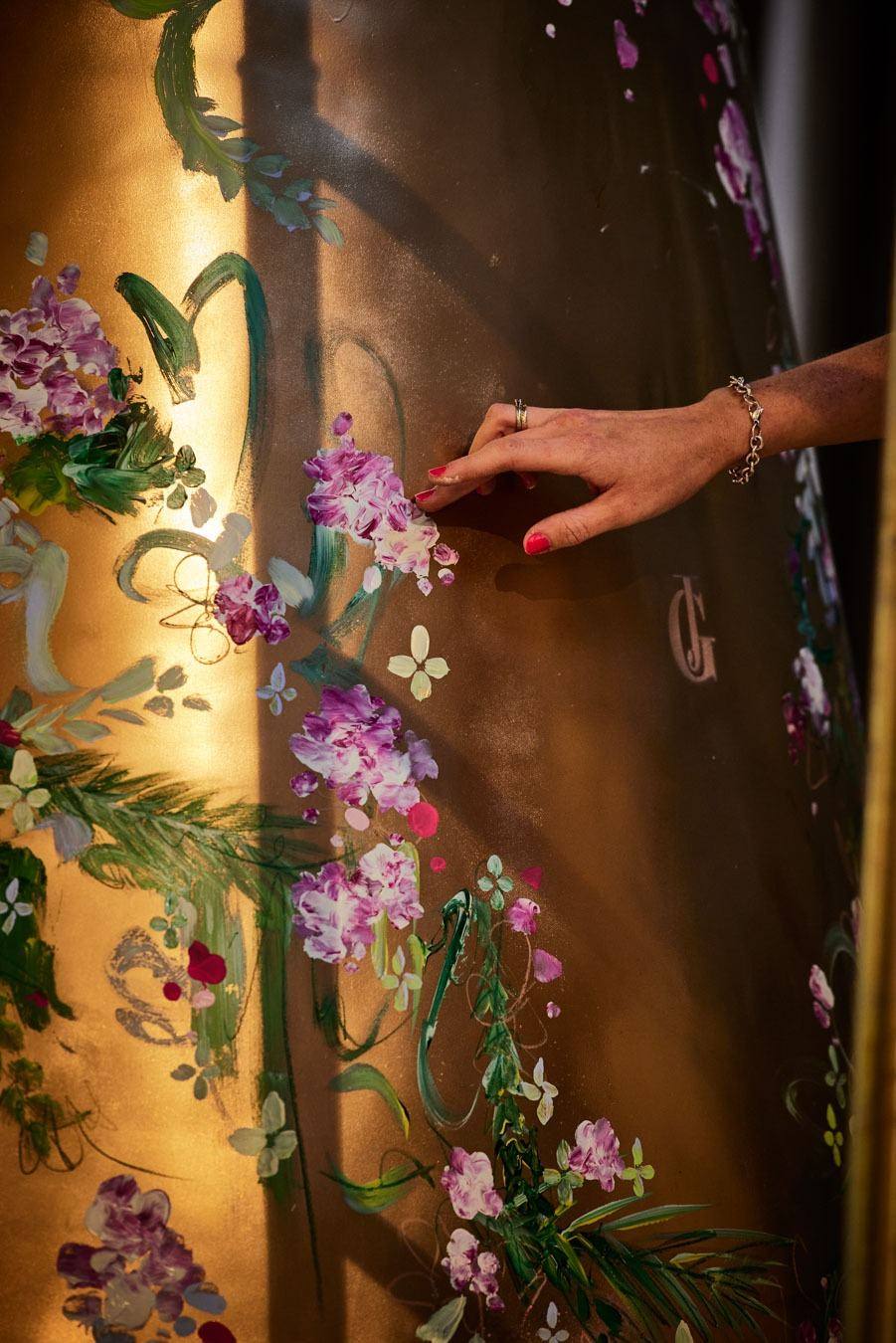
After format comes material. Highly pigmented acrylics, lacquers, chalk and pencils differ in cost and in the time they take. Gold makes the difference clearest. Genuine gold leaf is wafer-thin, is laid by hand and needs a prepared ground. How Juliane Golbs works with 24-carat gold leaf is described in the article on gold leaf in painting.
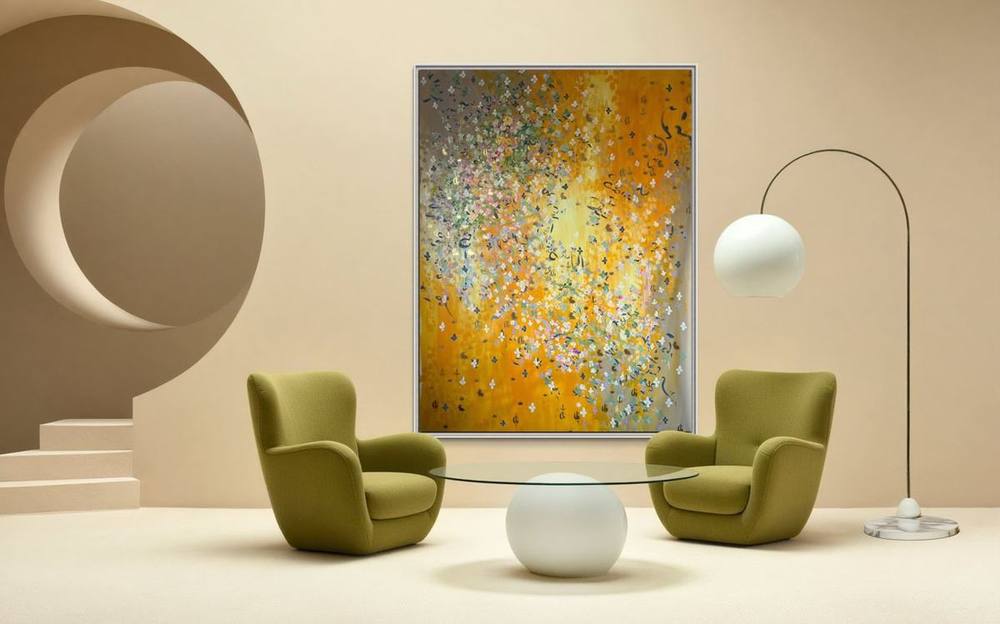
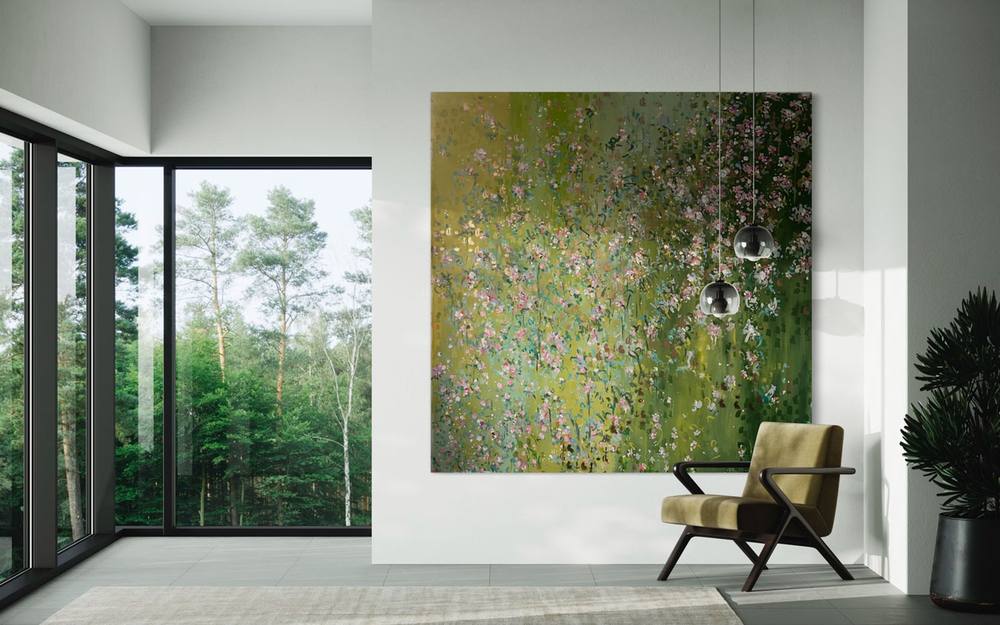
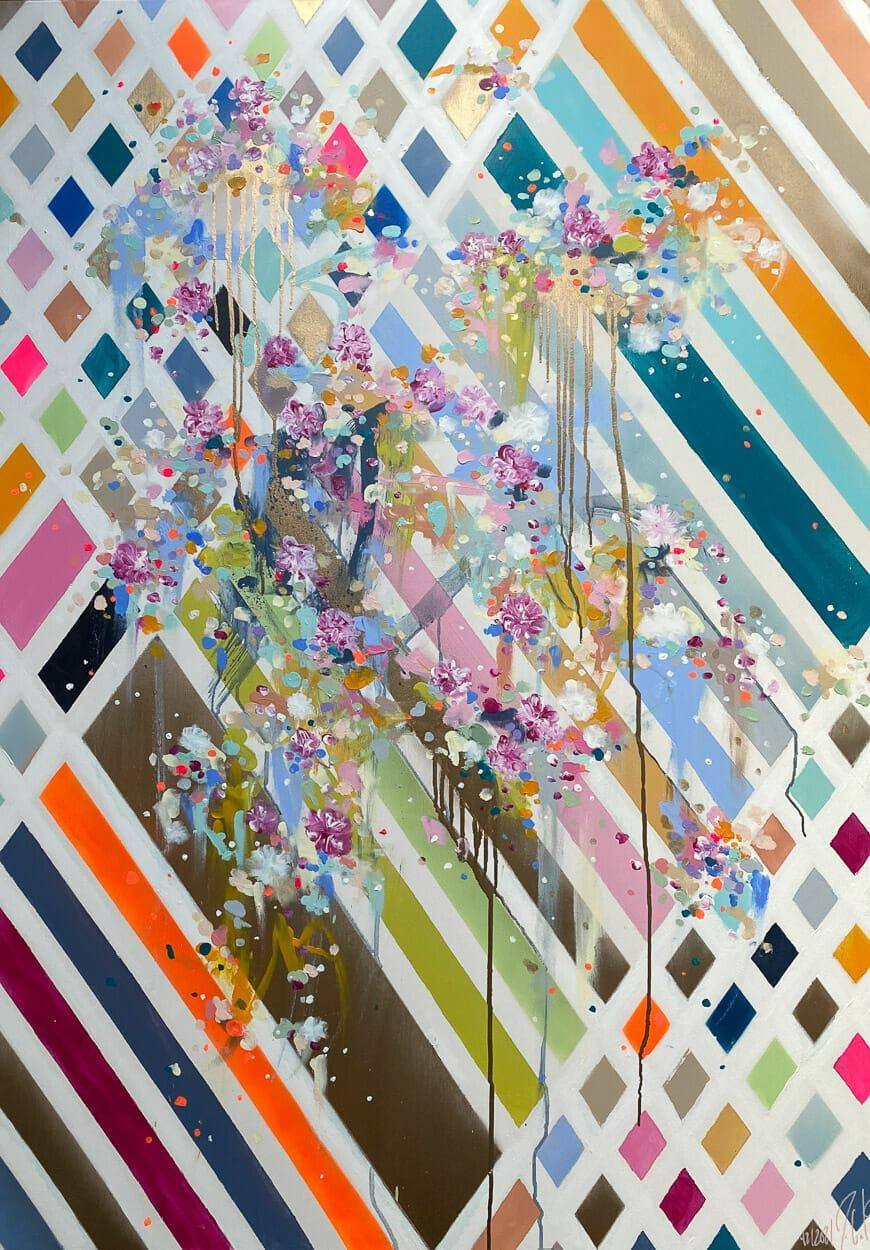
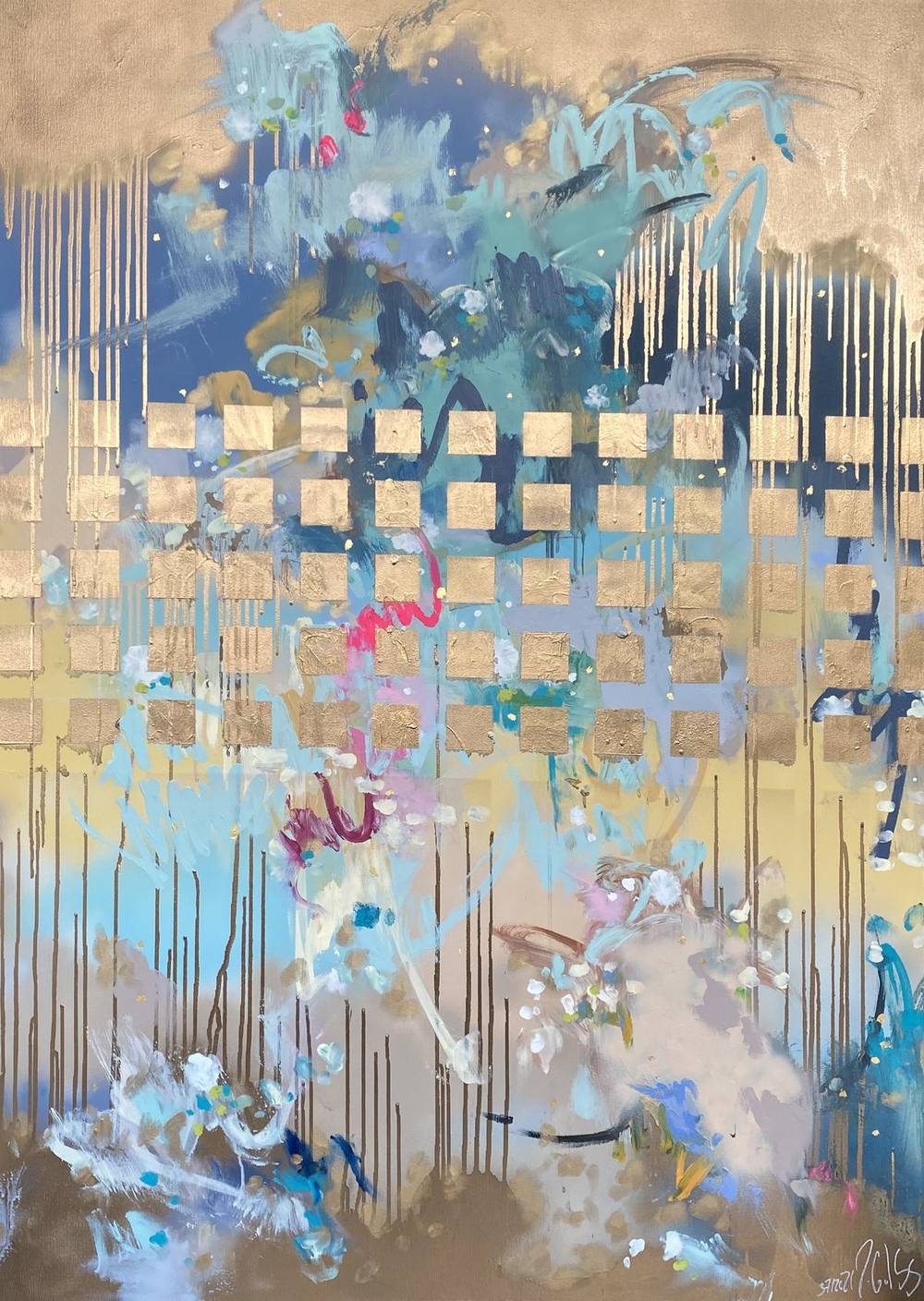
One example is 42 | 2021 from the Signature Collection: a cascade of small blossoms over a lattice of coloured diamonds, painted in acrylic and heightened in places with gold leaf. In 37 | 2021 from the Golden Things series, a grid of gold leaf squares structures the surface, alongside gold lacquers and acrylic. Works like these are built from many layers, each of which has to dry before the next. That effort is visible in the picture. It also goes into the price.
Exhibitions, sales and demand
The third building block is the artist's track record: exhibitions, collections, regular sales. The Swiss financial news site finews.ch names the artist's reputation, the market and the quality of the work as the measures by which galleries calculate prices. An important museum exhibition or inclusion in a well-known catalogue raisonné can lift a price beyond its usual range.
In the end, demand decides. A price holds only if there are people willing to pay it. The exhibitions page records where Juliane Golbs has shown her work, for instance at Venice Design Week 2025 with the Hamburg studio WERNS, or as artist in residence at the Hotel Louis C. Jacob. In the catalogue of works, each painting is marked as available or sold.
Primary and secondary market
Where a painting is sold also matters. The German Cultural Council (Deutscher Kulturrat) describes the division like this: galleries place works fresh from the studio with a first buyer and so serve the primary market. Dealers and auction houses sell works that have already had an owner. This sector is known as the secondary market.
On the primary market, the artist and gallery set the price. On the secondary market it is formed anew, at auction by the highest bid. A successful sale in the auction room can raise an artist's market value. Buying from the studio means buying on the primary market. The price is then the one the artist herself has set for her work.
The artist's factor: a rule of thumb with limits
In German-speaking countries one often hears of a simple formula, the Künstlerfaktor or artist's factor. The width and height of a painting in centimetres are added together and multiplied by that factor. The artist Dagmar Reiche works through an example on her blog kunstreiche: a painting of 60 × 40 centimetres with a factor of 10 comes to 1,000 euros. The factor rises with training, exhibitions, awards and regular sales.
As a guide, the formula has its uses. It keeps an artist's works consistently priced in relation to one another. Its limits are plain, though. There are no binding criteria for the factor. It does not reflect materials, framing or effort. It is also often unclear whether a price calculated this way includes VAT. Nor is the method uniform: finews.ch describes a variant in which height and width are multiplied, and in the United States a calculation based on area in square inches is common.

Large formats make this especially visible. If width and height are added, a painting of 200 × 200 centimetres costs twice as much as one of 100 × 100 centimetres, although its surface is four times as large. A painting with gold leaf costs the same as one of identical size without it. Knowing the artist's factor helps you understand the logic of many price lists. It does not value a work.
Gallery commission, VAT and resale right
When a painting is sold through a gallery, gallery and artist share the proceeds. The law firm WBS.LEGAL cites a customary commission of 40 to 50 per cent, while finews.ch speaks of around 50 per cent. In return, a good gallery takes on exhibitions, fairs, catalogues and work with curators. The commission is retained from the sale price, so it is already contained in the price the buyer sees.
German VAT on art became simpler on 1 January 2025. Under the Annual Tax Act 2024, paintings executed entirely by hand are once again generally taxed at the reduced rate of 7 per cent, via § 12(2) no. 1 of the VAT Act in conjunction with no. 53 of Annex 2. Between 2014 and 2024 the reduction was tied to narrow conditions, chiefly a sale by the artist herself or her heirs. With any offer, ask whether the quoted price already includes VAT.
For a later resale, § 26 of the German Copyright Act sets out the artist's resale right. If a dealer or auctioneer is involved and the proceeds before tax amount to at least 400 euros, the artist is entitled to a share: 4 per cent of the portion up to 50,000 euros, tapering above that, with a maximum of 12,500 euros per sale. The seller pays. This section is general orientation, not legal or tax advice.
Prices for Juliane Golbs: on request
Every work by Juliane Golbs is a hand-signed original. The studio therefore does not publish a list but gives prices personally and for each work individually, together with dimensions, technique and availability. The work pages carry the note "price on request". A short message through the contact form is enough. It helps to include the title of the work and where it is to hang. A photo of the wall makes the reply easier. The same enquiry can also arrange a trial hanging or a private appointment at the studio in Hamburg.
If you would like a sense of the range first, start with the art advisor. It asks four questions about colour, format, mood and budget and shows only whether an available work falls within the range you choose. For a fee, an original can be hung on trial. If you decide to buy, the fee is credited in full. The guide to buying abstract art in Hamburg explains how to choose an original with confidence, from certificate to light.
If the right painting does not yet exist, a commission is possible. There too the price depends on format, technique and scope, especially on the amount of gold leaf. It is set after the first conversation. The article on commissioning art tells more. A painting is not an investment with a promised return. It is a work you live with. In the end, its price says above all how much labour, experience and material it holds.
Works from this article
Frequently asked questions
How much does a painting by Juliane Golbs cost?
The studio gives prices on request, for each work individually and together with dimensions, technique and availability. The art advisor on the website shows in advance which available works fall within a chosen budget.
What is the artist's factor?
A rule of thumb common in German-speaking countries: the width and height of a painting in centimetres are added together and multiplied by a factor set for the artist. There are no binding rules for this factor. It does not reflect materials, framing or tax.
How much VAT is charged on a painting in Germany?
Since 1 January 2025, the supply of paintings executed entirely by hand has been taxed at the reduced rate of 7 per cent in Germany, whether the artist sells directly or through a gallery.
Can I hang a painting on trial before buying?
Yes. For a fee, an available original comes to you for a while. If you decide to buy it, the fee is credited in full against the price.
Sources
8 sources
- Deutscher Kulturrat, Stefan Kobel: Zwischen bürgerlicher Tradition und digitalem Wandel (2 Dec 2020)
- finews.ch, Simone Töllner: Preisgestaltung in der Kunst – ein Mysterium? (31 Jan 2024)
- kunstreiche: Was kostet Kunst? So entsteht der Preis für Originale (8 Jan 2022)
- WBS.LEGAL: Verträge im Kunstrecht (contracts in art law)
- German VAT Act (UStG) § 12: tax rates
- German VAT Act (UStG) Annex 2, no. 53: works of art
- Bavarian State Tax Office: reduced VAT rate for works of art from 1 January 2025 (14 Jan 2025)
- German Copyright Act (UrhG) § 26: resale right