Live painting: when a picture is made at the event
A painting made in the course of one evening, in full view of the guests. On live painting as an art form and on what a company gains from it.
Live painting is painting with the audience present. The picture is not made in the studio over weeks but in a single evening, on a stage, in a foyer or on a terrace. Those watching witness every decision: the first colour, the correction, the moment when areas of paint turn into a motif. What remains at the end is an original that carries the evening within it.
For companies, this form of art has become a category of its own in recent years. It does not replace a speech or a band. It gives a corporate event something neither can offer: an object that stays. This article explains where live painting comes from, how Juliane Golbs approaches it and what matters when planning an event in Hamburg.
Where live painting comes from
Painting in front of an audience is older than the term for it. Art history regards the French painter Georges Mathieu as one of the first to make public painting the event itself. According to an article published by Tate, in 1956 he painted a canvas measuring twelve by four metres in around twenty minutes on the stage of the Théâtre Sarah-Bernhardt in Paris. Other sources mention some 2,000 spectators and around 800 tubes of paint.
Four years later, Yves Klein took a different path. On 9 March 1960 he invited around a hundred collectors, artists and critics to the Galerie internationale d’art contemporain in Paris. A small orchestra played his Monotone Symphony while the Anthropometries were made in front of the guests. The Centre Pompidou describes the work as a performance in which subject, object and medium merge.
Both evenings show what still matters today. The audience does not see finished art. It sees art being made. This closeness is the real value, and it sets live painting apart from any exhibition.
Live painting with Juliane Golbs
For the Hamburg painter Juliane Golbs, painting in front of an audience is no sideline. Many of her best-known works came about this way, in places that at first have little to do with painting.
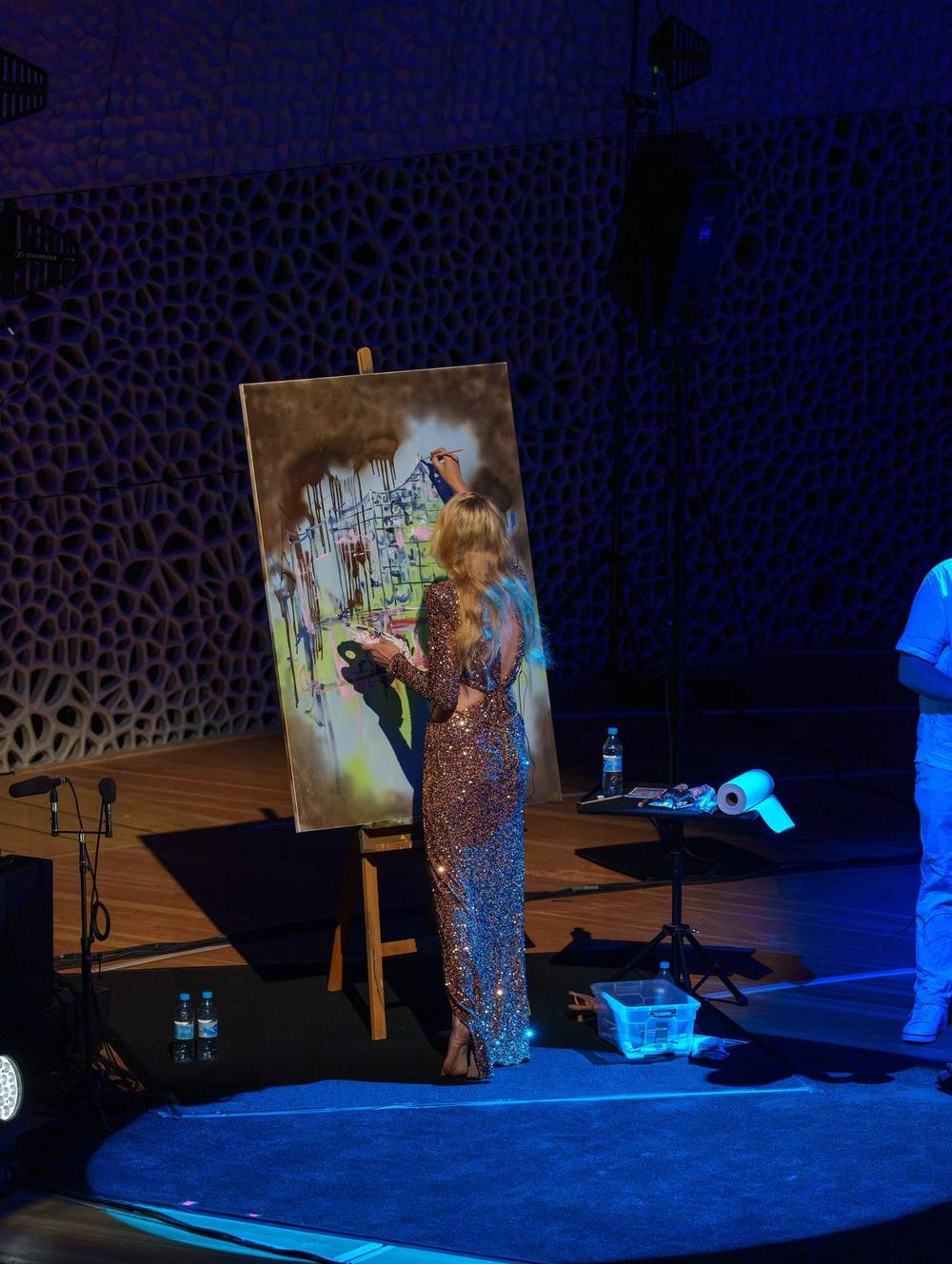
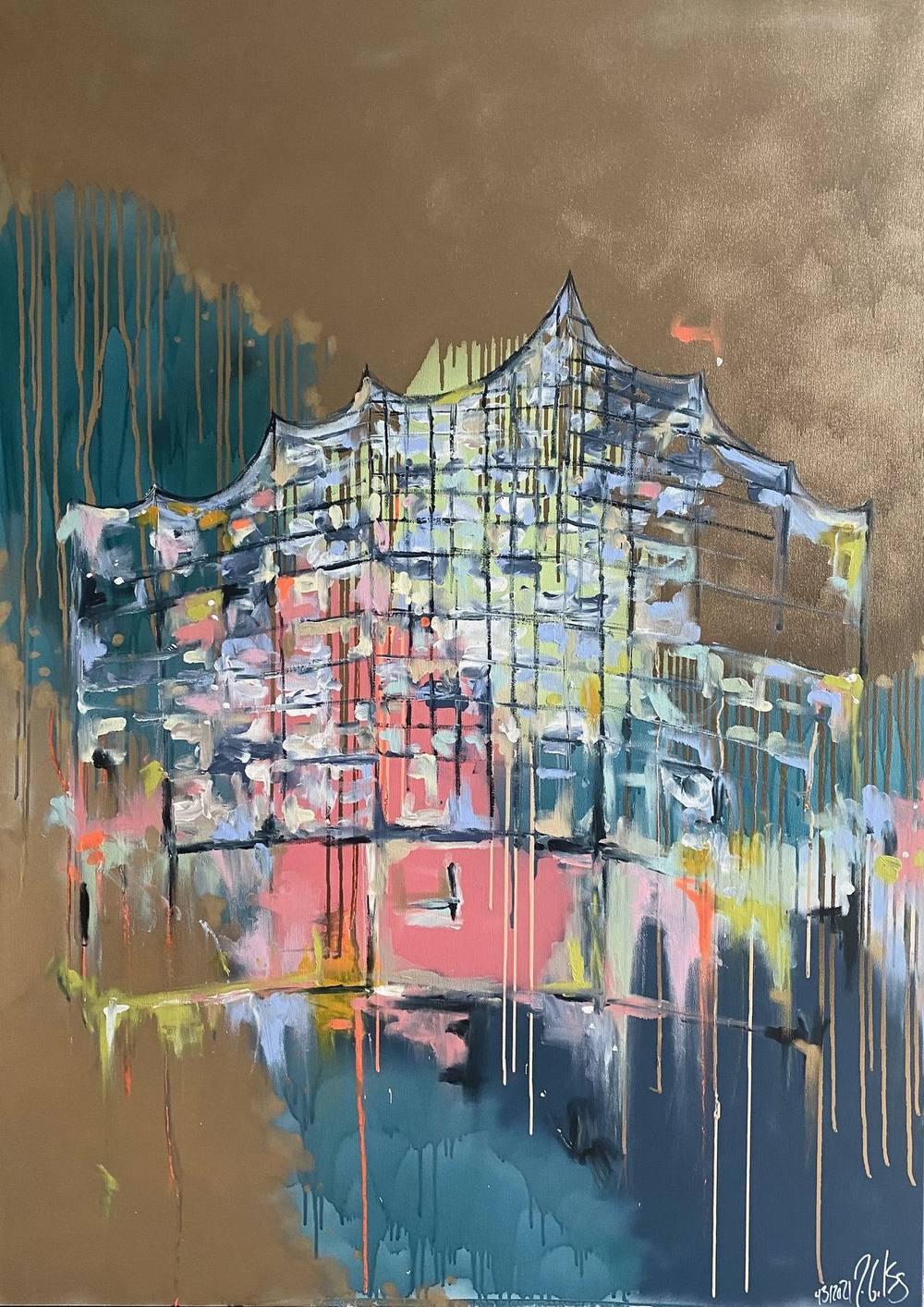
At the Elbjazz Festival 2026 she stood on the stage of the Grand Hall of the Elbphilharmonie and painted to the music of the singer Joss Stone. A large-format picture of the Elbphilharmonie took shape on the easel, a unique work from the Golden Things series. It was then auctioned for the NCL Foundation. That evening, motif and venue were one: a picture of the building, painted inside it.
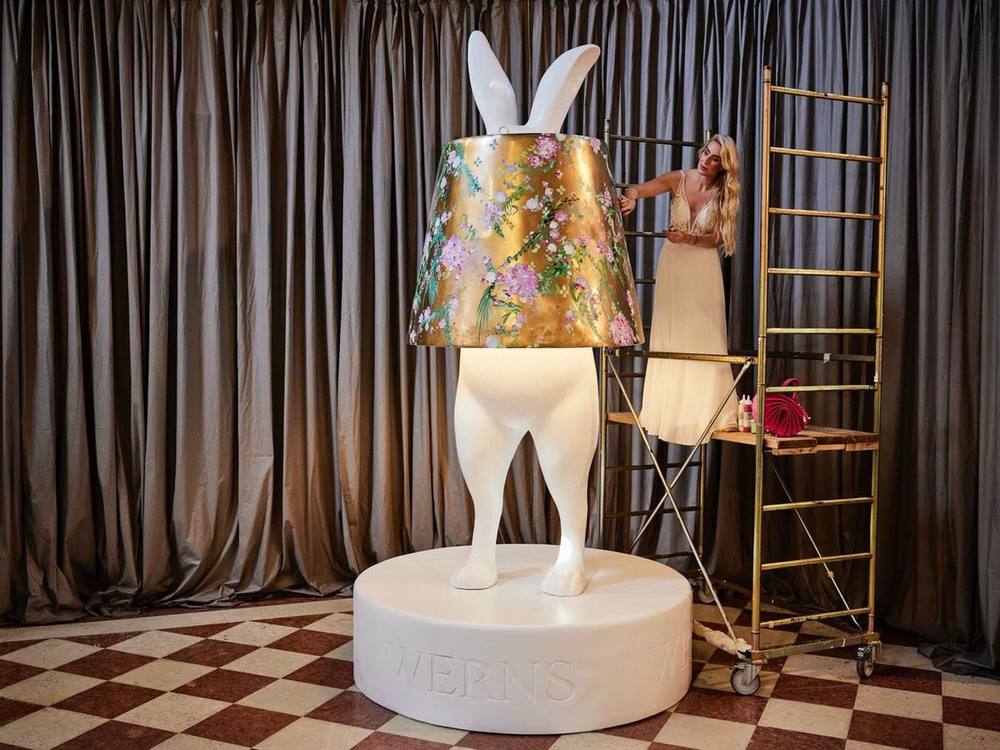
In Venice the surface was larger. At the Venice Design Week 2025, on 11 October, she painted a hare sculpture around 3.5 metres tall by the Hamburg label WERNS in the church of San Leonardo. She worked from scaffolding on a curved form that can never be seen in full at once. The installation became the emblem of the festival. The article The emblem of Venice tells the whole story.
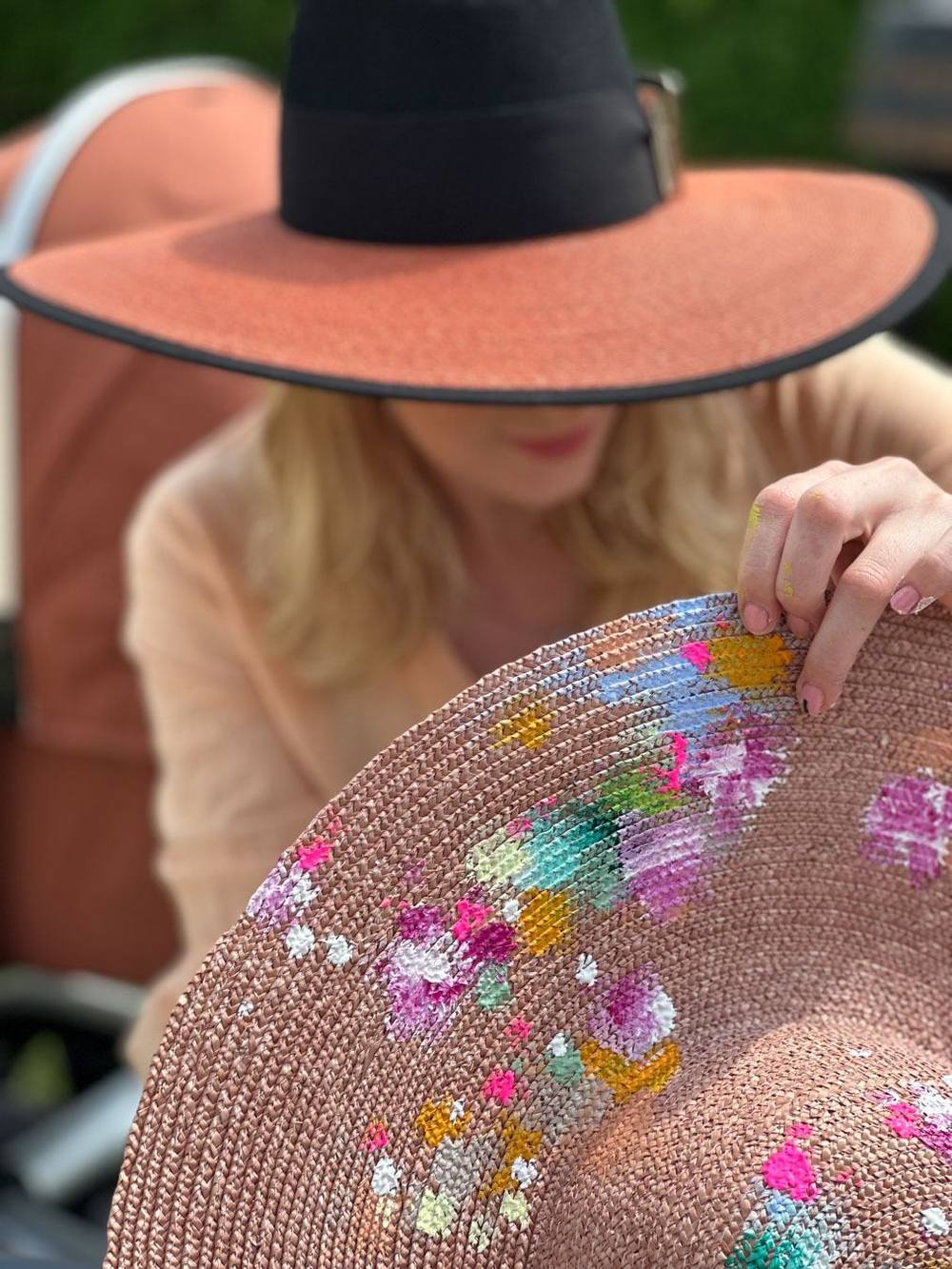
In May and June 2023 she painted straw hats live in Deauville together with the milliner Maison Laurette, surrounded by classic Porsche cars. Painting, fashion and the automobile met in one place.
What a corporate event gains
A corporate event lives on moments that guests remember. Most of these moments are fleeting. A speech is over once it has been given, a concert once the last note fades. Live painting leaves a work behind.
This has three effects. First, the evening becomes visible: guests stop at the easel, return later and talk about the progress. The canvas becomes a meeting point in the room. Second, it produces material that carries the story beyond the evening. Photos and film of a painting taking shape take an event into channels that usually show only the result. Third, the original remains. It can hang in the company’s reception, in a meeting room or in the boardroom, where it recalls an occasion that many in the company shared.
How art works in everyday office life is the subject of the article Art in the office. A painting made live has a special place there, because it brings its own story.
Which occasions suit it
Not every evening needs an easel. Live painting is at its strongest where there is a theme in the room that a painting can take up. Typical occasions are anniversaries at which a company looks back on its history, product launches, openings of new premises, galas, client evenings and concerts.
The format suits charity evenings particularly well. The painting is made in front of the people who will later bid on it and carries the memory of that very evening. For an auction this is a rare quality. How such evenings are structured is described in the article on the charity art auction.
Hotels use the format as well. Since 2025 Juliane Golbs has been artist in residence at the Hotel Louis C. Jacob on the Elbchaussee, a long-term art cooperation in which works by the artist are on view in the house.
Planning live painting in Hamburg
Hamburg offers an unusual number of stages for live painting: concert halls such as the Elbphilharmonie, arenas, hotels on the Elbe, warehouses in HafenCity, villas and parks along the Elbchaussee. Each of these places has its own requirements. These questions should be settled before an enquiry:
- Space. The easel needs room for the format, for the artist and for the materials. Guests should be able to come close without getting in the way.
- Light. A stage with coloured lighting changes how colours appear. Good, ideally neutral light on the canvas helps both the painting and the photographs.
- Floor. Where there is painting, paint can drip. A cover protects parquet, carpet and stone.
- Time. A painting needs a frame. Whether it grows over a whole evening or is made within a fixed slot in the programme is agreed in advance.
- Theme. A company can suggest a motif, such as a building, a brand colour or an image for an anniversary. The handwriting remains the artist’s own.
- Afterwards. Freshly painted pictures need time to dry before they are transported, framed or hung.
Who owns the painting
At the end of an evening there is an original. Who owns it is settled in advance. The painting can pass to the company, be presented to a guest or partner, or be auctioned.
The rights of use are a separate matter. Under Section 44 of the German Copyright Act, selling the original does not, in case of doubt, grant any rights of use. The company may own and display the work. Anyone who wishes to use it further, for example as the motif of a campaign, on prints or in an edition, agrees this separately. How this works for paintings made for a particular place is described in the article on commissioning art.
Works that set the tone
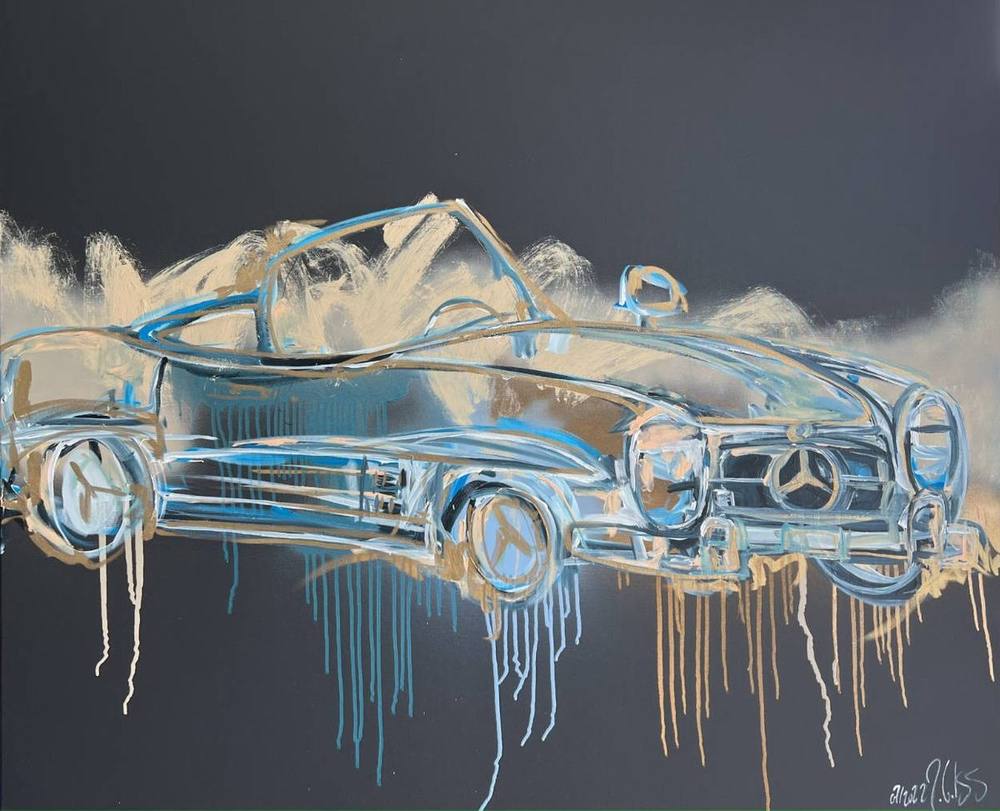
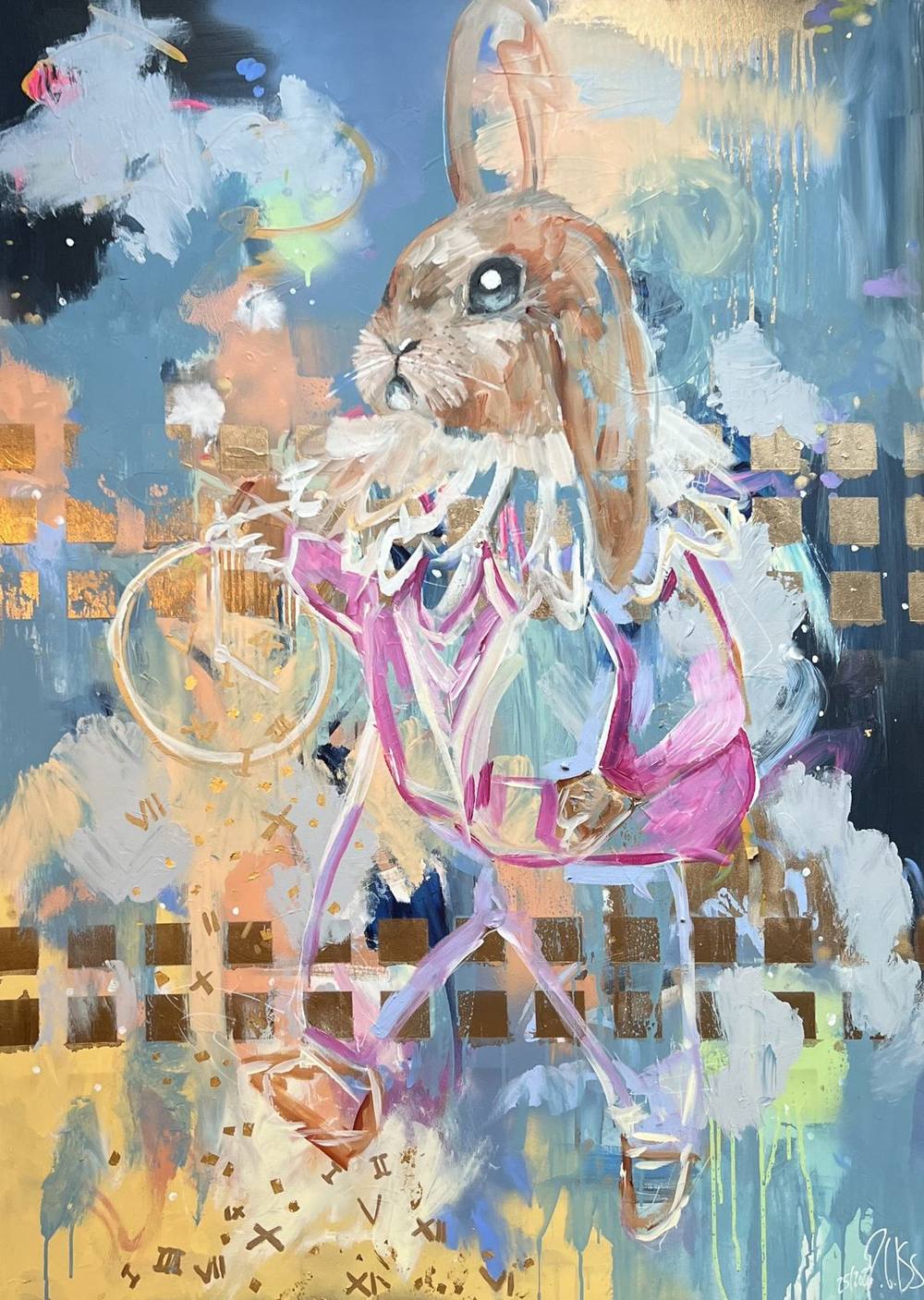
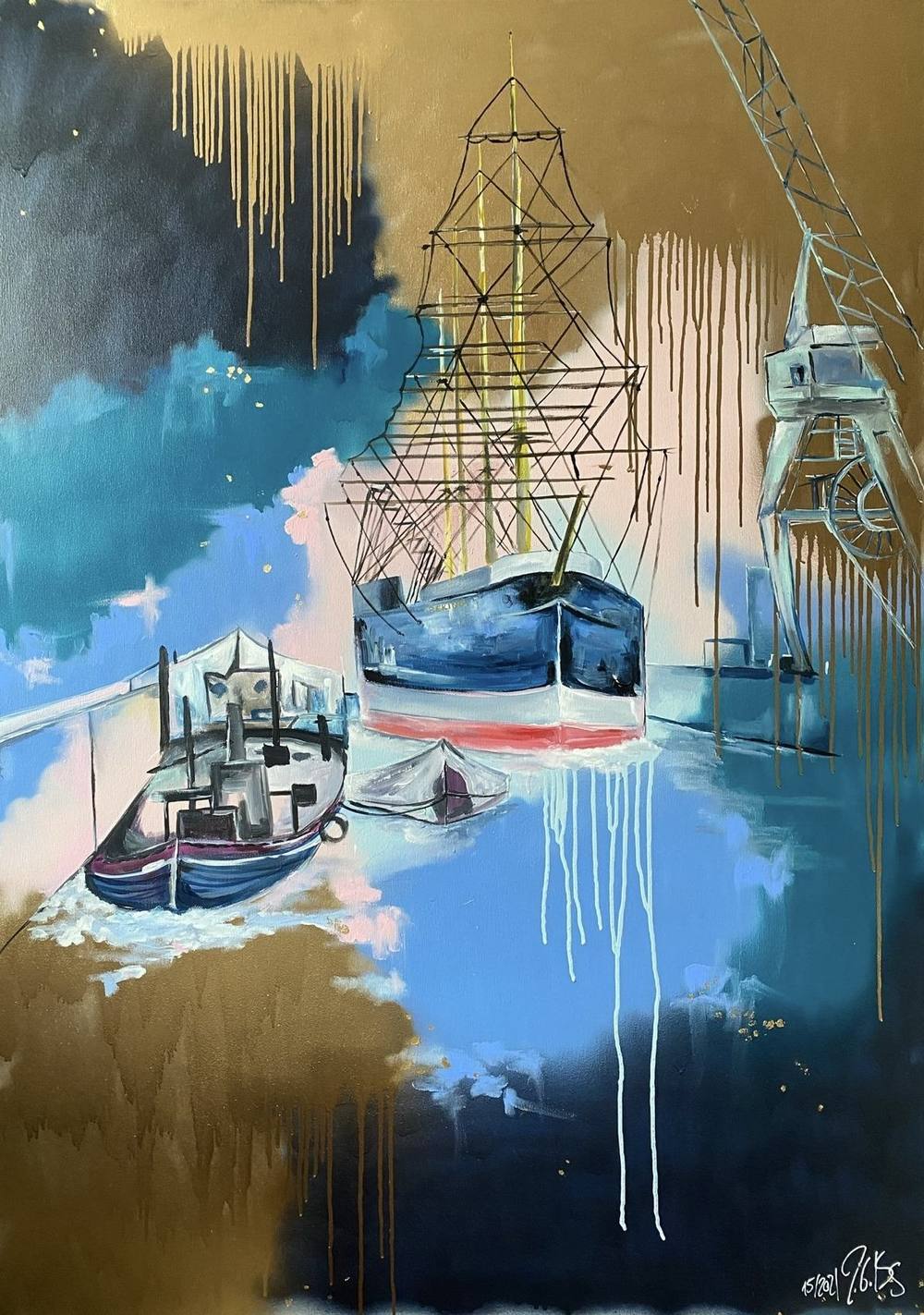
Anyone wondering what a live painting by Juliane Golbs might look like will find works from the same visual world in the catalogue. The Golden Things series, which also includes the Elbjazz painting, brings together blue, gold and warm tones. 43 | 2021 shows this palette with turquoise and pink, while 07 | 2022 works in landscape format with blue, gold and apricot. 25 | 2022 and 15 | 2021 continue the series in portrait format.
These works help to form an idea of colour and format. The art advisor can help to find the right direction for a room or a brand.
Enquiring about an event
A few details are enough for an enquiry: date, venue, occasion, approximate number of guests and a sentence on what the painting should stand for. Everything else is settled in a first conversation. Companies, hotels and event organisers can reach Juliane Golbs via the contact form with the subject Partnership. Further collaborations are collected under Dialogues.
A painting made in front of an audience is, in the end, both an artwork and a memory. It shows what happened in a room on one evening, long after the last guest has gone.
Note: This text was created with the support of artificial intelligence.
Works from this article
Frequently asked questions
What is live painting?
Live painting means creating a work in front of an audience, usually during a concert, gala or reception. The picture is made within the event and is afterwards a fully fledged original.
Which occasions suit live painting?
Corporate events, anniversaries, product launches, galas, concerts and charity evenings. What matters is an occasion whose mood or theme the painting can take up.
What happens to the painting after the event?
That depends on the agreement. The original can stay with the company, be presented as a gift or be auctioned for a good cause, as at Elbjazz 2026 in support of the NCL Foundation.
May a company use the painting in its marketing?
Under Section 44 of the German Copyright Act, selling the original does not, in case of doubt, transfer any rights of use. Use in campaigns, prints or social media is therefore agreed separately.
How do I enquire about Juliane Golbs for an event?
Via the contact form with the subject Partnership. Helpful details are date, venue, occasion, number of guests and an idea of what the painting should stand for.
Sources
6 sources
- Tate Etc.: Pretentious, moi? (Georges Mathieu, Issue 18, 2010)
- Grisebach: Form Through Touch (Yves Klein, 9 March 1960)
- Centre Pompidou: Yves Klein, ANT 82, Anthropométrie de l’époque bleue
- WERNS: Venice Design Week 2025
- Tageskarte: Louis C. Jacob starts long-term art cooperation with Juliane Golbs (29.09.2025)
- German Copyright Act, Section 44: Sale of the original